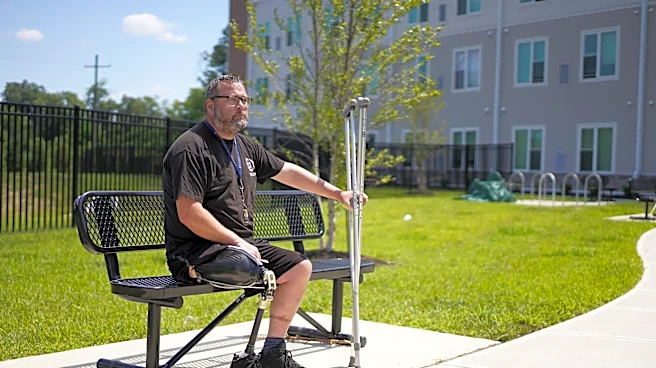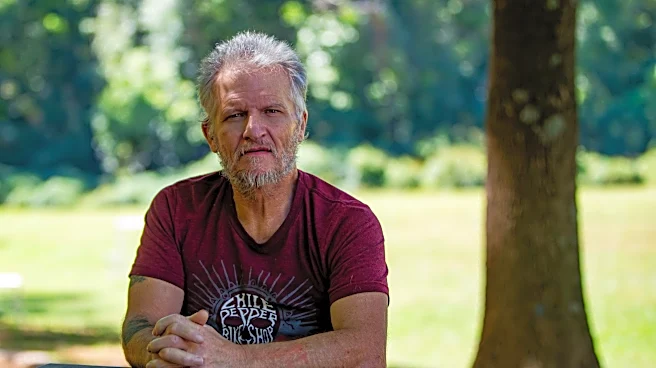





ASHEVILLE - Shawn Vandernick lived without a home in Asheville and the surrounding area for 14 years. He lost his home and job during the recession in the mid-2000s, he said.
"That was about it. I wasn't able to recover," he said.
That changed less than a year ago, when Vandernick, 59, met Ryan Duckworth, the outreach coordinator withSafe Shelter in West Asheville.
Duckworth works with the West Asheville Street Engagement Team, or WASE, a program dedicated to making contact with people living on the streets of West Asheville and connecting them to resources that can help them.
This can include helping them access substance abuse counseling and treatment, getting them bus passes, helping them acquire important personal documents, and eventually,
connecting them to housing.

Over the course of around six months, Duckworth worked with Vandernick, getting him into treatment for his methamphetamine addiction, and from there, into supportive housing at Homeward Bound's Compass Point Village. Vandernick will be 60 Nov. 1, and for the first time in 14 years, he will celebrate his birthday in a home.
"It meant everything," Vandernick said. "I didn't think that day would come. If it wasn't for him, I'd still be out there."
About Safe Shelter pilot program in West Asheville
Vandernick is far from the only person WASE has helped.
Safe Shelter Executive Director Christian Chambers recently told the Asheville City Council's Public Safety Committee that WASE made 550 "meaningful engagements" with people who needed help in the program's first eight months. A "meaningful engagement" is essentially contact with a client, which can come in the form of a check-in, acquiring someone a bus pass or giving them a ride. WASE is a pilot program, Chambers said, and its total annual cost is $342,026. The city of Asheville awarded WASE $222,000 of federal American Rescue Plan Act funds, but that money must be spent by the end of the year. WASE is in the process of seeking other avenues for funding.
"Stabilization is not the end of the work. Follow-up helps people stay connected to the supports they're first connected with. If WASE is not sustained, basically, things may get out of hand again," Chambers told the Public Safety Committee. "We've built a really strong relationship with not only the houseless population, but the neighbors, community members, businesses, schools, all in West Asheville."
WASE's need for funding comes at a critical time for Asheville. The Salvation Army shelter in downtown Asheville is set to close in November while leadership seeks funding in hopes of continuing that service. If the shelter cannot raise more than $1 million by April 30, it will close permanently. Phillip Stokes, who oversees shelter operations with his wife, Sherrie Stokes, told the Citizen Times Sept. 14 that they had so far raised around $40,000.
"We're hoping that the Christmas season will pick up," Stokes said. "We're trying to look at every single opportunity that's there."
With WASE, although the program is set to run out of funding, Safe Shelter has less it needs to raise. The nonprofit also has a plan in place, as well as pending applications for funding, and those funds will replace much of the money that previously came from the city, the agency said.
"We're doing something that is tangibly working. People are literally seeing it working," Chambers said.
Looking back at Safe Shelter's three years of service
Safe Shelter opened in November 2023 as a partnership between three area churches and Counterflow LLC. In 2024, the shelter moved to Trinity United Methodist Church on Haywood Road. Safe Shelter became an independent nonprofit late last year, and WASE was launched as a Safe Shelter program in early 2026.
"It was kind of something we always had in the back of our thoughts, but we just had to wait for everything to align, for us to get a permanent space, to find the right staff and funding opportunity," Chambers said.
"The houseless population was growing, and neighbors were concerned," Chambers added. "I think we learn and what we know is that community and building relationships changing everything. So we wanted to approach outreach that way, create a community of both the unhoused and housed population. It's all West Asheville."
In addition to street outreach, the organization holds community clean-ups, education and training for businesses, and helps provide connection to clinical support. Clients also get access to a nurse practitioner, who can prescribe medications, and clinicians with WASE also work closely with Buncombe County community paramedics. WASE also partners with a pharmacy, which offers its clients free or low cost medications.
According to Chambers, 59 people WASE has served since its inception are now either housed or in a shelter. That's well over one-half of the total number served.
Duckworth, the outreach coordinator, said one of the biggest gaps is a lack of affordable housing. WASE workers are able to get people into treatment for substance use, but then they have nowhere to go afterward, he said.
"They're just put right back out on the street," he said. "And back on the street, back into crisis, eventually they're going to use again."
Duckworth said that WASE is consistently serving a little more than 100 people.
Chambers said that WASE leadership is confident in their funding approach.
"We'll make it work because we really care about the work we do," he said. "If the city, the state or the county gives us five, we produce 10 with that five. … We're going to make it happen."
How one person has gotten off the streets
Steven Defosses credits WASE with keeping him off the street. He had lived on the streets eight of the past 10 years, and he met Duckworth and Chambers a couple of years ago.
He said that he was hospitalized around a month ago with sepsis, and Duckworth visited him in the hospital. Then, Duckworth reached out to his contacts at Haywood Street Respite and was able to get a referral submitted for him. The following day, Duckworth gave him a ride to the respite program. From there, Duckworth continued checking on him, and weeks later, Duckworth gave him a ride to an apartment, where he is now living with his uncle.

"He's gotten two of my best friends housed, and then I'm housed now," he said. "They're making a dent."
He said that having a home is helping him recover his health.
"It's safety. You can keep your belongings in one place and not have to worry about them being stolen," he said. "It's a lot off my shoulders."
Kara Fohner is the Public Safety Reporter for the Asheville Citizen Times. Email her at kfohner@usatodayco.com or call her at 980-241-8671.
This article originally appeared on Asheville Citizen Times: West Asheville outreach program connects people without homes to housing