







Two years after Helene, Washington has funded 16% of the damage.
In Bat Cave, families are still paying mortgages on homes they cannot safely reach: The house survived Hurricane Helene but the driveway or the bridge did not. In Gerton, parents drive their children to school, and families along Middle Fork Road start their mornings an hour early to get through construction delays and flaggers.
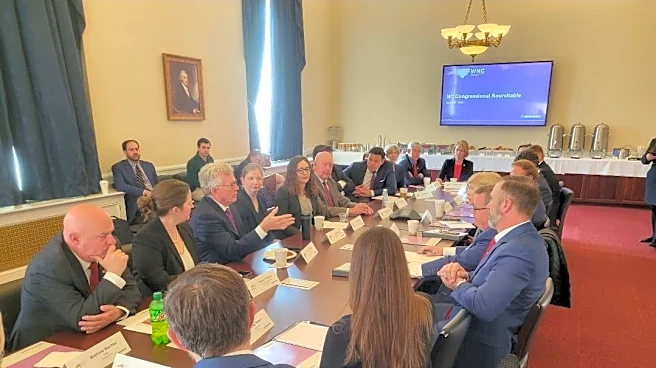
Sept. 27 marks two years since Helene killed 108 people in North Carolina and caused nearly $60 billion in damage and recovery needs. This summer I convened a listening session in Hickory Nut Gorge where residents of Bat Cave and Gerton sat down with state Rep. Eric Ager and me. What we heard was not a request for sympathy. It was a demand for accountability.
Helene was the costliest disaster in the United States in 2024 and the costliest natural disaster in North Carolina's history. The federal response has not matched its impact.
According to North Carolina's latest comprehensive accounting, as of June 30 the federal government had approved, allocated or awarded roughly $9.7 billion for Helene recovery, about 16% of the $59.6 billion in estimated damage and recovery needs. By comparison, federal aid ultimately covered roughly 78% of the damage from Hurricane Sandy and 73% from Hurricanes Katrina and Maria. Even Hurricane Florence, a far smaller disaster, drew a larger federal share.
The money is not entirely missing. Much of it is stuck. Congress appropriated roughly $110 billion in supplemental disaster assistance in December 2024, following Helene, Hurricane Milton and other disasters. But appropriating money in Washington is not the same as getting it to the people living with the damage. North Carolina has repeatedly asked federal agencies to release funding Congress already approved. In June, Gov. Josh Stein returned to Washington with a targeted request for about $10.2 billion in additional support for housing, infrastructure, small businesses and other categories with unmet needs. Congress has not acted on it.
The consequences of that gap are not theoretical. At current funding levels, the state estimates roughly 2,100 applicants will go unserved by its single-family housing program. Its private road and bridge program received more than 3,600 applications, and state emergency management officials said earlier this year the program could fund only about 10% of them. The state has since added money, but not nearly enough for the thousands of families still waiting.
For families in these mountains, a private bridge is not a luxury. It may be the only way an ambulance reaches the house, a child gets to school, or a family gets home.
And what has been rebuilt so far is fragile. Over Memorial Day weekend, Bearwallow Mountain Road, already inside a Helene work zone, took new damage when water eroded a temporary gravel section. Along Highway 74A near Bat Cave and Gerton, crews found a collapsed culvert more than 20 feet beneath the roadway and had to close the highway to replace it. Roads that had been made passable were damaged again, and families who had spent two years adapting to detours faced new closures with no clear end. In Gerton, the Upper Hickory Nut Gorge Community Center, a gathering place for generations, was damaged beyond repair and demolished last year. Residents are working to rebuild it while permanent road work throughout the gorge remains unfinished.
This is what an unfinished recovery looks like. Not a single catastrophe, but a community living one heavy rain away from losing access all over again.
All of which makes the debate now underway in Washington urgent. The FEMA Review Council has recommended shifting more responsibility for disaster response and recovery to states and local communities, guided by the principle that disaster response should be locally executed, state-managed and federally supported.
Those last two words are the whole question.
We already have evidence about which of those words Washington takes seriously. Last year, Homeland Security officials directed FEMA to plan for cutting its workforce roughly in half, from about 23,000 employees to 11,383. On Sept. 12, a federal judge ruled that directive unlawful, finding it violated protections Congress wrote after Hurricane Katrina to keep FEMA's staffing decisions with FEMA. The judge described the target as appearing "pulled from thin air." The cuts were never fully carried out, and the Review Council's final report dropped the 50% recommendation that appeared in its December draft. But the intent was documented. An agency being asked to do more for states cannot simultaneously be planning to operate at half strength.
There is real value in giving states and communities more control. They know their roads, their businesses and their neighborhoods better than Washington does. But state-managed cannot quietly become state-funded. North Carolina cannot absorb the cost of a nearly $60 billion disaster alone. More responsibility without matching resources will not rebuild a bridge, repair a home or keep a small business alive.
FEMA Administrator Cameron Hamilton recently visited North Carolina to see the recovery firsthand and meet with local leaders, including communities with projects that remain unfunded. That attention matters, but reorganizing an agency does not answer the question in front of us: where are the resources to finish the job?
Raleigh has work to do too. North Carolina should put substantially more behind private roads and bridges, create direct grants and forgivable loans for small businesses that cannot take on more debt, and make sure recovery dollars follow demonstrated need rather than population, visibility or tourism revenue. The state should build clearer pathways for communities like Bat Cave and Gerton that straddle jurisdictional lines, strengthen emergency communications, and give families one point of contact when they are caught between FEMA, state programs, insurance and local government. And when we rebuild, we should build stronger, so the next heavy rain does not wash away the progress.
But the largest share of the unmet need still sits in Washington. Recovery should not be measured by press releases. It should be measured by whether communities can function normally again, whether businesses can plan, whether infrastructure holds in the next storm, and whether families can stop bracing for the next crisis.
The people of Western North Carolina have already done their part. Volunteers hauled supplies, rebuilt homes, cleared roads and built bridges. Neighbors carried neighbors through the hardest days of their lives. A recovery can be locally led and state-managed, but after a disaster of this magnitude, it has to be federally supported.
Our resilience is something to honor. It is not a reason to leave us waiting.

Lynne Russo lives in Henderson County, where she has spent the past two years talking with residents and advocating for Helene recovery. She is a candidate for North Carolina House District 117.
This article originally appeared on Asheville Citizen Times: Opinion: Two years after Helene, federal recovery funds fall far short