









No matter where you were in the world, spring 2020 was a time of fear and uncertainty. The expanding COVID-19 pandemic prompted prevention measures that would have previously been unthinkable: closures of schools, restaurants, and even public lands like Great Smoky Mountains National Park. It was amid this backdrop that Frances Figart, creative services director for Smokies Life (then called Great Smoky Mountains Association), met with Marketing Coordinator Elly Wells for a brainstorming session. How could Smokies Life continue connecting people to the park when visiting was not allowed?
“At the time, George Ellison still had his Nature Journal column in the Asheville Citizen-Times, in which he shed light on various wonders of biodiversity from
his secluded cove several miles west of Bryson City, surrounded on three sides by the park,” Figart recalled. “But Parkinson’s disease was wreaking havoc on George’s ability to generate new material, and sometimes the paper had to rerun an older story.”
Perhaps, Wells suggested, Smokies Life could create its own column, honoring Ellison’s style of regional storytelling while continuing to inspire readers to connect with and care for the park. Figart loved the idea, and the Word from the Smokies column was born. The column first appeared in the Asheville Citizen-Times on April 5, 2020.

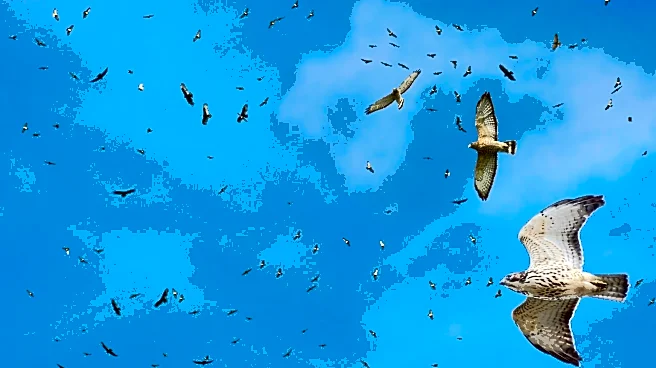
Over the past six years, Word from the Smokies has covered everything from bears and broad-winged hawks to sochan and salamanders. Now, some of Figart’s favorite pieces are collected in the newly released book Word from the Smokies: A Nature Reader.
“There’s a delight in the collection,” Wells said. “There’s this thread of celebration and engagement and interest in all of these pieces. They speak to a wide range of readers.”
Figart traces her love of both writing and wildlife back to her childhood in eastern Kentucky, where she grew up on the grounds of the summer camp her parents were tasked with tending. Her father, an associational missionary, also printed a monthly newsletter—called “Mountain News and Views,” it was delivered to all 31 Southern Baptist churches in his association—on a Heidelberg printing press.

“I remember I liked the authoritative first-person voice he struck in his column,” Figart said. “Back then, I was making books for my parents before I could even spell; I dictated the storylines to my mom. I have always loved words and always enjoyed writing columns for the various magazines I’ve edited.”
Launching Word from the Smokies just seemed like a “natural progression.”
For some stories in the book, Figart employs a first-person voice like the one she once admired in her father’s writing, sharing wildlife anecdotes from her backyard in East Tennessee or detailing how she formed her own perspective on issues like the importance of preventing wildlife deaths on roads. In others, the writing is more reporterly, bringing together nature experts and appreciators to help explain such mysteries as why bobcats are so rarely seen and what happens to box turtles when they’re relocated.
“It took me a few stabs at finding the ‘voice’ I wanted to use,” said Figart. “We didn’t want it to in any way compete with or replace George’s [Ellison] steady drumbeat exposition on nature. But we did want to bring the park into focus, through both its cultural and natural history.”

Since the column’s inception, Figart has authored more than 100 pieces exploring everything from the stories behind the Smokies’ grassy balds to historic building renovations to the amazing comeback of the northern river otter. These “all-encompassing, very packed little jewels of writing,” as Wells described them, offer insightful information, intriguing interviews, and invitations for readers to help protect the park’s unique natural resources.
Narrowing the list down to the smaller subset of stories in the book was made easier by the decision to focus the book on nature-centered topics. Figart gathered up her favorites and worked with her staff to whittle the contents down to 24 chapters. The stories were then re-edited to achieve the more timeless quality needed for a book, complete with updated facts and figures and, for most chapters, a brief section at the end offering the reader resources to learn more or to make a difference in preserving the wildlife featured in the story.

“These articles are not very complex; they’re written for anyone at pretty much a basic reading level,” Figart said. “What I really hope is that if readers can gain some new insight into critters, plants, or fungi through this simple book, then maybe they will share that and spread a greater appreciation for the biodiversity that really is our salvation if we are to continue to live on this planet.”
For Figart, the best part about writing Word from the Smokies has been hearing various perspectives and learning about new topics during interviews. But her favorite pieces have been stories that highlight her neighbors—owls, hawks, weasels, wild turkeys, bobcats, box turtles, and venomous snakes—on the six-acre mountain property where she resides with her husband, John Beaudet, who also gets the spotlight in a chapter featuring his wood carvings honoring black bears.
“I am proud to be able to share experts’ hopeful messages for protection and preservation of these animals that deeply inspire them,” Figart said.

Among the book’s 24 chapters is an exploration of the true nature of venomous snakes; a reflection on the awe-inspiring spectacle of the annual elk rut in the Smokies; and a story about the quest to learn more about the mysterious least weasel, which despite being the world’s smallest carnivore pound-for-pound has the strongest jaws of any North American predator.
Box turtles, bobcats, and bears all get their moment in the limelight, as do owls, spiders, and Russula mushrooms. The Cherokee tradition of harvesting sochan (also known as green-headed coneflower) is explained, and the impact of a burgeoning effort to keep wildlife safe on Southern Appalachian road crossings is explored.
“Taken individually, they teach us about distinct aspects of the living world of the Smokies, but like nature itself, taken all together, these Words show how interconnected the web of life is,” Wells writes in her foreword.

Six years after Figart penned the first Word from the Smokies, the column is still going strong and has expanded to include additional authors and topics, and to reach additional audiences. In addition to the Asheville Citizen-Times, Word from the Smokies’ appears regularly in the Beacon Tribune, Knoxville News Sentinel, Smoky Mountain Living Magazine, and Smoky Mountain News. Each Word also runs on the Smokies Life blog, Smokies LIVE.
“Word from the Smokies now reaches tens of thousands of readers weekly,” Figart said. “There is no doubt that working consistently on Word for several years has helped me nurture my own spirit as a creative nonfiction writer and science communicator.”

Word from the Smokies: A Nature Reader retails for $14.99 and is available in park bookstores and online at SmokiesLife.org/word-from-the-smokies-a-nature-reader. Sales of this and other items sold by Smokies Life help support the scientific, historical, and interpretive activities of Great Smoky Mountains National Park.
Holly Kays is the book’s editor and now the primary writer of Word from the Smokies columns. She is the lead writer for the 29,000-member Smokies Life, a nonprofit dedicated to supporting the park by providing educational products and services such as this column. Learn more at SmokiesLife.org, or reach the author at hollyk@smokieslife.org.
This article originally appeared on Asheville Citizen Times: Word from the Smokies: New book collects wonders of the Smokies for nature lovers