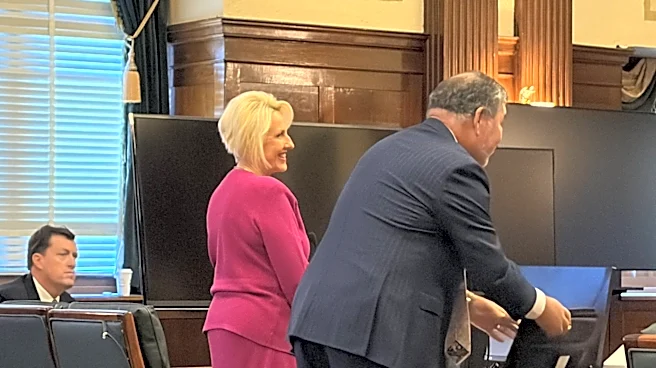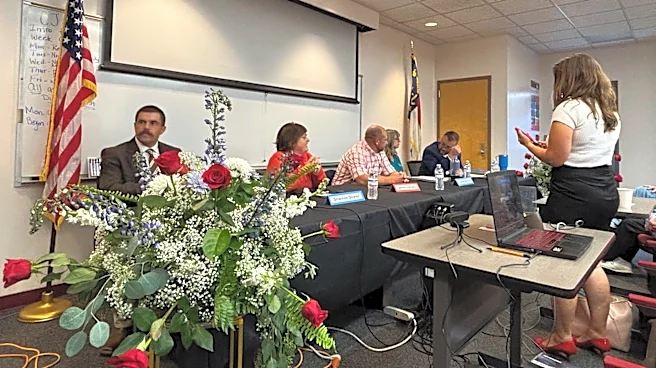




MARSHALL - Roughly one month before the November election, the Madison County Board of Commissioners candidates spoke in a forum on taxes and the specific needs of residents in towns versus those in rural communities.
The five candidates — Bill Briggs, Shannon Dowler, Jeremy Hensley, Connie Molland and Alan Wyatt — fielded questions from Sarah Scully, a local reporter with WNC Grassroots Media who served as moderator of the Sept. 22 forum, organized by the Madison County Chamber of Commerce and hosted by AB Tech's Madison campus in Marshall.
Briggs; Hensley, the commission's current vice chair; and Wyatt, a current commissioner, are Republicans. Briggs, 37, owns a property maintenance company specializing in pressure washing and lives in Mars
Hill. Hensley, 47, has been a Verizon service technician for 20 years. Wyatt, 50, is a sales representative for L&W Supply in Arden. He is a firefighter with Ebbs Chapel Volunteer Fire Department, and president of the county firefighters association.
Both Hensley and Wyatt live in Mars Hill and have served as commissioners since 2022.
Dowler and Molland are Democrats. Dowler, a family physician and health policy consultant, is in her second term on the Madison County Board of Health. Molland owns Flow Gallery in Marshall and has been active with the Downtown Marshall Association and Rotary Club of Madison County for years. She was named the Rotary Club's first district governor in 2024.
Mark Snelson, another Democrat, did not participate in the forum. Snelson served on the board from 2018 to 2022 and served as the board's chair in his final year. He is director of the county emergency medical services, where he has worked since 1990.
The three top vote-getters will win seats on the board.

Taxes
The candidates made introductory and closing statements, and addressed six topics: the economy, taxes, the question of resources for towns versus rural communities, accountability to the residents, the county's youth, and their personal top issues.
One of the questions pertained to taxes:
"Property taxes are a major concern for many residents. How would you approach balancing needed services with keeping taxes affordable?"
Molland said taxes are the issue she hears most when out talking with residents in the community.
"What I do know is that North Carolina law requires our county to provide and fund the following core services: public schools, law enforcement and jails, social services, public and mental health, emergency medical services, and records and administration," Molland said. She also noted that roughly 70% of the county's 2026-27 budget of nearly $35 million is sourced from property taxes and sales tax revenue, while the remainder is sourced from governmental and organizational grant funding.
"The role of the county commission on the expense side is to help our county departments work as efficiently and effectively as possible, ensuring that their budgets are spent as wisely."
Wyatt and Hensley pointed to Madison County having the 10th-lowest tax rate in the state.
"This is all while giving our departments a pay raise, and plus we have gotten the minimum wage from $8 to $15 now," Wyatt said, adding that the county's most recent property revaluation has contributed to spikes in home values. "What we can do as commissioners is lower that tax rate and be good stewards of that tax money and not waste it."
Briggs said with prices on the rise since 2020, land value has been on the rise in Madison County as well. He commended the current commission board, which includes his father, Bill Briggs, for reducing the tax rate from 50 cents per $100 valuation in its last revaluation cycle in 2024, to the current 36 cents per $100 valuation.
"When that comes up again, and it will, we'll keep looking and keep it as low as possible so it saves everybody money," Briggs said.
Dowler said taxes are "a tough one," as they support critical work of the government, including the health department, emergency services, education and collection centers.
"We've got to work smarter, and not harder," Dowler said, adding that she felt residents were concerned about potential tax increases to help fund the new Public Service Complex.
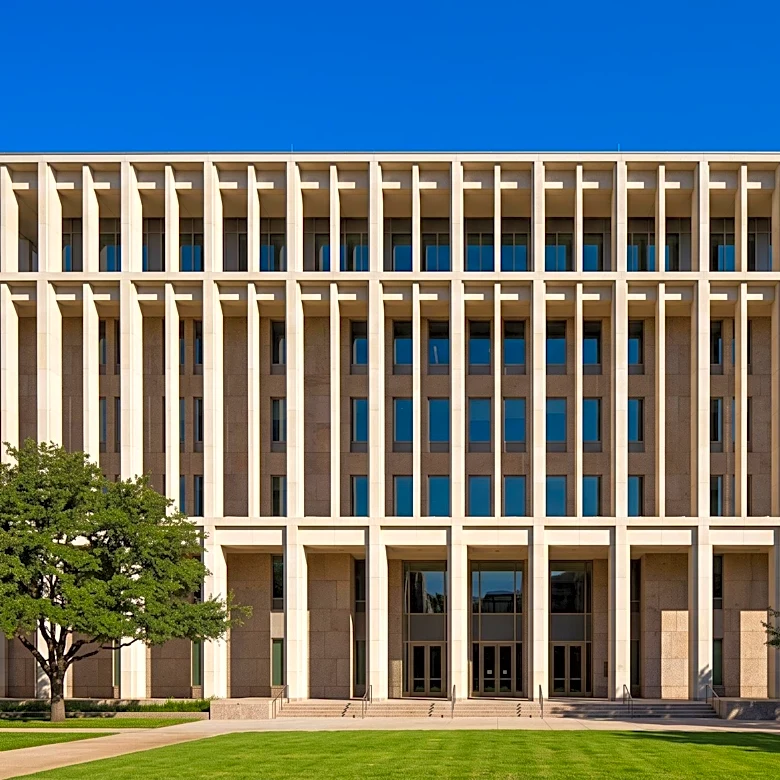
The 80,000-square-foot facility broke ground in July and will include a judicial center at 500 Medical Park Drive in the field behind the health department in Marshall. It will consolidate governmental, social and judicial services into a single facility, including Department of Social Services, clerk of court, inspection, child support, county administration, information technology, as well as county offices such as register of deeds, zoning and planning, board of elections and a commissioner meeting space.
"My commitment to you is to hear you, to listen to you, to get your feedback and your input before I make decisions that are going to take money out of your wallet."
Hensley said it's important to be good stewards with the taxpayers' money, but added that there are challenges particular to Madison County, including 72,000 acres of federal land, which is not taxed.
"At $13,000 an acre, you're looking at over $1 billion in revenue. We could lower the tax rate 8 cents if we had collected those taxes," Hensley said. "But also, we need to do better as citizens buying in the county, and shopping local. If you can wait on something, buy it online, because we get those taxes when you buy something from Amazon."
According to Hensley, the county received $60,000 in August as part of its quarter-cent sales tax referendum to help fund local schools.
"That's $24 million that citizens spent in this county. So, continue to buy local and continue to shop online instead of giving our sales tax money to Buncombe County," Hensley said.
Needs for towns versus rural communities
Candidates were also asked about differentiating between and meeting the needs of towns versus rural communities.
"What do you believe is the biggest difference between the needs for a town — like Marshall, Mars Hill and Hot Springs — and the needs of our more rural communities?"
Wyatt pointed to Madison County's large landmass, adding that from his home near Interstate 26 Exit 3 for Wolf Laurel, he can reach the South Carolina border quicker than Spring Creek, on the other side of Madison County.
"We have to build upon our community centers and make them a hub, and continue to support the towns we have," Wyatt said. "I live outside of the community for a reason: I don't like the streetlights. I don't want to live in town. A lot of people that live in the outside communities choose to be there."
Briggs said residents living in rural areas because they love the peace.
"We've got a challenge: our terrain. Everything's a challenge for Madison County," Briggs said. "I think that the commissioners that are there now have looked over and helped each town. I just want to continue doing that so we can build on that and help them as they need."
Dowler referenced her campaign theme, "Madison Matters," and said she felt there is a tension between the towns and the more rural areas. She said the rural parts of the county are just as important as its towns, and have different needs.
"One of the things that I learned quickly here was how valuable the community centers are in some of our rural areas," Dowler said. "We have incredible resources in our community centers: senior sites where we can provide food and meals and we even deliver to the homes. There are educational and fellowship opportunities. But those community centers need support, and they have different levels of support."
In Hensley's view, there is a big difference between city life and rural life.
"It seems like people that live out in 'the country,' as you'd call it, they're pretty much self-supporting," Hensley said. "City life and rural life is different. I live out in the country, and I wouldn't have it any other way. I don't know what a need in the city life is, because I don't live there. But out in the rural, I don't need anything. I rely on myself. I was taught personal responsibility at a young age."
Molland said one of the big differences between rural communities and towns is the lack of infrastructure.
"I talked to somebody (Sept. 21) and she was complaining about not having cell service on the other side of Hot Springs," Molland said. "It really is a problem. When you start driving out there, you cannot call someone. You can't even pull up directions."
Johnny Casey is the Madison County communities reporter for The Citizen Times and The News-Record & Sentinel. He can be reached at 828-210-6074 or jcasey@citizentimes.com.
This article originally appeared on Asheville Citizen Times: Taxes, rural needs discussed in Madison commissioner candidates forum