







Asheville leaders have recently floated the concept of “microtransit,” the use of smaller, on-demand vehicles similar to taxis or rideshares, as a solution for the city bus system's challenges.
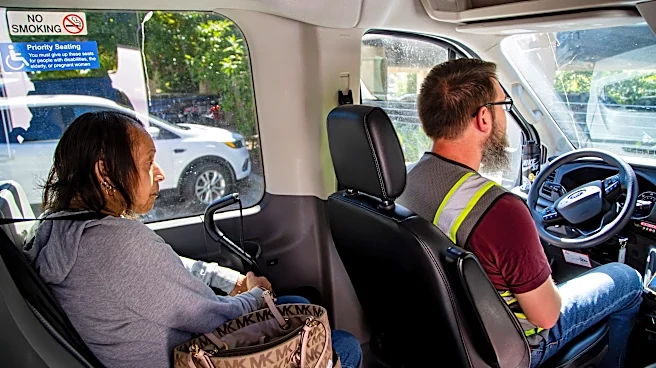
Some have pointed to Buncombe County’s Mountain Mobility, which operates a fleet of vans providing door-to-door service, as a possible partner.
But as Asheville wrestles with questions of routes and coverage, Buncombe’s transportation service faces its own challenge: a lack of drivers. Transit advocates and Mountain Mobility riders, many of whom have disabilities or are older adults, say the county can do more to make its system work as promised.
William High, Buncombe’s lead transportation planner, said Mountain Mobility was operating 42 vehicles with 27
full-time and nine part-time drivers as of August. He said the county’s contract with RATP Dev USA — the same company that Asheville uses to operate its buses — calls for 35 full-time and 14 part-time drivers. That means staffing is 27% below the contracted level.
“It is the responsibility of the operating contractor to make efforts to hire and retain employees,” High wrote in an emailed response to questions from the Citizen Times. Representatives of RATP Dev did not respond to a request for comment.
Retention goals not met, but no penalties issued

Buncombe’s contract with RATP Dev, first signed in 2020 and renewed by county staff in June, doesn't allow the county to penalize the contractor for understaffing. It does include penalties tied to missing staff retention goals, which High confirmed had been triggered last fiscal year.
Of Mountain Mobility drivers employed in July 2025, 41% had quit the system by June 2026. For the period from January through June, turnover was 60.8%. However, Buncombe chose not to enforce those consequences for poor retention.
"The purpose of penalties is to correct poor performance of the operating contract. Examples of poor performance include situations in which trip demand cannot be met, vehicle accidents increase, or efficiency measures (example: on-time performance) suffer," High wrote. "The county noticed the operating contractor of the intent to implement this penalty in the current year to promote staffing stabilization and ultimately improved service."
According to High, Mountain Mobility's average monthly on-time performance from July 2025 through June was 94.62% — below Buncombe's target of 95%, but better than several years over the past decade. The county defines timeliness by the percentage of passengers dropped off and picked up within 15 minutes of their scheduled time.
Eva Reynolds, the associate director of the nonprofit Disability Partners and chair of a county board that advises staff about transportation, said Mountain Mobility has worked hard to keep up service despite its shortages. She noted that the system's general manager has even jumped in to operate buses when regular drivers have called out sick.
Compared to the situation in rural Western North Carolina counties like Jackson and Madison, Reynolds added, Buncombe's service for elderly residents and people with disabilities remains much more robust. But she said that some riders do complain about lengthy waits for rides to vital needs like medical appointments or grocery shopping.
And Elizabeth Williams, executive director of the nonprofit Mountain Aging Partners, placed Mountain Mobility's issues in the broader context of the region's challenges.
"Western North Carolina is experiencing an unprecedented demographic shift. As the population ages, demand for transportation, health care, caregiving, housing and other supports continues to increase," Williams wrote in a statement to the Citizen Times. "This is not just an aging issue; it is also a workforce and funding issue. Addressing these challenges will require long-term planning and investment to ensure older adults can remain active, connected, and supported in their communities."
Should Mountain Mobility drivers earn more?
For Gino Perez, the solution is obvious: Pay drivers more. Perez is executive director of Better Together Transportation, a nonprofit ride service in Buncombe County, and serves on the WNC Initiative for Supportive Housing and Transportation, an advisory group on aging residents’ needs organized by the Land of Sky Regional Council.
Many of Perez's clients have raised issues with Mountain Mobility, he said, with complaints becoming more frequent in recent months. He pointed to Buncombe data showing that on-time-performance was below the county's goal nine months out of 12 in the most recent fiscal year, compared to just four months in fiscal year 2024-25. County penalties on RATP Dev for late performance more than doubled over the same period.
Perez noted that the advertised starting pay for Mountain Mobility drivers is $18 per hour, substantially less than either the Just Economics living wage rate of $24.10 or the $25.25 starting rate for Asheville bus drivers. While Asheville’s system struggled with hiring last year, he said, it’s been fully staffed since pay went up and RATP Dev focused on recruitment.

Perez said Mountain Mobility’s wages need to match the value its drivers provide — not just as vehicle operators, but as companions and assistants to some of Buncombe’s most vulnerable residents. Over his own years providing transit for older people and those with disabilities, he said, he’s realized that at the heart of the work is community care.
“It’s not just a physical task of driving. You’re dealing with people that are constantly dying, getting sick, and you fall in love with them,” he said. “You consider that, and you plan for that, and you pay the people.”
Reynolds, the chair of Buncombe’s Community Transportation Advisory Board, agrees. "The answer to all this is money," she told the Citizen Times, saying that state and federal government support for service providers hadn't kept up with the area's cost of living.
High noted that Buncombe had approved a driver wage increase as part of its latest contract renewal. The starting rate listed in the original contract for the current fiscal year was $15.33. He also wrote that the county was striving to boost Mountain Mobility’s efficiency through technological improvements like new scheduling software.
Daniel Walton is the city government watchdog reporter for the Asheville Citizen Times. Email him at dwalton@gannett.com.
This article originally appeared on Asheville Citizen Times: Staffing shortfalls challenge Buncombe County's transportation system