







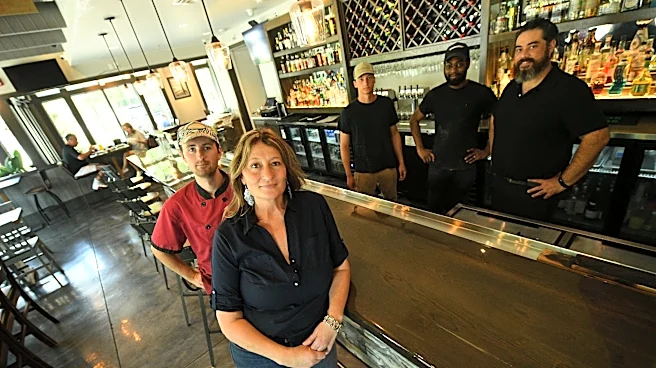
ASHEVILLE - Jess Shepard Joudry wants Western North Carolina to see recovery, not simply the crisis that can precede it.
Joudry, a board member of the WNC Recovery Community Collaborative and community liaison for the Carolina Center for Behavioral Health, has worked in the region’s behavioral health and substance use field for more than a decade. On Sept. 3, she and a volunteer committee will bring the collaborative’s second annual recovery rally to Pack Square Park in downtown Asheville from 2 to 7 p.m.

The event falls during National Recovery Month. Organizers expect more than 100 exhibitors, along with music on two stages, speakers and two panel discussions. One panel will feature healthcare and community providers. Another will bring together
people representing multiple pathways of recovery.
The idea grew out of conversations among collaborative members about creating an event that would celebrate recovery in the region.
“We talk so much about the problem, which is obviously incredibly important,” Joudry told the Citizen Times Aug. 28. “All those stories matter, but that's not the whole story.”
Last year’s inaugural rally drew about 550 people and more than 60 sponsors after roughly 90 days of planning. This year, organizers have spent about a year preparing and assembled a volunteer committee of more than 20 people. Churches, treatment providers, public agencies and other community organizations are among those supporting or participating in the event.

The rally also serves as a fundraiser for the WNC Recovery Community Collaborative, a recently formalized nonprofit working across the region. The organization is focused on strengthening local recovery networks, improving access to care and resources, supporting sober living initiatives and helping communities develop sustainable recovery ecosystems.
Money raised at the rally will be reinvested in that work. Among the ideas under consideration are centralized resource navigation that could make services easier to find and efforts to help recovery residences adopt recognized best practices. Joudry said the collaborative also wants to help counties with fewer resources learn from places such as Buncombe County, where a larger network of recovery services already exists.
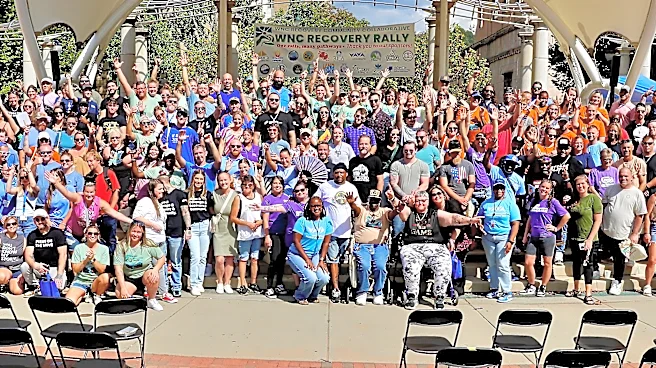
Organizers also plan to repeat one of last year’s most visible features, a large group photograph of attendees who identify as being in recovery from mental health or substance use challenges.
Joudry said she hopes the photograph grows large enough in future years that organizers need a drone to capture everyone.

“For the general public, this is a picture of what recovery looks like — they’re not the people on the side of the street; they are members of our community,” Joudry said. “Recovery is not rare or distant. It's actually happening all around us.”
From punishment to recovery
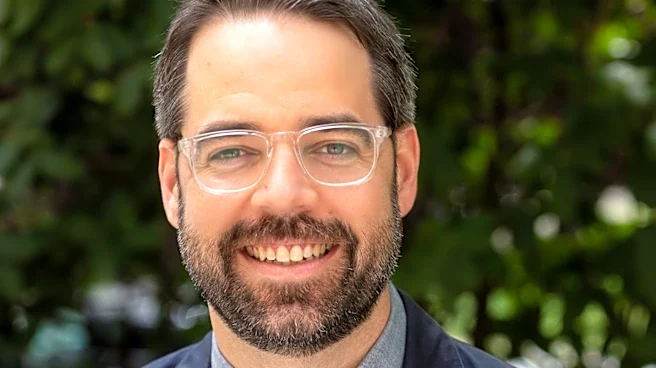
Rep. Eric Ager, D-Buncombe, is among the elected officials supporting the rally. A Navy veteran himself, Ager serves on the board of the Veterans Treatment Court Foundation and said his interest in recovery policy grew from seeing substance use problems among military families, in Buncombe County and through his work in the General Assembly.
His experience with veterans treatment courts has given him a close look at what can happen when the criminal justice system couples accountability with efforts to address substance use.

“Our traditional approach has been to put people in jail and then hope for the best when they get out, but that doesn't tend to pay off very well,” Ager said.
Ager described the General Assembly’s response to substance use and behavioral health as piecemeal. He credited lawmakers with some worthwhile efforts and said the issue can attract bipartisan support, but criticized the use of substance use concerns to advance what he called “really draconian laws.” He said punitive approaches used historically at both the federal and state levels have failed to solve underlying problems and, in some cases, made them worse.
He sees recovery courts as an area where the state could adopt a more systematic approach. Ager supports establishing veterans treatment courts throughout North Carolina’s court system and said there is an argument for funding other recovery courts more broadly.
The General Assembly has begun to recognize some of the state’s behavioral health challenges and has directed money toward them, Ager said. Veterans treatment courts may be somewhat easier to advance politically because of the population they serve, he said, but the same basic approach could benefit people outside the veteran community.

Ager acknowledged that expanding those programs would require an initial investment from the state.
“Like a lot of things that we do in the General Assembly, it will cost some money up front, but will save us a lot of money down the line,” Ager said.
Beyond the potential savings, Ager said the larger benefit comes from helping people leave the criminal justice system, regain stability and become productive members of their communities. Building enough bipartisan support to make those programs more widely available, he said, is the next challenge for lawmakers.
Cory Vaillancourt is the Helene Recovery/Investigations Reporter for the Asheville Citizen Times. Find him on X at @The_CoryV or on Signal, via email at cvaillancourt@citizentimes.com or at 912-508-5640.
This article originally appeared on Asheville Citizen Times: Asheville recovery rally celebrates paths beyond crisis