








ASHEVILLE - It’s a $1.4 billion industry dependent on a complex mix of conditions that keep trout alive, anglers casting and money flowing through North Carolina — cold water, shaded banks, stable streambeds and bugs small enough to disappear under a thumbnail.
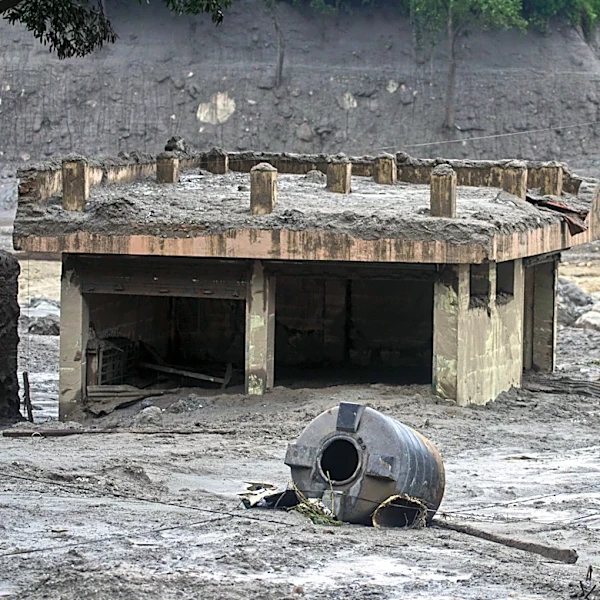
It is also a recipe that does not take kindly to a wall of muddy water. On Sept. 27, 2024, Tropical Storm Helene put that recipe in a blender. Nearly two years later, trout are still swimming and anglers are still angling, but the streams, the businesses and the tiny aquatic insects that keep Western North Carolina’s fishing economy afloat are still fighting to find a new equilibrium.
“These streams, these fish — they're woven into the fabric of Western North Carolina,” said Jacob Rash,
a program director for Trout Unlimited’s Southern Appalachians region. “They're really important for a lot of reasons. A lot of people depend on them.”
The current
Forrest Dorsey has watched that adjustment from both sides of the counter at Hunter Banks, an Asheville fly shop that has been in business since 1985. Dorsey relocated to the area seven years ago, starting in sales before moving into marketing, guiding and eventually ownership. He has been a co-owner for three years.
Helene arrived just as Hunter Banks was entering its busiest retail stretch. The shop closed for six to eight weeks after the storm, washing out what Dorsey described as a season that had been headed toward a record year.
“We lost all the retail sales, we lost all the guide trips,” Dorsey told the Citizen Times Aug. 21.

The timing matters because spring and fall bring a heavy tourism component to the business. In October and November, Dorsey estimates Hunter Banks’ customers can be roughly split between locals and visitors. Business has slowly improved, he said, but remains below where it stood before Helene.
The more complicated concern lies beneath the surface. Dorsey said floodwaters widened some streams, moved boulders and gravel, stripped arboreal cover and vegetation from banks and altered shaded areas and riffles. Sediment buried sections of streambed, along with mayflies, caddisflies and stoneflies that trout eat and fly anglers attempt to imitate.

For trout, that is not merely a bug problem. The same upheaval changes feeding patterns, shelter, water temperature and the physical structure of habitat. Hatches can become less predictable, Dorsey said, leaving anglers and businesses waiting to see how the system settles over several seasons.

Bugs bounce back
Matt Green spends his working life looking at exactly those tiny pieces of the puzzle. Green is a benthic biologist with the North Carolina Department of Environmental Quality’s Division of Water Resources, where biological communities, including aquatic insects, are used to assess the health of rivers and streams.
DEQ sampling conducted in December 2024 and January 2025 found that even many streams heavily damaged by Helene retained much of their expected aquatic insect diversity. A stream where researchers might normally find 30 or 40 different kinds of insects could instead have 22 or 23, Green said. Researchers found considerably more diversity than expected in Spring Creek in Hot Springs, while some Upper Catawba tributaries, including Buck Creek near Lake Tahoma, showed steeper declines.
When researchers returned to many of the same waters in spring and summer 2025, biological ratings had largely returned to levels expected in years without a major storm.

“I don't think a lot of folks realize how resilient some of these aquatic insect populations are,” Green told the Citizen Times Aug. 25. “It is incredible to me in the decade and a half that I've been doing this of how resilient these bugs are.”
Many aquatic insects can retreat deep into wetted gravel beneath the streambed during high-flow events, Green said, then reproduce and recolonize relatively quickly. Abundance was lower in some streams during the first year after Helene, potentially reducing food available to trout, but Green said that effect has largely faded.
The more persistent problem, Green said, is habitat. Floodwaters displaced established trout populations and removed logjams, pools and other features fish use for shelter. Some trout were pushed far downstream, sometimes into less suitable habitat or below newly altered barriers that can make returning difficult. Green called habitat degradation and displacement the storm’s “legacy problem,” one that could require years of restoration work.

The catch
Jacob Rash has spent more than two decades working on that problem. Before recently joining Trout Unlimited as a program director for its Southern Appalachians region, Rash spent more than 20 years with the North Carolina Wildlife Resources Commission working on trout research and applied research. His Trout Unlimited territory now covers North Carolina, South Carolina, Georgia and Tennessee.
Trout Unlimited works with government agencies, nonprofits and local communities on stream restoration. Rash said that can mean replacing failed stream crossings, stabilizing eroding banks that dump sediment into waterways and planting trees and shrubs along streams to restore shade. The goal is basic but unforgiving. Trout need clean, cold water, and once suitable habitat returns, Rash said the fish have a chance to follow.

The economic stakes are difficult to overstate. A July 2023 Wildlife Resources Commission report estimated nearly 370,000 people fished for trout in North Carolina in 2022, including about 48,000 anglers from outside the state. Together, they spent 4.6 million days trout fishing and took an average of nine trips apiece. About 72% of trip-related spending occurred near the angler’s typical fishing site.
Tourists also opened their wallets wider. Anglers traveling more than 20 miles spent an average of $276 per trip, compared with $112 for local anglers, with the largest differences coming from lodging and gasoline. Statewide, anglers spent about $588 million on trout trips and another $771 million on equipment.
All told, the report calculated a $1.38 billion economic impact, supporting nearly 12,000 full- and part-time jobs, including at shops like Hunter Banks. Every dollar spent on trout fishing generated an estimated $1.93 for the state economy. Guide and charter fees alone accounted for more than $50 million in trip spending.

The report predates Helene and does not measure post-storm trout populations. What Rash sees, however, is hardiness. Some areas suffered an initial drop, he said, but fish are responding as habitat stabilizes and restoration proceeds.
“As bad as Helene was, it's encouraging to see the collective group of folks pulling together to help the region and to help these fish,” Rash told the Citizen Times Aug. 27.
That work leaves the region with something more useful than a fish story — cautious optimism that the resource and the industry built around it will keep swimming in the right direction.
Cory Vaillancourt is the Helene Recovery/Investigations Reporter for the Asheville Citizen Times. Find him on X at @The_CoryV or on Signal, via email at cvaillancourt@citizentimes.com or at 912-508-5640.
This article originally appeared on Asheville Citizen Times: Helene reshaped WNC trout streams. A $1.4 billion industry still feels it