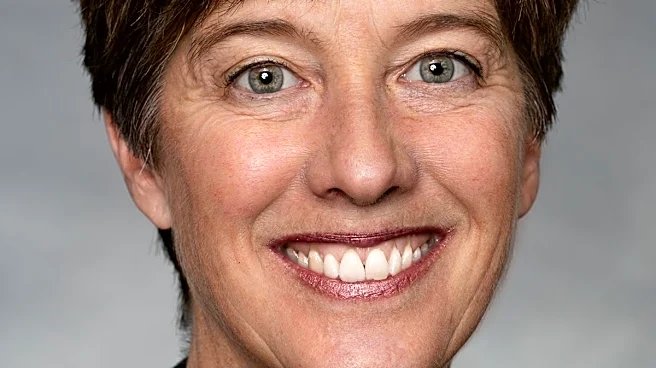

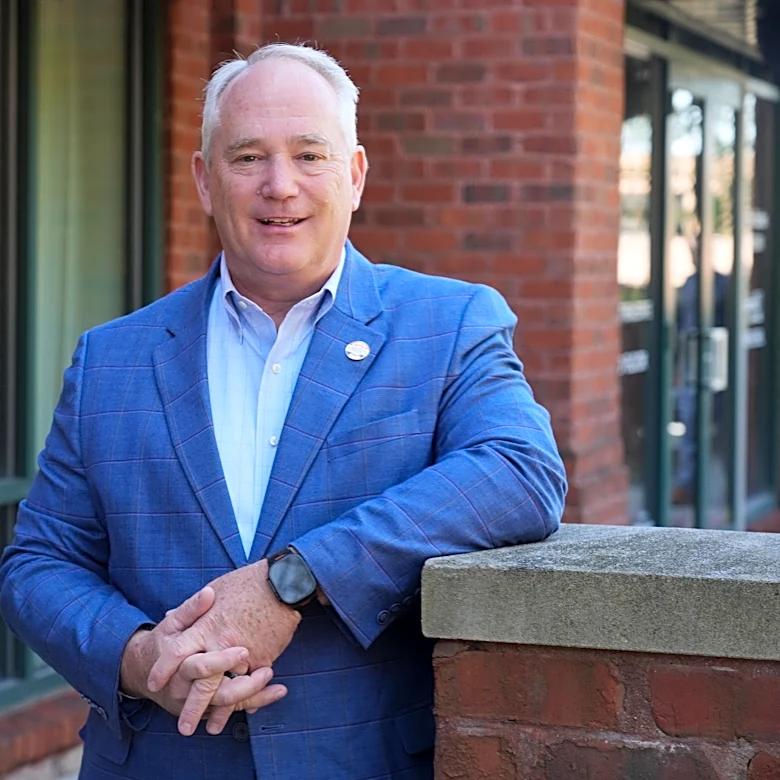



ASHEVILLE - Julie Mayfield has the advantage. CJ Domingo wants to change the direction.
Mayfield, a Democrat seeking another term in North Carolina Senate District 49, faces Republican Domingo in a Buncombe County district that performed at 64.8% for Democrats from 2016 through 2022, according to nonpartisan political mapping website davesredistricting.org.
Their contest pits an experienced legislator and former Asheville City Council member — Mayfield — against an Asheville native making the case that state government needs to focus more aggressively on affordability, local ownership and the economic changes he expects artificial intelligence to bring.
Mayfield moved to Asheville in 2008 after practicing law in Atlanta and working in environmental
advocacy. She led the Western North Carolina Alliance, now MountainTrue, before winning an Asheville City Council seat in 2015. She was first elected to the Senate in 2020.

Domingo was born and raised in Asheville, graduated from Asheville High School and UNC Asheville and has a bachelor's degree in microbiology. He previously worked for the city of Asheville and is now operations manager for Champion Homes, a manufactured housing company.
Asked why voters should replace Mayfield, Domingo said he wants the district represented by someone more directly connected to residents struggling with the region's cost of living.
“I feel like we need representation from somebody who is on the ground, taking hits on the chin like everybody else, and is thinking about what we can do to make our troubles less hurtful to our neighbors, to our friends, to our family, to everybody else in Buncombe,” Domingo said.
Property taxes and affordability divide Senate District 49 candidates
The candidates diverge sharply over a proposed constitutional amendment that would give the General Assembly explicit authority to limit local property tax rates set by local governments.
Mayfield opposes the proposal, arguing the amendment is primarily intended to motivate Republican voters.
“The legislature already has the authority to regulate property tax and levy limits,” Mayfield said of the Republican-led General Assembly. “We could pass a bill. We could have passed a bill last session. We didn't, and so you have to ask why.”

Domingo has not decided how he will vote on the measure. He said the lack of details about what lawmakers would do if the amendment passes makes him wary of committing either way.
On affordability, Mayfield said lawmakers should attack both sides of the household ledger by increasing income and reducing expenses. She supports raising the minimum wage, restoring state earned income and child tax credits and increasing state support for housing. She also wants lawmakers to revisit property tax relief programs such as the homestead exemption, saying eligibility requirements and benefit levels have failed to keep pace with housing costs.
Domingo believes government responses can become too broad and cited Buncombe County's property tax increase as harmful to residents on fixed incomes. He wants more state support directed toward locally owned businesses, arguing that money spent with large corporations is more likely to leave the region.
Housing is another priority for both candidates.
Domingo supports removing barriers to manufactured housing and allowing more duplexes, quadruplexes, cottage courts and other “missing middle” housing. He also proposed helping homeowners convert larger houses into multiple units.
Mayfield supports statewide land-use changes intended to increase supply but said additional construction alone will not reach lower-income households.
“If you're talking about truly affordable housing for people who are at say 120% area median income or below, and certainly if you're talking about people at 60% or 80% AMI and below, that requires government subsidy,” Mayfield said.
Helene recovery remains central in Buncombe County
Two years after Tropical Storm Helene, both candidates say the state still has work to do.
Domingo said lawmakers should continue funding repairs but also begin deciding which damaged places can realistically be restored and where recovery money should instead create something new. He said the region should not measure success solely by how closely it recreates conditions before September 2024.
“I want to figure out what can we do to make us happy and proud of the choices that we made two years from now,” Domingo said. “What will make us look back and say, ‘That was the right decision?’”

Mayfield said WNC remains caught between unmet needs and insufficient state and federal funding. She identified housing and private roads and bridges as two areas where more state money could make an immediate difference without some of the restrictions attached to federal programs.
She pointed to residents who missed application deadlines or fell through gaps between programs, including an Asheville neighborhood facing a roughly $1 million road repair after a landslide and an elderly Yancey County woman living in a storm-damaged trailer.
“She's just fallen through the cracks, and that just kills me,” Mayfield said of the Yancey County resident. “I have to wonder how many other dozens or hundreds — hopefully it's not thousands of people — are like her, and they've just fallen through the cracks.”
Mayfield, Domingo differ on opportunity scholarships
The state's expandedOpportunity Scholarship program also divides the candidates.
Mayfield said she would not eliminate the program but would return it closer to its original form by imposing income limits and barring families already paying private-school tuition from receiving the taxpayer-funded scholarships. She also supports stronger standards for participating schools and teachers.
Domingo described the scholarship program as a response to years of frustration among parents who believe public schools have not met their children's needs.
He stopped short of calling for expansion or repeal and instead suggested voters should have a referendum on the program's direction. If the state continues spending public money on private education, Domingo said, those schools should face greater transparency and independent performance testing.
“If the taxpayers are paying for this, then we should check in on them,” Domingo said.
Data centers and Flock cameras expose policy differences
Both candidates see a role for state government in policing emerging technology, but they differ on how far it should go.
Domingo supports a statewide moratorium on new data centers, saying rapid construction is competing for electrical infrastructure needed by growing communities and for storm resilience.
“I think it is prudent for us to have a statewide moratorium specifically to protect these communities until after we get a better handle on where AI is going to fit into our economy, and how many centers we actually need,” Domingo said.
Mayfield does not support a statewide moratorium but wants minimum state standards requiring developers to disclose expected water use, energy consumption and noise impacts. Her larger concern is who pays for new electrical generation and transmission infrastructure.
“Absolutely no cross-subsidization of new energy infrastructure to support data centers,” Mayfield said, arguing residential and existing business customers should not shoulder those costs.

The candidates also see value in automated license plate readers such as Flock cameras while raising different concerns about their use.
Mayfield called them an important law enforcement tool but said agencies need stronger safeguards against officers misusing searches for personal reasons. She also opposes local law enforcement data being shared for federal immigration enforcement.
Domingo's concerns extend to the private companies operating surveillance systems and the data they collect. He said local communities should control such systems and retain the information themselves rather than allowing technology companies to use it for their own purposes.
“While I believe in public safety, I think that the community should own those solutions, and I think that all that data should stay here,” Domingo said.

Mayfield acknowledged national political conditions could help Democrats elsewhere in North Carolina but said her race is unlikely to turn on them. Domingo is also concerned about national Republicans but said Buncombe County voters have a history of making their own judgments.
“I hope voters see me for who I am,” Domingo said, “which is a person who has always loved Asheville and loved Buncombe County.”
Cory Vaillancourt is the Helene Recovery/Investigations Reporter for the Asheville Citizen Times. Find him on X at @The_CoryV or on Signal, via email at cvaillancourt@citizentimes.com or at 912-508-5640.
This article originally appeared on Asheville Citizen Times: Mayfield, Domingo split on housing, Helene recovery