
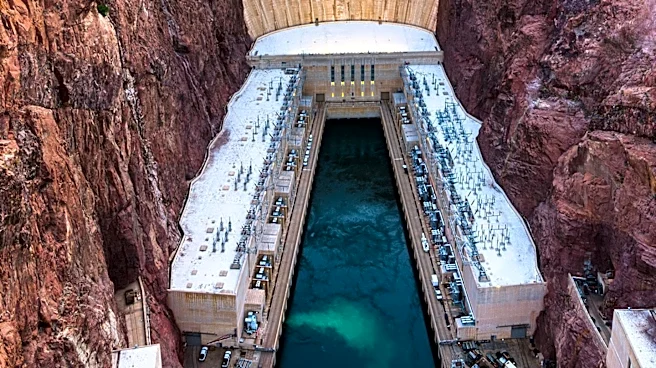
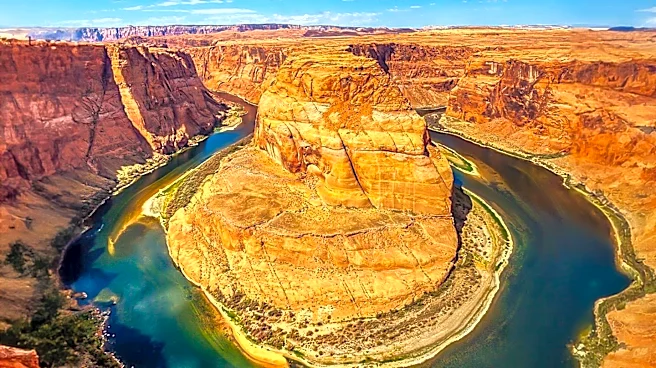
Nevada has sued to block a new federal plan for reducing Southwestern water deliveries from the Colorado River, arguing it unfairly jeopardizes the Las Vegas economy.
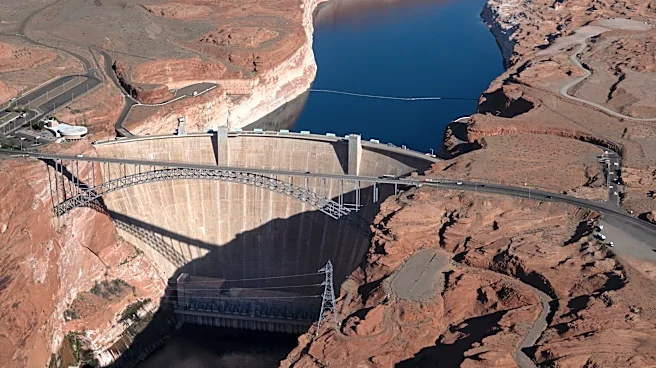
The state, the Colorado River Commission of Nevada and the Southern Nevada Water Authority seek to block the U.S. Interior Department’s imposition of a shortage framework reducing deliveries out of Lake Mead. They filed suit in federal district court in Nevada on Aug. 24, three days after Interior Secretary Doug Burgum signed the plan to restrict water use in Arizona, California and Nevada, collectively known as the Lower Basin states.
“The Department of the Interior can’t roll Nevada and solve the entire Colorado River shortage on the backs of the Lower Basin states,” Nevada Gov.
Joe Lombardo said in a statement. “We’ve already shown that we’re willing to do our part, but the Colorado River is a shared resource, so the solution needs to involve everybody. Until that happens, we are prepared to fight for as long as it takes.”
Interior officials did not immediately comment on the suit.
Arizona officials have said they retain the right to sue at any time, both over the new shortage guidelines that Nevada is challenging and over the likelihood that reductions in flows from the Upper Basin will soon cause flows to the Lower Basin to drop below what the Colorado River Compact promises. But state water officials had no immediate response to Nevada’s lawsuit.
“We are evaluating Nevada’s complaint and are working on a proper course of action moving forward,” Arizona Department of Water Resources spokesperson Shauna Evans told The Arizona Republic.
Plan 'unfairly punishes' Las Vegas
The plan that Interior released takes 1.25 million acre-feet a year from the Lower Basin for the next two years, though that isn’t the real point of contention. The three states had offered to absorb those cuts for two years. Instead, the issue is the 10-year framework that the government adopted, which will allow it to more than double those cuts in future years if drought continues to push reservoir storage lower.
Nevada is arguing that the level of cuts proposed “draconian,” and is inappropriate when Interior is not forcing Upper Basin states to make new, mandatory cuts that could help arrest the decline. While a Supreme Court precedent makes clear Interior’s authority to act as “water master” in the Lower Basin states that draw from Lake Mead, no such precedent exists above the big dams, and the government’s new plan did not assert one.
The result is a system that unfairly punishes Las Vegas residents who have worked to conserve water, Nevada officials say.
“Over the past 25 years, southern Nevada has become a global leader in water efficiency, reducing our Colorado River consumption by about 40 percent even as the community added 800,000-plus residents, so we have clearly demonstrated our ability to adapt and do more with less,” Southern Nevada Water Authority General Manager John Entsminger said in a statement. “However, conservation has its limits, and there is just no way to meet even the basic needs of this community with the volume of water Interior has proposed.”
Worst-case cuts could empty CAP Canal
Water use in the Colorado River Basin is out of balance with what the river has supplied in recent decades, a problem that has led the seven states that use the river into years of negotiations that have not resulted in an agreement to cut back. Instead, the federal government is reducing deliveries to the Lower Basin and seeking voluntary conservation in the Upper Basin.
A majority of the water is used in the Lower Basin, and a majority of that water is applied on farms. But in Nevada, the state's relatively small share of the river is used almost exclusively by homes and businesses in and around Las Vegas.
In a letter announcing Nevada's lawsuit to the lead river negotiators in the six other Colorado River states, Entsminger said he is committed to both defending his state's rights and continuing to work toward finding a seven-state agreement to supersede the federal plan.
"While I am not ignorant of the political pressures each of you face, I firmly believe that hiding from reasonable legal interpretations in order to defer hard political decisions helps no one over the long term and further endangers our shared resource," Enstminger wrote. "Our responsibility as water planners is to assure the long-term health of the Colorado River system, and that can only be accomplished if we manage it together."
Nevada argues that Interior’s required environmental study of the shortage plan’s impacts contains legal and technical shortcomings, including a failure to analyze “the impact of draconian curtailments on southern Nevada’s $180 billion economy,” SNWA said in a news release.
If taken to their limits, the shortage guidelines in the 10-year framework could reduce Nevada’s 300,000 acre-foot river allocation to 86,500, draining most of the major water source for Las Vegas. Likewise, while next year’s cuts to Arizona are set to drain 760,000 acre-feet mostly from the Central Arizona Project’s supply, the framework asserts federal authority to impose later cuts that could more than empty CAP’s full 1.6 million-acre-foot capacity.
Brandon Loomis covers environmental and climate issues for The Arizona Republic and azcentral.com. Reach him at brandon.loomis@arizonarepublic.com.
Environmental coverage on azcentral.com and in The Arizona Republic is supported by a grant from the Nina Mason Pulliam Charitable Trust.
Follow The Republic environmental reporting team at environment.azcentral.com and @azcenvironment on Facebook and Instagram.
This article originally appeared on Arizona Republic: Nevada sues to block federal Colorado River cuts. Is Arizona next?