






Lea la historia en español
Sometimes there is only one. Sometimes there are two or three. On one occasion, the remains of more than 100 unborn babies were brought together to an Arizona cemetery for burial.
They are not accompanied by photographs or personal records. In many cases, the files contain little more than an address and a date marking where a life ended before reaching 20 weeks of gestation. Yet behind those entries are families living with loss.
Many mothers left the hospital without knowing what would happen to their babies’ remains. Others were never told what options were available. Some did not ask the question until years later. Others carried it with them from the very beginning:
Where did my baby go?
For families who experience
pregnancy loss in the earliest weeks, the uncertainty can be especially painful. Many do not know what happens to the remains of their unborn children, what rights they have, or whether burial is even an option.
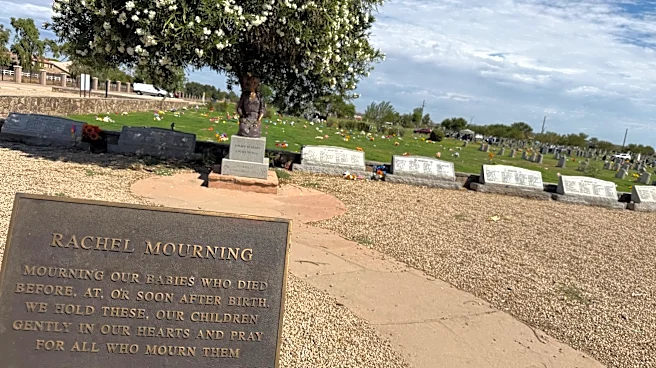
In Arizona, there is a program that many parents are unaware of, even after experiencing such a loss. Rachel Mourning works with hospitals, laboratories, and cemeteries to document and provide burial for unborn babies who did not survive to term.
For some families, those records have become a long-awaited source of answers. Years, and sometimes even decades, after a pregnancy loss, they offer something many parents never thought they would find: a way to learn what happened to their unborn child.
Where do unborn babies rest? This is the story of Rachel Mourning
Every year, more than one million women undergo an induced abortion. For some, the experience is accompanied by feelings of sadness, loss, guilt, or difficult questions that linger long after the procedure.
When a fetal death is diagnosed, parents are typically presented with several options: undergoing a medical procedure to remove the baby, waiting for the body to expel the pregnancy naturally, or inducing labor so the mother can deliver.
In many cases, when a baby dies in the womb, the remains are not claimed. Whether because families are unaware of their options or overwhelmed by grief, many never ask what happens next. Under the protocols of numerous medical facilities, those remains are classified as biological waste and handled accordingly.
In Arizona, however, some hospitals and diagnostic laboratories take a different approach. They collect information about the embryos and submit it to the Rachel Mourning program.
“It could be one or two. It could be 60. On one occasion, a single institution brought more than 100,” said Paty Rodríguez, manager of Holy Cross Catholic Cemetery, during a tour of the grounds.

With a warm voice, measured gestures, and a slight Spanish accent, Rodríguez has spent more than a decade working with the program. For her, the records represent more than an administrative process. Behind each file, she imagines a life cut short and parents who may have already begun choosing a name, preparing a room, or wondering what it would be like to hold their child in their arms.
By 19 or 20 weeks of gestation, babies already display clearly defined human features. According to the Mayo Clinic, they can suck their thumbs, move their heads and mouths, and even yawn.
When hospitals or medical service providers, such as Sonora Quest laboratories, transfer remains to the cemetery, a careful process of documentation and burial begins, Rodríguez explained.
The remains are placed in receptacles and buried together in crypts. Each is identified by the date and the institution that transferred it. The cemetery maintains records of every burial.
At first glance, it may seem like little more than paperwork. That changes when, years later, a parent calls looking for the baby they lost long ago.
“To me, this is a very necessary program because many people don't know what to do, and many hospitals don't tell families that this option exists,” Rodríguez said.
Six cemeteries offer a final resting place for unborn babies

Rachel Mourning works with six Catholic cemeteries across Arizona that provide burial space for unborn babies: Queen of Heaven in Mesa; Holy Cross in Avondale; Holy Redeemer and St. Francis in Phoenix; All Souls in Cottonwood; and Calvary in Flagstaff.
The type of service and burial arrangements vary depending on gestational age. According to Catholic Cemeteries & Funeral Homes, a free burial program for babies lost before 20 weeks of pregnancy is available specifically at Holy Cross and Queen of Heaven.
For babies lost after 20 weeks of gestation, another section, known as Saint John Paul II Junior, is available. According to Rodríguez, it can also accommodate children up to approximately three and a half years old.
For Rodríguez, however, gestational age does not change the importance of the service.
The remains of babies who never reached birth deserve the same dignity and respect, she said, regardless of how long they lived in their mother's womb.
An option many families never knew existed

Perhaps the most heartbreaking pattern to emerge since Rachel Mourning was established is not found among the graves themselves, but in the stories of families who learn about the program years after losing a baby.
Rodríguez recalls speaking with women who experienced miscarriages at home and others who underwent medical procedures after their pregnancies were no longer viable.
“In that moment, they may have been in shock and simply followed the instructions they were given at the hospital without asking further questions,” she said. “Imagine that feeling. Two go in, one comes out.”
For many families, it is only years later that they discover there had been another option for their unborn baby's remains.
“I’ve had people tell me, ‘If someone had told me this service existed, I would have gladly chosen it,’” Rodríguez said, recalling both the experience of a family member who suffered a loss and conversations with other mothers who were unaware of the program.
For Rodríguez, raising awareness is one of the main reasons Rachel Mourning continues to matter.
“These babies are part of us, part of the people who lost them,” she said. “It's very sad that there aren't more places offering these services.”
An answer for those who never stopped asking

There are parents who hear about Rachel Mourning and immediately think of the baby they lost five, 10, or even 20 years ago.
Perhaps they never knew what happened to the remains. Perhaps there was never a grave to visit. Some may not have even had the chance to give their baby a name.
“It happens sometimes, not often, but there are families who come looking years later to find out where the children are,” Rodríguez said.
Historical records show that the program has been operating for years. Some cemetery records date back to 2010. Three headstones from that year bear inscriptions such as, “Dream with the little angels,” and, “Although we never got to see your face, we miss you and love you.”
Father Kevin Grimditch of St. Matthew Catholic Church in Phoenix said that having a burial place can give mothers a physical space to remember their unborn children. Still, he added that even for those who never had that opportunity, it does not change the fact that those babies continue to hold a place within their families.
For some mothers, the grief began decades ago. For others, it is only beginning. But for those who have spent years wondering what happened to the remains of their unborn children, Rachel Mourning offers something that once seemed out of reach: An answer.

Resources for families after pregnancy loss
Families who experience a pregnancy loss before 20 weeks and would like to learn about their options can contact Holy Cross Catholic Cemetery & Funeral Home in Avondale at 623-936-1710, or Queen of Heaven Catholic Cemetery & Funeral Home in Mesa at 480-892-3729.
Catholic Cemeteries & Funeral Homes recommends contacting the cemetery directly for guidance on available services and the burial process.
Those seeking information about historical records or looking for support can call 602-267-3960.
To contact reporter Nadia Cantú, email nadia.cantu@lavozarizona.com or follow her on X at @Nadia_Cantu.
This article originally appeared on Arizona Republic: Cemeteries of the unborn: The grave many mothers never knew existed