
Peoria residents are challenging whether a councilmember who sold her house can still run to represent her part of the city, and despite a trio of complaints, there are no clear signs that anyone will
investigate the situation.
Jennifer Crawford was certain to win reelection in November to her second term because she faced no official challenger. She was elected in 2022 to represent the city's southeastern region known as the Acacia District.
Peoria has six councilmembers who are elected from geographic districts and a mayor who serves the city at large.
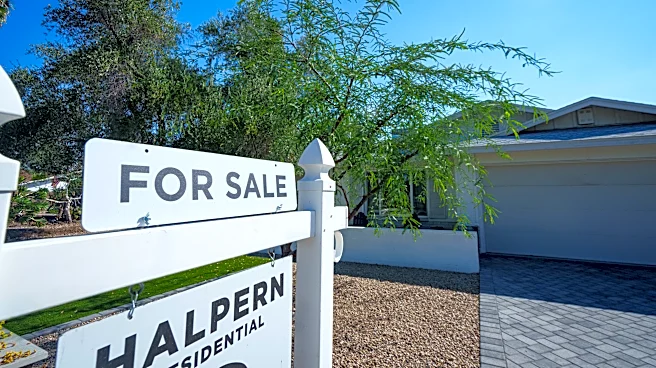
In July, Crawford sold the home she listed as her residence on election paperwork filed with the city earlier this year, according to property records. Records show she owns other residences, but they are not within her district.
One of those homes is listed as her address in property records, but it's unclear if she is possibly renting in the Acacia District.

Arizona law requires councilmembers to be registered to vote and reside in their city. Peoria's charter goes further, saying council candidates "shall be a resident from the district from which election is sought, and shall continue such residence therein for the term for which candidate is elected."
Peoria has pointed to state law on council qualifications, which says if councilmembers cease to be registered voters in their city or cease to reside in the city, the Maricopa County Attorney's Office could be asked to investigate and determine whether their seat is vacant.
The County Attorney's Office said the situation lies with Peoria police to investigate. Peoria police referred questions about the matter to the city.
Meanwhile, two of the biggest cities in metro Phoenix with similar charter language said that if councilmembers no longer resided in their district, the cities would look to enforce the charter. A spokesperson for one of those cities said that if it were found that councilmembers no longer lived in their district, their seat would be considered vacated.
Crawford did not return four phone calls or emails requesting comment over six days. Her husband, Stephen Crawford, also did not return calls.
Her council district's Facebook profile, which appears to garner minimal public interaction, has only posted about upcoming events and has not publicly addressed her residency since the issue was first raised at the start of September.
Questions about where Crawford lives have prompted complaints to the city, and one resident has filed as a write-in candidate to give Acacia residents an option in the Nov. 3 election.
When did questions about Jennifer Crawford's residency arise?
Peoria resident Jon Forsythe publicly called out Crawford at a Sept. 1 council meeting, detailing through public records how she no longer lives in the area she was elected to represent.
Crawford, in nomination paperwork filed with the city in March, said her actual residence was a home in the Acacia District near 87th Avenue and Echo Lane. That home was also listed as her address when she first ran in 2022.
However, property records show the home sold on July 31, and it was previously listed for rent. Property records show she owns a residence farther north in the city's Willow District, and another home in Phoenix.
Forsythe said he wanted answers.
"I would like an explanation tomorrow if you would, please, since I am a citizen," Forsythe told the Peoria City Council.
He didn't get any. City Manager Mike Faust told him that state law outlines the process for Forsythe to address his concerns, according to an email obtained by The Arizona Republic. Forsythe could reach out to the county attorney for a possible review, he suggested.
Who will investigate Jennifer Crawford's eligibility?
Diane Arthur, a Peoria spokesperson, said state law, which has supremacy in this case, was clear. It says the county attorney "shall investigate and determine whether a vacancy exists."
Karla Navarrete, a spokesperson for the county attorney's office, said the office received a complaint, but citizens cannot submit cases to prosecutors.
The office sent the complaint to Peoria police to investigate, Navarrete said, and if Peoria police have a case, they can submit it to the office.
Sgt. Shelly Montes, a Peoria police spokesperson, said she could not answer questions about whether the department received details from MCAO and whether police would investigate the issue.
"I was advised that all communications and inquiries related to these questions should be directed to the City of Peoria Office of Communications," Montes said in an email.
Residents want Peoria to act on apparent charter violation
As of Sept. 8, three people have reached out to Peoria to complain about Crawford's residency, according to Arthur.
One, Natalie Gilstrap, made a campaign complaint to the City Clerk's office, arguing that Crawford's apparent charter violation made her ineligible to qualify for the November ballot. Gilstrap said she used to work in the city clerk's office.
Her complaint was unsuccessful. City Clerk Agnes Goodwine told Gilstrap that the alleged charter violation does not fall within the "campaign finance complaint process" administered by the City Clerk's office, according to the letter obtained by The Republic.
Goodwine said state law has a separate process for challenging a candidate's qualifications, including residency, according to the letter.
But the deadline has passed. Gilstrap has since refiled the issue as an ethics complaint, but said Sept. 8 she had not heard back from the city.
In Peoria, the only requirement for residence disclosure is the election qualification process, according to Arthur.
Gilstrap said she's frustrated with the city's lack of action and that Peoria "does not think" the charter applies.
Other metro Phoenix cities have similar residency rules
A handful of metro Phoenix cities are split up into districts, and their charters outline the residency requirements for councilmember terms. They state that councilmembers must reside in the districts they represent for the duration of their elected terms.
Buckeye, Glendale, Mesa and Phoenix all have such requirements.
Surprise also has residency requirements, but it does not explicitly state that councilmembers must reside in their district for the duration of their term. However, residency under Surprise's charter means where the councilmember intends to live permanently. City spokesperson Virginia Mungovan said the city couldn't speculate how it would respond to councilmembers moving out of their district "without reviewing the specific facts and related law."
In Phoenix, if councilmembers no longer resided in their district, the city "would take appropriate action depending on the circumstances to enforce the city charter" and state law, according to spokesperson Dan Wilson.
Casey Blake, a spokesperson for Mesa, said if councilmembers violated this aspect of the city's charter, they would be deemed to have forfeited office, and the City Council could take action to fill any vacancy.
Arthur, Peoria's spokesperson, said it was important to note that city staff doesn't oversee the City Council. The city operates under a council-manager form of government, she said, meaning the Council practices "governance over us."
Elena Santa Cruz covers the West Valley cities of Glendale, Surprise and Peoria. Reach her at elena.santacruz@arizonarepublic.com or follow her on X @ecsantacruz3.
Like this story? Get more West Valley news straight into your email inbox by signing up for our free weekly West Valley Newsletter, which comes out on Tuesdays.
This article originally appeared on Arizona Republic: AZ city residents question legality of reelection bid | Exclusive