





The Fort Sill Apache Tribe has regained a physical presence in its ancestral lands in southeastern Arizona, lands lost in 1886 when the tribe was forcibly exiled from the state.
The Trust for Public Land on Sept. 23 said it would convey a 55-acre parcel of private land in the historic Cochise Stronghold region of the Dragoon Mountains, about 50 miles southwest of Tucson, to Fort Sill. The parcel, which lies within Coronado National Forest, was formally signed over to the tribe Sept. 10.
This is the newest project of the trust's Tribal and Indigenous Lands Program, which has transferred more than 200,000 acres back into tribal ownership. It's the first project of its type in Arizona.
The contemporary Fort Sill tribe is composed of the descendants
of the Chiricahua and Warm Springs Apaches who lived in southwestern New Mexico, southeastern Arizona and northern Mexico, including the Dragoon Mountains and the Cochise Stronghold.
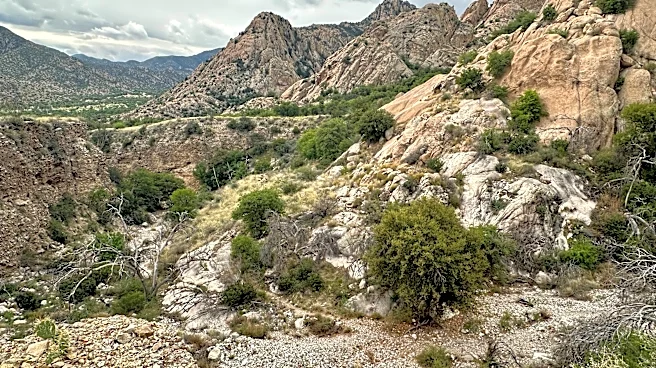
The 25-mile-long range is one of the famed Sky Islands, which soar high above the desert floor and hold some of the planet's highest levels of biodiversity. The rugged range is also the historic refuge of Chief Cochise and his Chiricahua people.

In 1872, Cochise and General Oliver O. Howard negotiated a peace agreement that also established a reservation in the Chiricahua's homeland. In 1876 the Chiricahua were moved to the San Carlos reservation, which ultimately resulted in a protracted war with the U.S.
In 1886, the Apache bands who had waged the war, including the leader Geronimo, were made prisoners of war and sent to Florida, Alabama and finally to Fort Sill in 1894. The tribe was not released from war prisoner status until 1914.
The 800-member tribe has its small land base in Oklahoma and a 30-acre reservation in Akela, New Mexico. But they never forgot their ancestral home in the Dragoons and have always strived to maintain a relationship with it.
The tribe was ecstatic at the opportunity to reacquire a part of their heritage.
"Returning even a small part of our ancestral homeland is a powerful step toward honoring our ancestors, preserving our culture and ensuring that future generations can maintain their connection to this sacred place," Fort Sill Chairwoman Jennifer Heminokeky said.
"The Dragoon Mountains have always been part of who Apache people are."

James Buckner, the tribe's secretary-treasurer, visited the site with Heminokeky and other Apache tribal members for the signing event and said he was "beyond elated" to see some of his ancestral lands.
"When we lost our land we lost a piece of ourselves," Buckner said. During and after the tribe's 28-year imprisonment, he said the Chiricahua Apaches were tied to survival rather than stability.
Buckner's own grandmother was born as a prisoner of war and died two months before his 18th birthday.
"It's still fresh to us," he said.
"To be able to have a piece of that land back represents a restoration of our identity, our sovereignty and basically the historical continuity for our people," he said.
"It isn't just a piece of real estate, it's the return of history, of memory and responsibility."

Returning some 'beautiful' lands to Chiricahua people a moving experience
Michael Patrick had been searching for a project to return ancestral land to the Chiricahua Apache for several years. Patrick is a senior project manager for the Trust for Public Land, a national nonprofit that creates parks and conserves public lands in areas with the greatest need.
"I realized their ancestral lands are such a large area of the southeast part of the state, and probably did not have any lands that were in Apache ownership."
Patrick came across a broker listing for the 55-acre parcel in the Dragoons.
"It's a beautiful property," he said. There's a flat area with a stunning view of Sulfur Springs Valley and the Chiricahua Mountains. From that point, granite cliffs rise 300 feet almost straight up to a flat, rolling ridgeline. The parcel also has a waterfall and groves of Emory oaks in the canyons between the granite outcrops.
Patrick said the land protection work he does gives him meaning and purpose, but this project meant far more to him than usual.
"I was close to where General Howard met with Cochise and promised him that Chiricahuas could have this land all the way to the New Mexico and Mexican borders."

When traveling with Fort Sill tribal representatives to the site in September, Patrick heard stories about the ceremonies that are held on some of these tribal land back projects, which he said "brings tears to our eyes."
"It's very meaningful for me to be able to provide this help to try to acquire this place where they can use it for ceremonies and harvesting and just connecting with the source or the spiritualness of this special place," Patrick said.
Buckner said people looking out for Indigenous peoples and working to help his people acquire significant lands like in the Dragoons was "just fantastic."
"We plan to take the dancers out to bless the grounds and hold our ceremonies that have been around for thousands of years," he said. "At one time, the ceremonies were a federal crime for us to even practice."
Native peoples did not regain their First Amendment religious rights until the enactment of the American Indian Religious Freedom Act in 1978.
'Land Back' movement places land back in Indigenous peoples' hands
The Trust for Public Land's program is one of several efforts to return land to Indigenous peoples as part of the larger "Land Back" movement. Although historic land returns, such as when the Pueblo of Taos regained ownership of Blue Lake, including 48,000 acres in 1970, the modern movement began in Canada in 2018, followed by South Dakota-based foundation and advocacy group NDN Collective in 2020.
The objective: "Give us the land back."
Advocates say regaining ancestral lands is the first step in revitalizing tribes' languages, cultures, economics and religious beliefs. They're returning traditional ways of knowing to steward—and, in many cases, heal—lands and waters damaged or devastated by colonization, development, or exploitation.
The Sierra Club said that, as of 2023, more than 420,000 acres have been reacquired by 73 state or federally recognized tribes, an intertribal coalition and six Indigenous-owned land trusts.
"Traditional Ecological Knowledge is not an alternative — it is the solution to the climate crisis," NDN Collective said. "Our lands are not commodities — they are ancestors, relatives and responsibilities."
Buckner said reclaiming the land was a sign of Apache resilience.
"Standing there, all I could think was that this gives our kids and grandchildren a place that we don't have to borrow," he said.
"The tribe survived, the Apache spirit isn't dead, it's still alive and well in 2026. We've rebuilt and we've returned."
Debra Krol reports on Indigenous communities at the confluence of climate, culture and commerce in Arizona and the Intermountain West. Reach Krol at debra.krol@azcentral.com. Follow her on X, formerly known as Twitter, @debkrol and on Bluesky at @debkrol.bsky.social.
This article originally appeared on Arizona Republic: Apache tribe will reclaim ancestral lands in southern Arizona