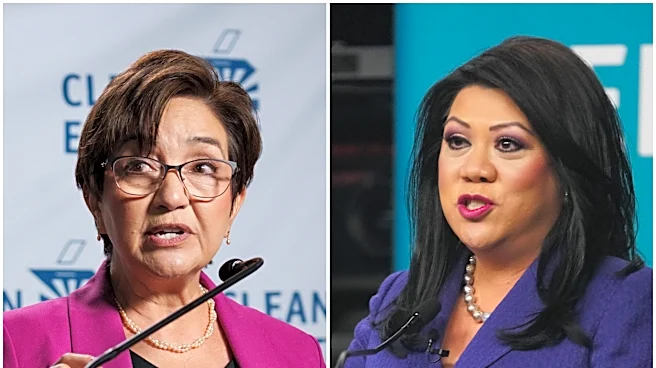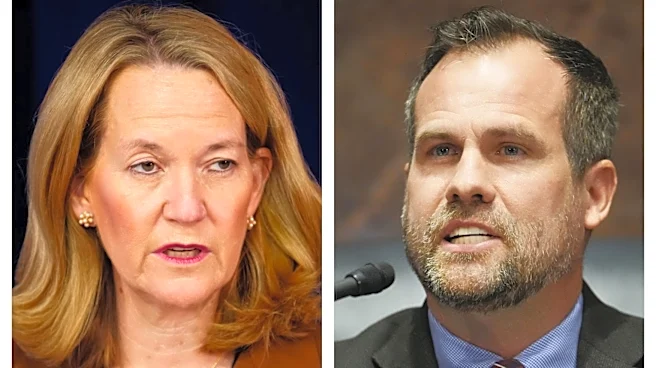



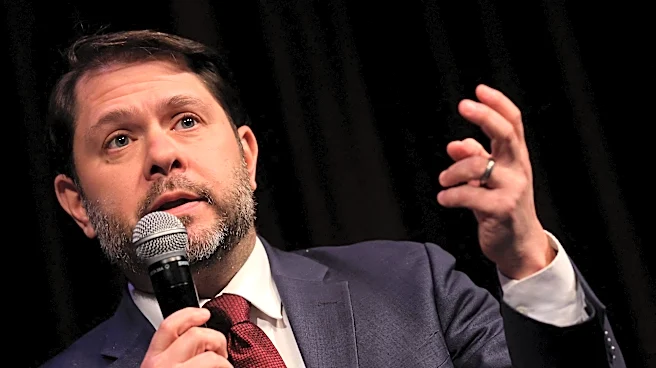
Arizona Attorney General Kris Mayes is asking voters for a second term this November as she faces a challenge from state Senate President Warren Petersen.
The attorney general is Arizona's top law enforcement officer, responsible for major drug and complex criminal investigations, and the office is often called the state's largest law firm. Prosecutors there represent state agencies, file lawsuits on behalf of Arizonans, and enforce consumer protection and civil rights laws. The office also handles all criminal appeals involving felony convictions and death sentences.
Whoever wins in November could significantly affect how President Donald Trump's policies are implemented or challenged in the Grand Canyon State.
Mayes won the job four years ago
by just 280 votes, and the election of the state's next attorney general could be one of the closest races on this year's ballot.
Here's what you need to know about the candidates and the race. Ballots go out to voters on Oct. 7, and Election Day is Nov. 3.
Kris Mayes, Democrat
Mayes grew up in Prescott. She was a reporter for The Arizona Republic and the now-closed Phoenix Gazette from 1994 to 2000 before she became a spokesperson for Gov. Janet Napolitano, a Democrat. Napolitano named Mayes, who was a Republican at the time, to the Arizona Corporation Commission and Mayes won elections to serve on the commission regulating Arizona utilities through 2010.
In 2019, Mayes became a Democrat, saying the GOP left her in the Trump era. She objected to the first Trump administration's policy of separating migrant children from their families.
She worked as a professor of sustainability and energy law at Arizona State University's Sandra Day O'Connor College of Law before announcing her 2022 campaign for attorney general. Mayes graduated from ASU law school before she was admitted to practice law in 2005.
Mayes has branded herself as an aggressive advocate for Arizonans in her first term, though some of her novel legal arguments and forays into policy advocacy have irked the business community and Republican critics, who say she's overstepped her foremost duty to enforce Arizona law.
Mayes has sued to block massive mergers she said would harm Arizona consumers and has taken landlords to court for not providing a safe environment for their tenants. She has become the state's foremost legal opponent of Trump's second-term agenda, filing 49 lawsuits as of Sept. 17 against his administration.
The cases have successfully blocked Trump's efforts to redefine who receives citizenship when born on American soil and thwarted his tariff policies, among other cases.
But not all of her courtroom battles have ended in victories, some have led to high profile defeats. Mayes in 2024 announced the indictment of 11 Arizona Republicans and seven top Trump aides in an alleged conspiracy to keep Trump in the White House in 2020. The high-profile case was dismissed this year after judges found that prosecutorial errors required the case to be brought again, though Mayes has said she intends to try the case again.
Latest coverage:
- Case reset: Mayes drops fake electors charges, eyes new indictment
- No retreat: Mayes doubles down on fake electors case
- Back to square one: Mayes must restart fake electors prosecution
- Health care lawsuit: Mayes targets pricing ‘cartel’
- Court blocks case: Judge halts Arizona criminal prosecution of Kalshi
- Inside the probe: Mayes seeks interview with governor in Sunshine Residential investigation
- Legal fight: Mayes sues ICE over Surprise detention center plan
- Ballot battle: Arizona joins lawsuit to block Trump mail-in voting order
- Election warning: Mayes, Fontes caution counties on releasing voter files
- High court win: Supreme Court hands Mayes victory in Trump tariffs fight
- Power struggle: Mayes says GOP bills aim to weaken her office
- Standing by her words: Why Mayes’ ICE comments sparked outrage from police, Republicans
- Utility clash: Mayes accuses Tucson Electric Power of misleading the public
- Voucher concerns: Mayes threatens lawsuit against Horne over ESA spending
- Fake electors: High court could make Mayes choose between new indictment, dropping case
- Defining her tenure: Inside the key moments that shaped Mayes’ first three years in office
- A running tally: Tracking Arizona’s legal fights with the Trump administration
- Back on the ballot: Mayes launches reelection bid for Arizona attorney general
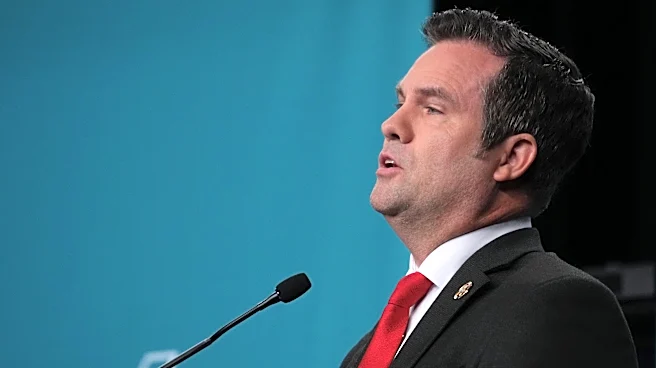
Warren Petersen, Republican
Petersen grew up in Gilbert. He worked in marketing for his family's real estate company, VIP Homes, and founded his own brokerage selling mostly residential properties, Network Realty. Petersen went to law school at ASU and was admitted to practice law in late 2023.
He first ran for a seat in the Arizona House of Representatives in 2012 and has represented the Gilbert area at the Capitol ever since. He has been elected to both the House and Senate. For the last four years, he has led the Arizona Senate as its president, a job that involves managing factions within his own Republican Party and overseeing a staff of about 130.
Petersen has said his favorite accomplishments at the Capitol are laws that reduced regulations for businesses or made it easier for professionals licensed in other states to work in Arizona.
He and House Republican leadership have also intervened in over 30 cases since 2023, according to Senate records, to advocate for state laws that Mayes declined to defend. Petersen has backed a law that banned abortions sought because of genetic abnormalities and another that prevented transgender girls from participating in school sports, both of which Mayes opposed.
Petersen has said he is the "de facto AG" because of those cases, and he will leave the Senate with a mixed record in the courts.
While Petersen has not loudly echoed Trump's conspiracies about the outcome of the 2020 presidential election, he has allowed them to fester and is undeniably tethered to them.
He issued subpoenas that led to the widely ridiculed Senate audit of the 2020 election results, and led hearings amid that partisan review that affirmed Democrat Joe Biden's win. Afterward, Petersen said the audit — which cost taxpayers over $5 million— was "incomplete" and accused county officials of breaking the law by processing duplicate ballots. He was one of 30 Arizona Republicans who asked then-Vice President Mike Pence to overturn the results of Arizona's election, and earlier this year he complied with a Trump administration subpoena to turn over audit records.
Petersen won his party's nomination for attorney general in July, beating back a challenge from perennial candidate and attorney Rodney Glassman. In September, he received an endorsement from Trump, who had stayed out of the race until that point.
"As Arizona Senate President, Warren has proven he has the Courage and Wisdom to deliver strong results for the incredible people of his wonderful State and Nation," Trump wrote on his Truth Social page.
Latest coverage:
- Campaign tactic: Petersen targets critic over column backing Glassman
- Attorney general debate heats up: Petersen, Glassman trade attacks
- Potential shake‑up: Petersen wants to reshape Arizona political maps after U.S. Supreme Court decision
- Inside the request: Petersen hands feds digital data tied to 2020 Maricopa County election audit
- Call for investigation: Petersen seeks federal probe into Mayes, Fontes
- Vetoed: Hobbs blocks Petersen's plan to rename Loop 202 for Charlie Kirk
- Setting up 2026: Petersen takes step toward Arizona attorney general run
- Post‑Proposition 139 clash: GOP moves to preserve abortion restrictions despite voter-approved rights
- Calling for scrutiny: Warren Petersen seeks FCC probe into Arizona PBS
- Campaign cash fight: Petersen’s bid to loosen rules on leftover funds falls short
- Immigration push: Arizona Republicans advance Petersen's Trump-aligned ICE Act
This article originally appeared on Arizona Republic: What to know about Arizona's attorney general race