




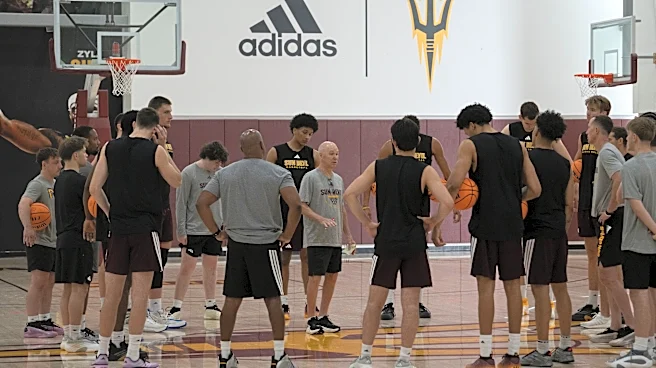

Film students at Arizona State University will soon be tapping into the world of “microdramas” in a specialized seminar this fall.
The bite-sized content builds off of traditional soap operas and produces them in a way intended to be watched on a cell phone for short periods of time. The upcoming class was developed in partnership with ReelShort, a major vertical video production company that has released hundreds of shows on its own platform.
The class this fall is one of the first opportunities for ASU students to learn more about vertical filmmaking. Students will analyze what makes a microdrama successful and write original scripts for the first three episodes of a vertical drama series. Those scripts will be evaluated by the lead screenwriter
at ReelShort, Dyann Chiang, who will also talk about how the industry has grown in recent years and how the company plans to use artificial intelligence to support production.
After the seminar, at least one of the top-performing students will be offered a pathway to become a contracted junior screenwriter for ReelShort. The course is open to 30 students, but others may be permitted to attend without earning school credit.
“We are looking at a new generation of audience and market as well,” said Alex Ma, ASU associate professor at the Sidney Poitier New American Film School. “It is about our commitment to link our students with the latest trends and make them ready for their next challenge.”
ReelShort is one of the top companies investing in microdramas. A series on the platform typically runs anywhere from one to three hours in total runtime. But unlike traditional television shows, each episode is written and edited to be only one to three minutes long. Shows are produced at a much lower price point than traditional media, with its CEO estimating that each series costs roughly $300,000, according to Time magazine.
A scroll through its catalogue features highly saturated posters with titles like “The Vampire Next Door” and "A Zombie Girl's Journey Home." Many are reminiscent of teen dramas and daytime soap operas. While some episodes are available for free, users must purchase a subscription plan or purchase specific episodes if they want to unlock more content.
As the company describes its model, viewers only need to watch for a couple of minutes to experience “the major plot twist, heartbreaking betrayal, or jaw-dropping cliffhanger that hits you with high-octane stories like the viral billionaire, revenge, and fantasy tropes.”
"ReelShort’s growing rise with vertically formatted dopamine hits has captured the attention of vertical fans worldwide," its website reads.
ASU course to offer insight into changing media market
Ma said the entertainment industry has been shifting to prioritize faster-paced content for several years now. He referenced the 1986 movie “Top Gun” and its 2022 sequel “Top Gun: Maverick.”
“The edits almost doubled,” Ma said. “The frequency, the pace. It's way faster.”
The industry transition can be seen through ReelShort’s user base as well, going from a 2022 launch to boasting 75 million monthly active users globally. That means the app rivals some entertainment platforms that use a traditional subscriber model. Recent projections estimate the company will make over $1 billion in revenue this year.
Ma said he first started to see short vertical dramas primarily in Asian markets. While their popularity has expanded to the U.S., many are still not familiar with the concept, including some of Ma’s own students, he said. But he anticipates that as the trend grows, it will make up an even larger share of the entertainment industry.
Vertical filmmaking, like other sectors of the entertainment industry, has started to incorporate AI into production. Many of ReelShort's own shows are labeled as AI-generated content. ReelShort spokesperson Rachel Bencosme said AI is used to tap into different genres, like fantasy, while still maintaining small budgets. Ma noted that the use of AI only further emphasizes the importance of scripts created by humans.
"I think it will become very evident to the student, 'Okay, we need to be a good storyteller, regardless of what tools we are going to use," Ma said.
Helen Rummel covers state politics and higher education for The Arizona Republic. Reach her at hrummel@azcentral.com. Follow her on X, formerly Twitter: @helenrummel.
This article originally appeared on Arizona Republic: A TV episode in 1 minute? ASU students to learn about ‘microdramas'