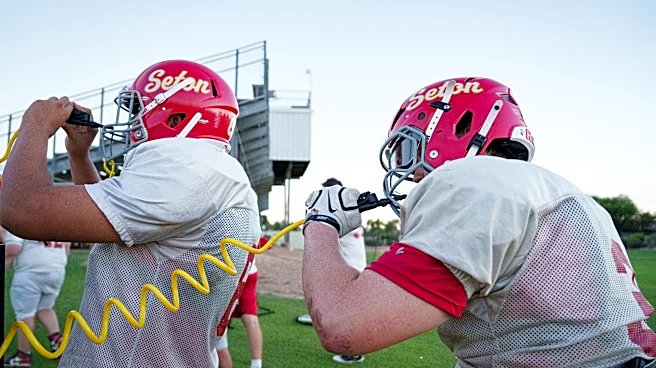



During one stretch in the second half on Friday, Aug. 21, at Chandler Seton Catholic, four Eagar Round Valley football players were on the ground on the sideline, being stretched out to reduce cramping.
One player being attended to said, "My body is not used to this heat." One coach was putting ice water cloths on players' necks as they stood on the sideline, waiting to go into the game.
It was 106 degrees at kickoff (7 p.m.). Round Valley, used to cooler climates in northeastern Arizona, with 26 healthy players, pulled through for a 30-14 victory to open its high school football season.
The heat issue came into greater focus over the weekend when, on Aug. 20, an Arizona State hockey player was hospitalized after collapsing on the track during
an outdoor exercise that morning.
At ALA Ironwood, Thatcher was feeling the heat on a Thursday night, Aug. 20, during its 33-6 win.
"Our kids were melting," Thatcher coach Daniel Jones said. "We had been preparing with water and electrolytes all week and still had major issues. The turf was incredibly hot. I would be in favor of later starts to alleviate this issue."
It's been another extremely hot August in the Phoenix area, as high school football teams try to navigate how to protect their players.
As of Aug. 24, the average high temperature in Phoenix for this month has been 108.9 degrees. This Thursday, Aug. 27, when some big schools open their season, the forecast is for a high temperature of 112 in the Phoenix area.

"Our varsity has not had any heat-related issues since we practice in the morning, but our freshman teams practice after school, and they have had to modify greatly due to the heat," said Phoenix Brophy Prep football coach Jason Jewell, whose team opens against Chandler Hamilton on Thursday.
"They have had to modify their start times, what they can wear and how long they can be on the field."
There haven't been any documented deaths in Arizona high school football related to heat since 1988, when a 14-year-old Phoenix Shadow Mountain player collapsed during a practice and died from heat stroke.
After that, the Paradise Valley Unified School District mandated that afternoon practices be held after 6 p.m., with water available and plenty of breaks.
Most high school teams practice in the evening or early morning to prepare for their seasons while navigating the cruel August heat.
"We don't have any lights, so we have to go in the afternoon," Avondale St. John Paul II coach John Padilla said. "Plenty of water breaks about every 15 minutes. Also, we have a PVC 'car wash' to wet down the players. Our last one was destroyed by the last storm, so we are having another one made.
"We modify practice. Remove shoulder pads. Our game at San Carlos last Friday was 90 degrees at game time."
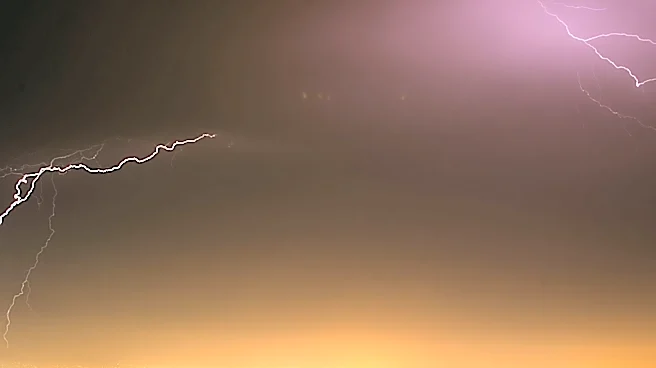
This is the monsoon season in Arizona, so evening practices can be cut short by lightning.
"We have not had to cancel any varsity practices due to heat, but the lightning has got us a couple times," Tucson Salpointe Catholic coach Patrick Ryden said. "If we can't get on the field by 6 p.m., we come back the following morning at 6 a.m.
"We have had to delay the start of freshman practice a few times due to heat, but we're usually OK to get on the field by 5:30 p.m., as long as we don't have a storm."
The Arizona Interscholastic Association has a heat acclimatization and exertional heat illness management policy in its bylaws that football teams must follow. For the first 14 days of official AIA practices, they go through a process outdoors, with the first three days in helmets, the next three in shoulder pads, before going into full gear.
Jim Dean, executive director of the AIA, said that teams couldn't go through it in lesser climate than what they would play their games in. School athletic trainers and coaches stay on top of it with the players to make sure there aren't signs of heat illness. There is a Wet Bulb Globe Temperature (WBGT) reading that schools will use to monitor the safest times to practice.
"We haven't gone out on the field until 6:30 p.m., and then the first 30 minutes we do not have any helmets," said Surprise Paradise Honors coach Josh Sekoch, who added that the helmets go on at 7 p.m.
Managing practice schedules can be tough when not all coaches are on campus, and players need to be home at a reasonable hour to get their homework done.
"You have time restrictions in the mornings, where not all coaches can make it," ALA Ironwood coach Myron Blueford said. "You don't want to push it too late because players start struggling academically if they are diligent with homework between school and practice.
"So we push practice back to 5:30 p.m., as the weather starts to break. Sometimes, it's helmets for the first 30 minutes. It's not ideal, but we are trying to find a happy medium."
Richard Obert has been covering high school sports since the 1980s for The Arizona Republic. Catch the best high school sports coverage in the state. Sign up for Azcentral Preps Now. And be sure to subscribe to our daily sports newsletters so you don't miss a thing. To suggest human-interest story ideas and other news, reach Obert at richard.obert@arizonarepublic.com or 602-316-8827. Follow him on X, formerly Twitter:@azc_obert
This article originally appeared on Arizona Republic: 'Modify greatly.' Arizona high school teams navigate the extreme heat