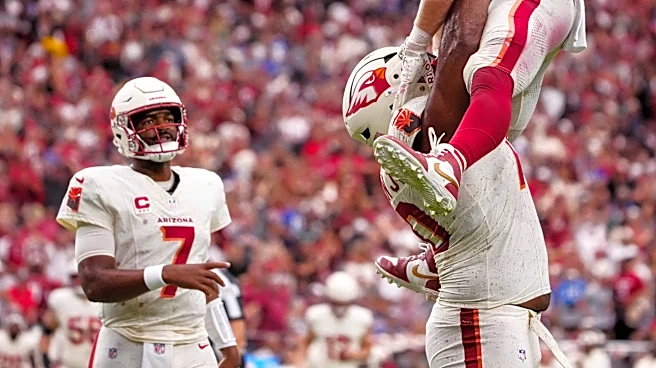

Week 1 was an exhilarating taste of what this new era could bring for the Arizona Cardinals.
Week 2 was a disaster.
Which version is real?
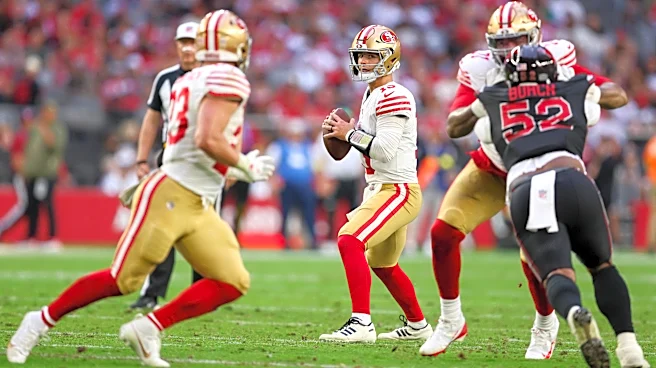
That’s the question Arizona will begin to answer in Week 3. The Cardinals don’t have to win this game to feel good about themselves — the San Francisco 49ers are off to a dominant start and enter as heavy favorites. But they do need to find more success on offense to show that LaFleur has his group on the right track.
Ideally, that would include unlocking Marvin Harrison Jr. for the first time this season.
Arizona Cardinals (1-1) at San Francisco 49ers (2-0)
Time/site: 1:05 p.m. MST, Levi’s Stadium, Santa Clara, California
TV: Fox. Radio: 98.7.
Last time they played: The Cardinals' midseason collapse hit full stride last November, when they were blown out, 41-22,
by the 49ers in Glendale. They trailed 13-0 within the first 6 minutes and never came close to reversing the deficit, although Jacoby Brissett tied the single-game completions record with 47.
Series history: The 49ers are the division opponent against whom the Cardinals have found the most success over the past decade, with an 11-9 record, including a sweep in 2024. All-time, though, San Francisco leads the series, 38-31.
Coaching matchup
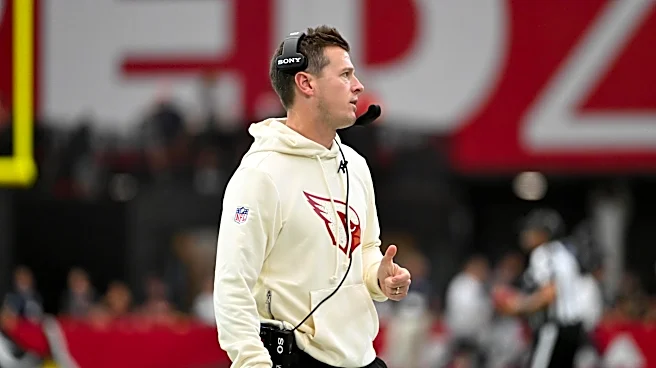
It’s another matchup filled with familiarity for Cardinals head coach Mike LaFleur, who worked under Kyle Shanahan from 2014 to 2020. That stretch included a year as a Browns intern, two years as an offensive assistant in Atlanta and four years as the 49ers passing game coordinator. Cardinals defensive coordinator Nick Rallis began tapping into that familiarity as soon as LaFleur was hired, as he searched for solutions to playcallers from the Shanahan tree. And on the other side of the ball, 49ers defensive coordinator Raheem Morris is among LaFleur’s closest friends in the industry. The two coached together in Atlanta. There are few secrets between these teams.
Arizona will win if…
- it unlocks the downfield passing game: Through two weeks, the Cardinals have produced the second-fewest explosive passing plays in the NFL. That’s not going to get it done. They need to find a way to push the ball downfield, whether that’s through Harrison, Michael Wilson or Trey McBride.
- the rushing attack improves: So how do the Cardinals get their aerial attack working? It may start on the ground. They rank 28th in yards before contact this season, which is allowing defenses to sit in shell coverage with two high safeties. And the 49ers have been the best defense in the NFL out of those coverages. Somehow, the Cardinals need to change that math.
- the offense finds answers for pressure: In Week 2, the Cardinals had no solutions for pressure. On those 12 plays, Brissett completed just two passes for eight yards, while taking two sacks and throwing an interception. It’s a big reason why they couldn’t pass the ball downfield, and it has to be better this week — whether through improved protection or more quick passing options.
San Francisco will win if…
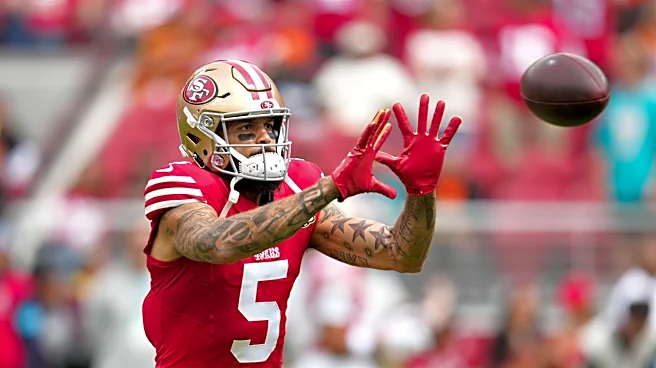
- backup wide receivers step up: With Mike Evans and Demarcus Robinson both banged up, the 49ers may be down to players like KhaDarel Hodge and Jacob Cowing at wide receiver this week. On the other side, the Cardinals' secondary lost Will Johnson for the season, while Garrett Williams hasn’t yet played as he works back from a torn Achilles. Those backup-on-backup matchups could be crucial in this one, especially since the 49ers have few other clear weaknesses.
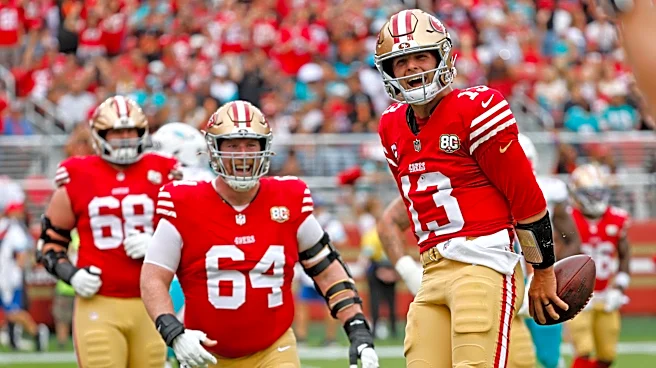
- it can exploit Arizona’s play-action defense: The Cardinals have been torched on play action this season, allowing 10.9 yards per attempt. And the 49ers live off play action, which quarterback Brock Purdy operates at an elite level. It should be a major advantage for San Francisco, unless the Cardinals' linebackers can play with more discipline in that area.
- its 21 personnel package continues to dominate: The 49ers love their two-running back sets, using them at the league’s highest rate by far. To stop those looks, the Cardinals need to be resolute up front, which has been an unexpected strength through two games. But over the past two seasons, they’ve struggled against 21 personnel (two running backs, one tight end).
They said it
Cardinals defensive coordinator Nick Rallis on Brock Purdy: “I’ve always felt like he’s an elite quarterback. He’s got an elite process. He’s got special arm talent in regards to, he can layer passes in there. … He’s got great touch. And if it’s not there, the guy is Houdini getting away from sacks.”
Brissett on whether the Cardinals need to feed early targets to Harrison to get him in rhythm: “Uh, that's so hard to say. It's more so, I just want to play good football. … The ball's gonna go where the ball's gonna go.”
By the numbers
0.61 — The Cardinals yards before contact per carry, the fifth-lowest mark in the league. Their offensive line is making it difficult to get much going, on the ground or through the air.
1 — Purdy’s rank, among qualified quarterbacks, in expected points added per dropback. He’s helping the 49ers overcome a barrage of offensive injuries.
1 — Harrison’s reception total through two games. It’s the least productive two-game stretch by a wide receiver drafted in the top 10 since Mike Williams nearly a decade ago. And it’s related to all the issues outlined above.
3.3% — The Cardinals' explosive pass rate through two games, the second-lowest mark in the league.
4.6% — The combined pressure rate generated by Josh Sweat and Walter Nolen, per Pro Football Focus. The Cardinals haven’t gotten much production from their two most important pass rushers.
Who will win and why
49ers 31, Cardinals 20: On paper, this looks like a uniquely bad matchup for the Cardinals defense. They struggle against play action and two running back sets, both areas in which the 49ers specialize. Perhaps their offense will have a big day to help keep pace, but that would require the offensive line to be more effective than we’ve seen through two games.
This article originally appeared on Arizona Republic: Can the Arizona Cardinals upset the 49ers? Breaking down the matchup