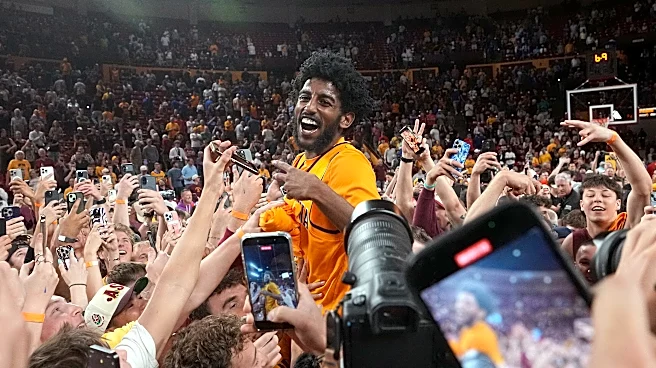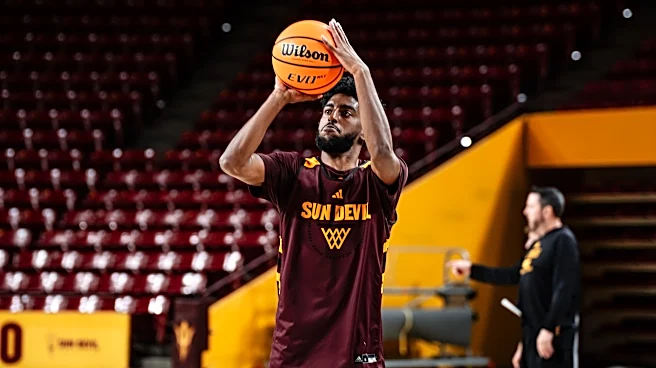



Moe Odum is in a novel situation.
The guard wrapped up his college basketball career at Arizona State in the spring — at least he thought he did.
A recent court ruling has granted many athletes who started their college career in 2022 another year of eligibility. Odum is one of those players.
To qualify, an athlete had to begin his or her collegiate career during the 2022-23 year. The athlete had to play their entire career at an NCAA Division I institution and conclude all four years of eligibility by the spring of 2026.
Odum did those things.
He would like to use the additional year he was granted last week when Judge Charlotte Sweeney of the U.S. District Court of Colorado granted a class-wide preliminary injunction requiring the NCAA to declare
athletes from the high school class of 2022 eligible.
The injunction came after a new five-for-five eligibility model was set to take effect for this school year, in which athletes would have five years to play five seasons. That resulted in myriad lawsuits against the NCAA by athletes who were not going to be "grandfathered in," with that ruling set to cover only athletes who had not finished their eligibility in 2026.
Sweeney issued a clarification to answer many of the initial questions that arose with the ruling: Players aren't eligible if they're over 24 or if they signed a professional contract. The same roster limits and transfer portal rules are in effect.
And that is where things get tricky for Odum.
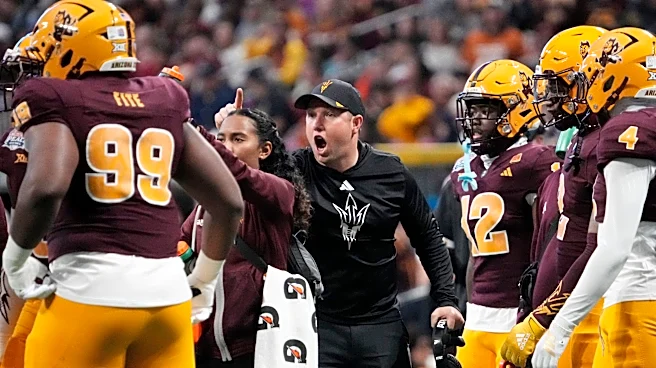
ASU men's basketball coach Randy Bennett has room to add at least one player to his roster. It sits at 14, one under the limit. That number includes incoming transfer Jonathan Griman, who is requesting a waiver to play the upcoming season. If he is denied, ASU would have two open spots.
ASU basketball players Anthony "Pig" Johnson and Allen Mukeba could also benefit from the extra eligibility. Johnson entered the transfer portal at the end of the 2025-26 season and was awaiting a ruling from the NCAA on an additional year because of his seasons spent at community college and NAIA institutions. Because of the Sweeney ruling, he no longer needs that waiver and can transfer immediately.
That's where his situation differs from Odum.
The transfer portal was open April 7-21 and will not open before the upcoming season.
Odum did not meet the portal deadline, indicating on social media and through his agent in recent days that he intended to do so. If a new transfer window isn't created, his only option would be returning to ASU. But that isn't even definite because one of the provisions is that "graduate" transfers can enter the portal at any time. So if Odum does indeed have his four-year degree, he could still seemingly do so.
Could Myles "Ghost" Rowser return?
Football player Myles "Ghost" Rowser has hinted at a return.
Ghosts always come back to haunt 😶🌫️ https://t.co/1QsUsuZyUx
— Gho$t (@MylesRowser) August 1, 2026
With a link to an article about the Sweeney ruling, he posted, "Ghosts always come back to haunt" on X over the weekend.
For football, the roster limit is 105, but ASU's sits at 107. How? Well, a special designation was created in the House vs. NCAA antitrust settlement. It protects rostered players and recruits from new hard roster caps by exempting them from counting against those team limits. They are dubbed "designated student-athletes," another way of referring to players previously called walk-ons or non-scholarship players.
It is unknown how many roster spots ASU has available. An ASU spokesman said it chooses not to make public the players with the DSA designation.
ASU's graduated players who would qualify for another year include Rowser, defensive lineman Jacob Kongaika and linebackers Jordan Crook and Keyshaun Elliott.
Elliott was drafted by and signed with the Chicago Bears, ruling him out of the equation, while Crook signed with the Hamilton Tiger Cats of the Canadian Football League in May.
Other basketball additions
The DSA designation also allowed the defending men's basketball Big 12 champion and Final Four participant Arizona to add a player. Its roster was at 15 before Clemson transfer R.J. Godfrey was added. A school spokesman said that it has one player, Jackson Cook, who was a walk-on and grandfathered in before the roster limit went into effect. He does not count against the 15.
Among the other players looking into the possibility of playing another year is forward Duke Brennan, a native of Chandler who played his freshman year at ASU in 2022-23, then spent two years at Grand Canyon before moving on to Villanova for the 2025-26 season.
And yes, the situation could change again. The NCAA is appealing Sweeney's ruling, so who knows what the picture will look like when the dust settles?
This article originally appeared on Arizona Republic: Former ASU basketball player caught in eligibility changes