



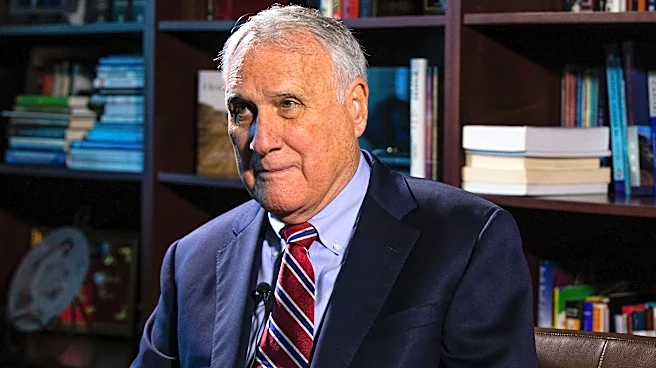


Arizona leaders remembered the late former U.S. Sen. Jon Kyl as a workhorse whose wide-ranging influence extended from water access in his beloved desert state to helping cement a conservative majority on the Supreme Court.
“He didn't care about the credit. He never did. He just went on and worked hard,” former U.S. Sen. Jeff Flake, R-Arizona, said in a telephone interview. “Arizona will benefit for years because of it.”
Kyl, R-Arizona, died from complications of a neurological disease at age 84, his family announced Sept. 17. He had stepped back from public life in December 2025 after being diagnosed with dementia.
Kyl represented Arizona through a tumultuous period of American history from the mid-1980s to the early 2010s, eventually rising to his party’s
second-highest ranking position as Senate minority whip.
He was a firm believer in the power of Congress as a co-equal branch of government, even as the power of the presidency expanded in the Trump era.
"Too many people think of Congress serving under the president. That's not true. I was a member of the U.S. Senate and I didn't want to be in the president's Cabinet. That's a step down from being in the U.S. Senate," Kyl told The Arizona Republic in a January 2025 interview. "Members of Congress have an equal say in what we do."
Upon news of his death, many of Kyl's former colleagues reacted with recollections of his political and policy prowess. Some praised him as a mentor.
U.S. Sen. Chuck Grassley, R-Iowa, who served with Kyl for nearly two decades, including as colleagues on the influential Senate Judiciary Committee, praised him as a great Republican leader in a post on X.
“Jon taught me so much and was a wonderful mentor. He also was a highly effective, brilliant Senator, who made countless contributions to the state of Arizona and to our country,” said U.S. Sen. Susan Collins, R-Maine, who overlapped with Kyl in the Senate for 16 years and campaigned in Arizona on behalf of his 2006 reelection.
Born in Nebraska and raised in Iowa, Kyl graduated high school and headed west to attend the University of Arizona. He followed in his father’s footsteps by running for Congress. He was first elected to the U.S. House in 1986 and served four terms there. He ascended to the Senate in 1994.
By 2010, Time Magazine had named Kyl among the world’s 100 most influential people.
“Few people have his command of policy, his knowledge of its nuances or his grip on how they fit together,” former GOP Senate Majority Leader Mitch McConnell wrote for the magazine.
Kyl served alongside the late U.S. Sen. John McCain, R-Arizona, for nearly his entire Senate career. He retired in 2013 but made an unexpected return to the Senate after McCain died from brain cancer in 2018, filling the seat at the request of then-Arizona Gov. Doug Ducey.
“Jon Kyl gave Arizona nearly three decades of principled, thoughtful leadership — and he gave me something just as valuable: his mentorship and friendship. I'll miss him deeply,” Ducey said on X.
Former U.S. Sen. Martha McSally, R-Arizona, also recalled Kyl as a mentor. She rose from an aide in Kyl's Senate office to a member of Congress and then senator.
"Saddened to hear of the passing of Jon Kyl, my former boss turned mentor and friend," she said in an X message. "He was a true patriot and statesman with a deep legacy of impact on Arizona and our nation. Prayers for his family."
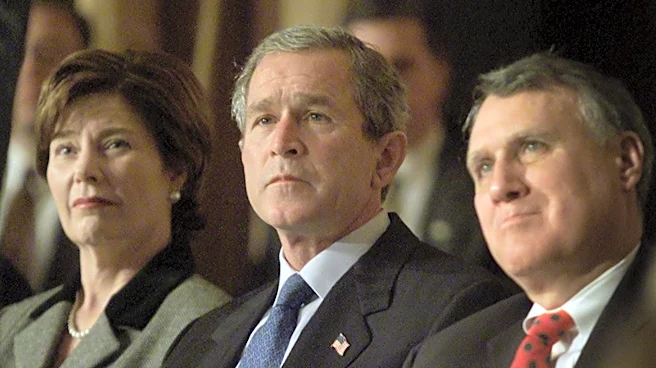
Kyl, an attorney who specialized in water law, helped to negotiate and facilitate several landmark Indian water-rights settlements, including the historic Arizona Water Settlements Act that former President George W. Bush signed into law in 2004.
“His landmark work securing historic tribal water settlements defined this state in ways that will last long after his passing,” U.S. Sen. Mark Kelly, D-Arizona, said in a written statement.
The Arizona State University Kyl Center for Water Policy at Morrison Institute was named for him in 2014.
“He never wavered in the fight for Arizona's water future,” U.S. Sen. Ruben Gallego, D-Arizona, said on X.
Anne Basham, an Arizona native who began her career by interning for Kyl, remembered the Republican lawmaker as someone who cared deeply about being an effective lawmaker. At the end of each day, Kyl would carefully review the letters and phone calls that came into his Senate office, she said.
Kyl was a staunch conservative but was able to work across the aisle because he valued mutual respect, Basham said. She pointed to the Crime Victims' Rights Act of 2004, which Kyl co-authored with the late U.S. Sen. Dianne Feinstein, D-California, as an important part of his legacy.
More recently, when Basham needed help to free a woman who was on death row for her Christian faith in Iran in 2019, Kyl quickly connected her to the people who would help her accomplish that goal.
"They don't make them like that anymore," Basham said, tearing up in a telephone interview. "I don't know if they ever did."
Basham founded the Interparliamentary Taskforce on Human Trafficking and convenes a bipartisan anti-trafficking policy roundtable twice a year in the Senate. Both were inspired by Kyl's focus on bipartisan efforts to help crime victims and keep the world safe, she said.
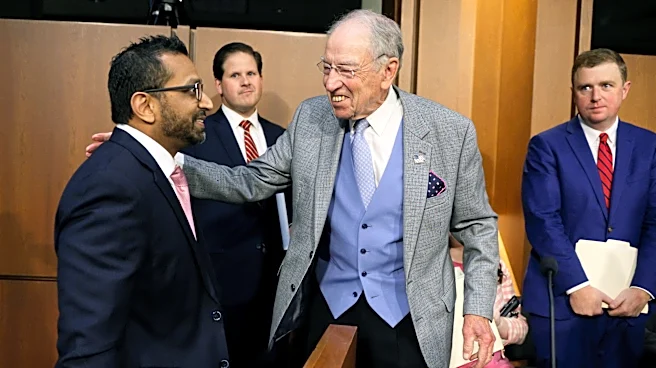
Kyl also left a lasting mark on the Supreme Court. He worked with presidents of both parties to appoint federal judges, Flake said, and served as the “sherpa” who helped Supreme Court Justice Brett Kavanaugh move through a tumultuous Senate confirmation process.
In a twist, Kyl was among the votes to confirm Kavanaugh to the conservative-majority bench when he returned to the Senate in 2018. Kavanaugh had been nominated by President Donald Trump.
In addition to his knack for navigating the halls of Congress, those who knew Kyl said he prioritized his family. Kyl enjoyed going with his wife, Caryll, to their no-frills cabin in the White Mountains of Greer.
"He loved NASCAR, he loved his friends and family, and he loved God and he loved Greer," Basham said.
Kyl was the father of two adult children, a son and a daughter. He also had four grandchildren.
“He told me the most important thing is your family,” Flake said. “That turned out to be the best advice I got from him that was non-legislative, just as a friend.”
In the final years of his life, Kyl remained engaged on key political issues in Arizona and abroad.
He was a wealth of knowledge on water issues, national security and economic policy, and saw balancing defense spending with other priorities as a key challenge facing the country.
"You can tell that I enjoyed being in the Senate and having something to say about these issues," Kyl said at the end of a 2025 phone call. "They are important."
Stephanie Murray covers national politics and the Trump administration for The Arizona Republic and azcentral.com. She co-hosts “The Gaggle,” The Republic’s weekly politics podcast. Reach her at stephanie.murray@usatodayco.com, on X and TikTok @stephanie_murr and on Instagram @stephaniemurray.news.
This article originally appeared on Arizona Republic: Jon Kyl left legacy as Senate 'workhorse,' mentor, colleagues recall