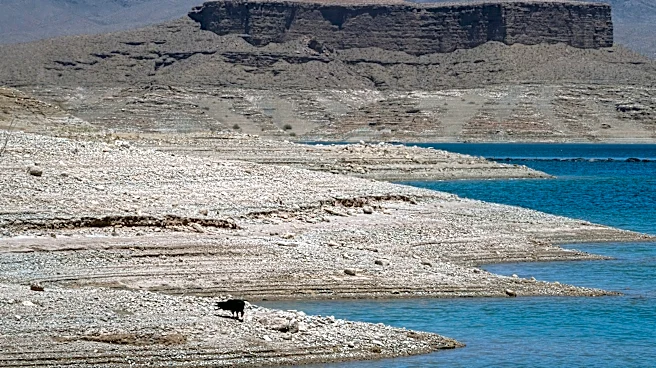






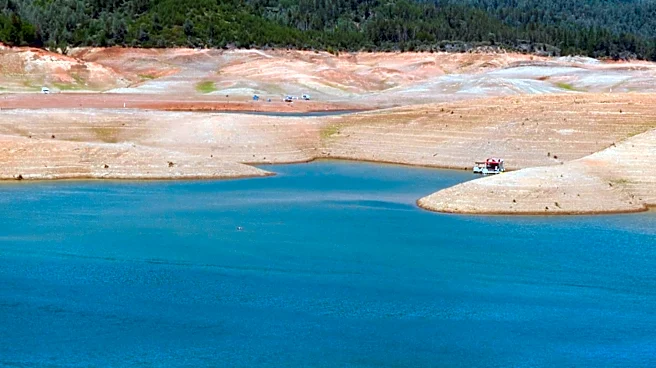
The federal government has finalized a plan to slash the Southwest’s use of Colorado River water over the next two years in an effort to halt decline of storage in the river’s largest reservoirs.
The U.S. Department of the Interior on Aug. 21 announced guidelines for dealing with the river’s shortage for the next two years by trimming 1.25 million acre-feet out of the usual allocation of 7.5 million that Arizona, California and Nevada share.
That’s essentially what those states had already offered to surrender over two years, though they have continued to press the four upstream states to commit to their own cutbacks in the following years if dry conditions in the Rocky Mountains continue to deplete the river.
The two-year operating plan closes
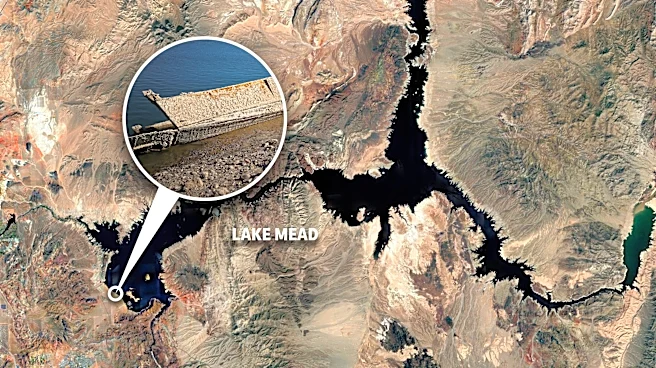
the first chapter in a 10-year “framework” that the department released earlier this summer — one that could take substantially more water from the three states that pull water from Lake Mead on the Arizona-Nevada state line if reservoir elevations continue to drop.
“These decisions provide a water management strategy for Basin stakeholders to respond to the prolonged drought by incorporating flexible tools and voluntary actions while leaving room for consensus agreements,” Andrea Travnicek, assistant Interior secretary for water and science, said in a statement. “The Department and (U.S. Bureau of) Reclamation will continue to work with all Basin stakeholders to identify areas to maximize efforts throughout the Basin to modernize infrastructure, develop conservation programs, and identify innovative approaches to deliver water under changing conditions.”
Arizona will take the largest cut, 760,000 acre-feet, due to the lower legal priority of its Central Arizona Project supply as compared to California and Nevada. California will lose 440,000 acre-feet a year, and Nevada, with the river’s smallest allocation, will lose 50,000. An acre-foot is about enough water to supply three households for a year.
Arizona officials have said this outcome would be a short-term win, though they continue to insist that Colorado, Wyoming, Utah and New Mexico must commit to their own mandatory cuts if things worsen. Those states make up the river’s Upper Basin, and they collectively use less from the river than the Lower Basin does. Without more help from the Upper Basin, though, Arizona has set aside funds for a potential Supreme Court battle to enforce the Colorado River Compact’s 7.5 million acre-foot allocation to the Lower Basin.
Arizona Water Resources Director Tom Buschatzke was traveling when the government announced the guidelines. His department said it would release a statement shortly and make him available for comment later in the day.
California’s lead river negotiator praised the government’s plan for the first two years, but signaled continued conflict unless the states reach an agreement for later years within the framework.
“I appreciate Assistant Secretary Andrea Travnicek and the Department of the Interior for helping move this difficult process forward and establishing a workable path for the next two years,” J.B. Hamby, California’s Colorado River commissioner, said in a statement. “But this is a bridge, not a permanent solution. California, Arizona, and Nevada have shown that states can compromise, make difficult decisions, and reduce water use when the river demands it. But three states cannot carry the responsibility of all seven.”
This is a developing story. Return to azcentral.com for updates.
Brandon Loomis covers environmental and climate issues for The Arizona Republic and azcentral.com. Reach him at brandon.loomis@arizonarepublic.com.
Environmental coverage on azcentral.com and in The Arizona Republic is supported by a grant from the Nina Mason Pulliam Charitable Trust.
Follow The Republic environmental reporting team at environment.azcentral.com and @azcenvironment on Facebook and Instagram.
This article originally appeared on Arizona Republic: Feds release Colorado River plan. Here's how much Arizona will lose