





The Central Arizona Project’s board authorized its legal counsel to take legal action “if necessary” against a federal plan to cut Arizona’s share of Colorado River water dramatically in coming years.
Board members went into a closed executive session before the Sept. 3 vote to discuss certain “occurrences” that could trigger a lawsuit or other legal filing, and did not specify them when voting unanimously for the authorization.
Board member Alexandra Arboleda introduced the motion at the meeting and prefaced it with a statement that the United States Department of the Interior's 10-year framework for dealing with water shortage “contemplates operations that are contrary to law and devastating to the water users of the Central Arizona Project.”
The board, formally known as the Central Arizona Water Conservation District Board of Directors, supports yearly cuts of 1.25 million acre-feet among Arizona, California and Nevada for the next two years as a way of preventing worse declines and giving the states time to negotiate a longer-term deal that those states hope will also extract mandatory cuts from the four states upstream from them and Lake Mead.
Although the federal framework accepts that volume for the first two years, it envisions cuts twice that high on the three states if conditions worsen in following years.
CAP board members spent part of their meeting discussing the need to finalize a three-state agreement that would lock in the 1.25 million acre-foot figure and prevent Interior from imposing something worse during even the first two years of the framework. But they also authorized their general counsel to consider litigation subject to later approval by themselves and CAP General Manager Brenda Burman.
CAP Canal could go dry under Interior plan
The biggest part of the cuts over the next two years — almost all of Arizona’s 760,000 acre-foot share of them — is expected to come out of the CAP Canal that delivers river water to the Phoenix and Tucson areas. That’s roughly half of the water that the federally authorized and built canal can carry, though it has already seen flows reduced by more than 500,000 acre-feet under agreements that are expiring as the new federal plan goes into effect. In the worst scenario under the 10-year framework, CAP officials warn that the canal could go dry.
“In order to protect the water supply of the Central Arizona Project, CAWCD must be able to quickly react to events as they occur, remaining flexible and nimble so as to respond to sudden or changing events consistent with the board's direction, including taking legal action if it becomes necessary,” Arboleda said.
“With this factual background, I move that the board authorize the general counsel with the concurrence of the general manager and the officers of this board and subject to the occurrence of the circumstances discussed in today's executive session, to take legal action if necessary.”
Such an action could include filing to intervene in a lawsuit Nevada has already lodged against the federal plan, she said, “or other related litigation or to initiate independent litigation relating to the (federal) record of decision or the Law of the River and advancing any or all of the causes of action and claims for relief as presented in executive session today.”
Arizona set aside money for possible lawsuit
Staffers briefed the board on Nevada’s lawsuit, listing several legal claims, including that Interior failed to consider the need to comply with the Colorado River Compact, which spells out how much water the three Lower Basin states are due on average each year.
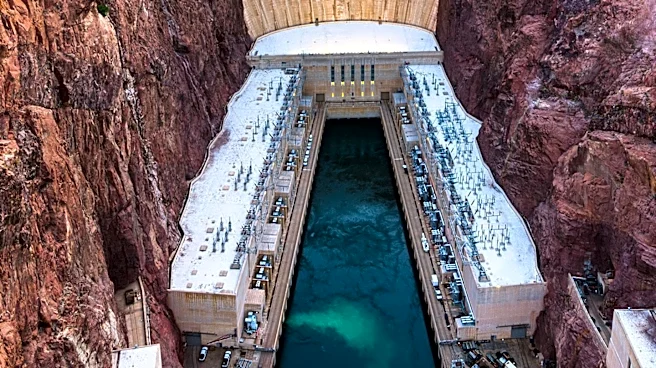
The amount flowing past Glen Canyon Dam and on to Lake Mead is expected to dip below that mark this year, and to be made worse by the new federal plan’s provision to reduce Glen Canyon Dam releases to protect hydropower production capacity there.
Vineetha Kartha, CAP’s water policy director, said a primary motivation for Interior’s plan was to protect critical federal infrastructure at Glen Canyon. Still, she noted, the plan does not protect CAP, which is also a federal project.
In that case, board president Terry Goddard said, the government is protecting “only one piece of concrete, and 336 miles of the Central Arizona suddenly did not become federal infrastructure? When did that happen?”
The Arizona Legislature has set aside several million dollars and hired a law firm to help with a potential lawsuit. For now, officials with the Arizona Department of Water Resources have said their priority is to finalize the three-state deal to conserve water and prevent worse cuts during the next two years. Authorizing such a deal will require action by the Legislature.
In the meantime, the CAP board also approved a deal to purchase roughly 9,000 acre-feet of water from the Colorado River Indian Tribes, a major holder of rights in western Arizona. The water is part of a pool that CRIT left in Lake Mead for later use under a previous conservation program meant to elevate the reservoir’s surface. Board members characterized this as a first step in backfilling the Central Arizona Groundwater Replenishment District’s holdings, and one that could lead to larger deals with tribes.
“This is a small but very important agreement,” Goddard said.
Brandon Loomis covers environmental and climate issues for The Arizona Republic and azcentral.com. Reach him at brandon.loomis@arizonarepublic.com.
Environmental coverage on azcentral.com and in The Arizona Republic is supported by a grant from the Nina Mason Pulliam Charitable Trust.
Follow The Republic environmental reporting team at environment.azcentral.com and @azcenvironment on Facebook and Instagram.
This article originally appeared on Arizona Republic: CAP board authorizes legal action against feds over Colorado River