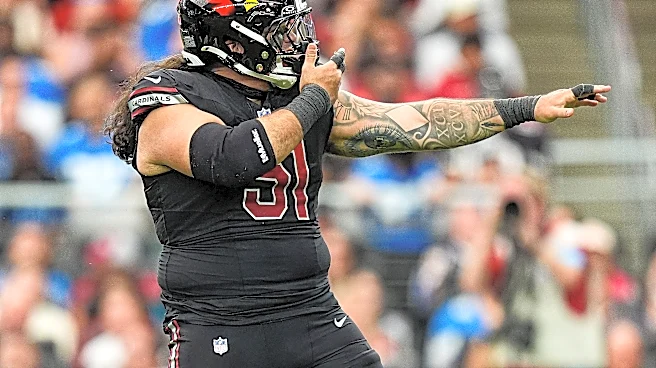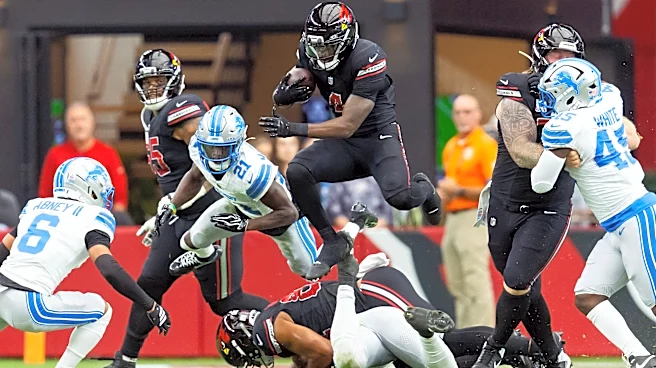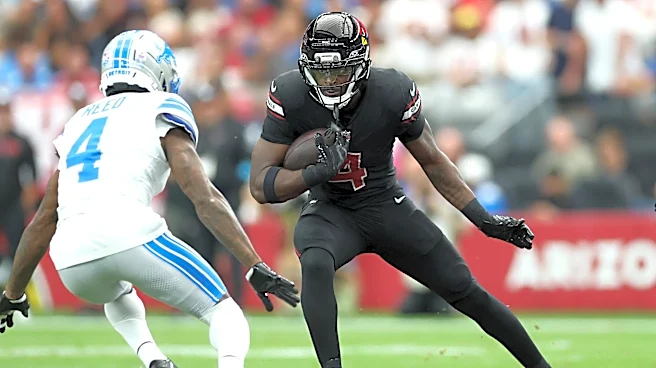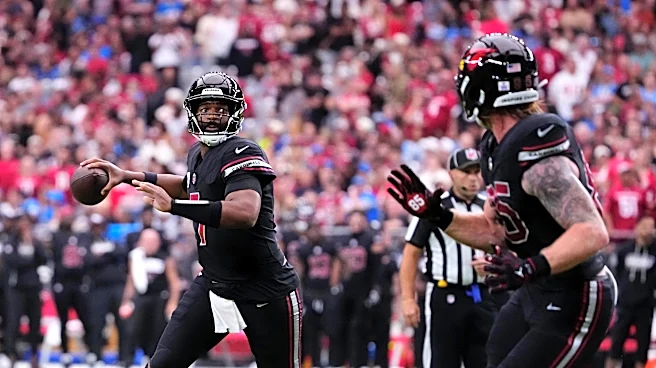


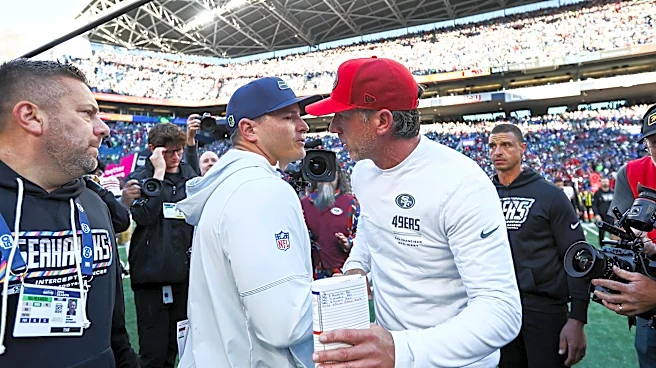

The blueprint is out for how to stop the Arizona Cardinals.
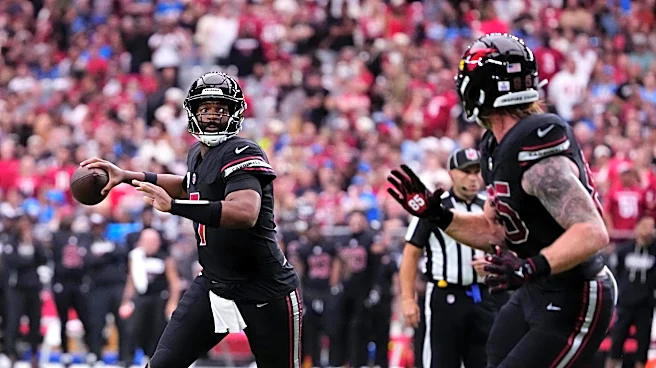
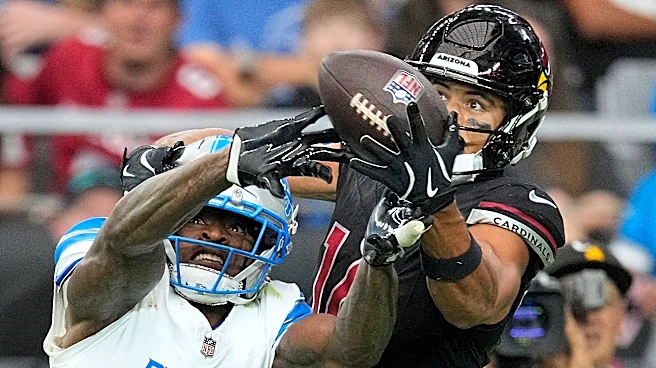
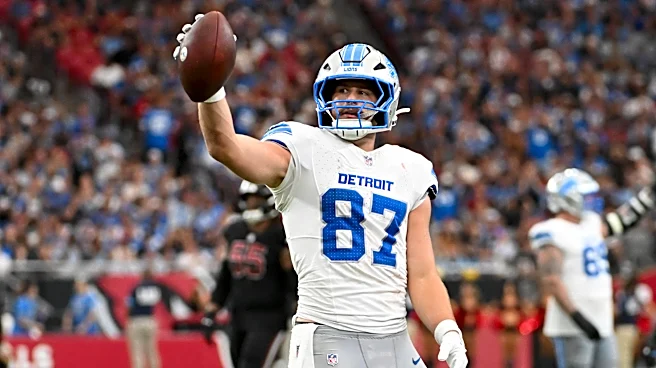
It was created by the New York Giants in Week 4, then tweaked and perfected by the Detroit Lions in Week 5. Both teams played man coverage at a rate almost unprecedented in the modern NFL. With Marvin Harrison Jr. gone, the Lions went a step further, throwing consistent double coverage at Trey McBride and Michael Wilson. McBride estimated he was doubled on 80% or 90% of his routes, an assessment supported by the game tape.
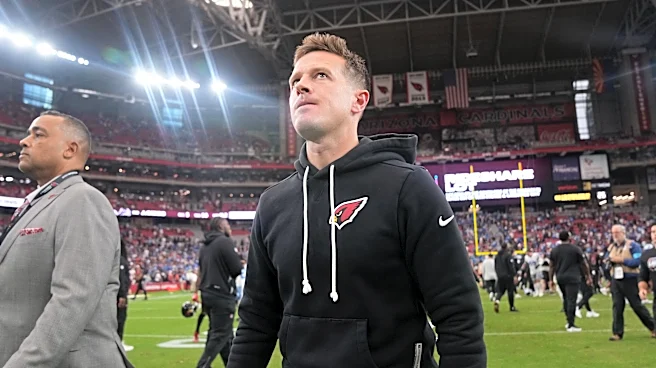
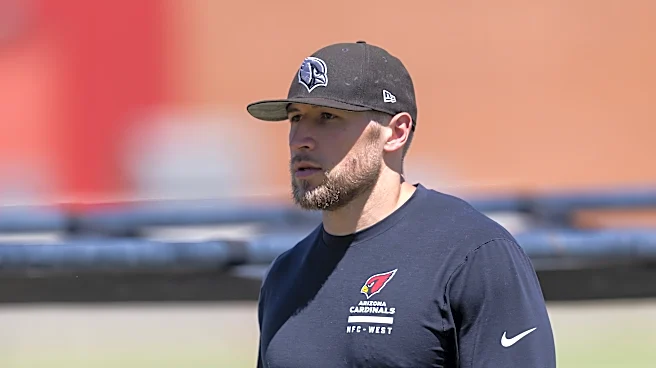
“(The game plan) was about as unique and bizarre as I've ever seen,” Cardinals head coach Mike LaFleur said. “It worked for them. So kudos to them.”
The logic is simple. Beyond McBride and Wilson, the Cardinals’ list of pass catchers — sorted by targets — is as follows:
Kendrick Bourne, Jeremiyah Love, Tyler Allgeier, Elijah Higgins, Jalen Brooks, Reggie Virgil and Teagan Quitoriano.
We’ll get to Love later, so put him aside. Everyone else? NFL defenses will take their chances one-on-one. Plus, Brissett is averaging 2.32 seconds to throw, the second-lowest mark in the NFL. While space can open up quickly underneath against zone coverage — McBride has made his living on those plays — beating man coverage typically requires longer-developing routes, where receivers have time to shake off their defenders.
So now, the onus is on LaFleur to counter that game plan.
Against the Lions, the Cardinals leaned on a heavy dose of classic man-beaters. They ran Jalen Brooks, Reggie Virgil and Elijah Higgins on slot fades, and Kendrick Bourne on slants. More often than not, those players lost their reps, and Brissett had few options for where to go with the football.
“We've gotta scheme some stuff up a lot better to help our guys,” LaFleur said. “Cause it's easy to say, 'well, just throw up the go balls away from them, throw up the slot fades.' And I think that's the loser way of looking at it from a coach's perspective, just throw it on the players and make it come to life.”
That’s not to say there’s no place for those routes.
“Everyone's gonna run slot fades vs. man if you think you've got a matchup that you like,” LaFleur said, adding that “at times” those are the best option. To some extent, the Cardinals simply need more from their pass-catchers.
But there are also ways for LaFleur, as a playcaller, to create wins for his players.
“You can get the bumps off, you can get some natural picks and stuff like that,” LaFleur said.

The Cardinals didn’t do that often enough in Week 5. They had some success on play-action boots, with the safeties leaving deep routes uncovered to double McBride. And on a few occasions, LaFleur’s concepts cleared space for easy completions to Bourne underneath. None of it, though, happened with sufficient regularity.
This hints at a larger issue. LaFleur spoke all offseason about creating conflict between the run and pass, and the Cardinals have been good in those situations, such as play-action boots. But on downs when defenses know they’re passing, the results get ugly.
On first-and-10, the Cardinals actually rank fourth in expected points added per dropback. On second-and-6 or longer, that rank drops to 26th. And on third down, they rank 29th.
Part of the solution lies in the run game. The Cardinals are averaging just 3.8 yards per carry, the 22nd-best mark in the league. On first down, 56.9% of their rush attempts have gone for fewer than four yards, putting them off schedule at the seventh-highest rate in the league.
“The run game's the start of everything,” McBride said. “If you can run the football in this league, everything else opens up. You can pass the ball better, you can do fun stuff.”
But the Cardinals also need their passing game to be better at pulling them out of uncomfortable situations.
LaFleur’s job is to find those answers.
Love, as mentioned earlier, could be a key ingredient — his current ankle injury notwithstanding. He was drafted, in part, because of his ability as a receiver. If the Cardinals are seeing consistent man coverage, he should be a matchup advantage against nearly every linebacker.
Yet, over the past two games, he’s run just 20 routes. Last week, he didn’t line up as a wide receiver on a single snap.
That’s because LaFleur “wasn’t too confident” running five-man protections against the Lions’ pass rush.
“Wanted to have that extra body in (pass protection),” LaFleur said. “There were a couple times where I wanted to get (Love) on some choice routes and stuff like that, but didn't feel confident that we were gonna be able to execute at the level that we needed to.”
That’s the problem facing LaFleur. His pass-catchers — beyond McBride and Wilson — aren’t good enough to win one-on-one. His offensive line isn’t good enough to protect with five. His quarterback isn’t a playmaker who can fix the math.
It’s an unenviable position, especially with the Los Angeles Rams up next. Life doesn’t get easier with Aaron Donald and Trent McDuffie on the other side of the ball.
But this is why LaFleur was hired: to give the Cardinals a schematic advantage. The deck is stacked against him from a talent perspective. Defenses know the score, and they’re not hiding it.
So, can LaFleur overcome those challenges? It’s the first real test of whether or not he has the play-calling ability to succeed as a head coach.
This article originally appeared on Arizona Republic: Arizona Cardinals coach Mike LaFleur faces biggest challenge. Here's why