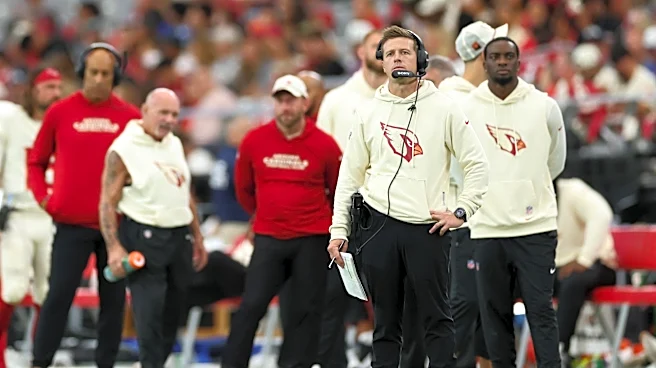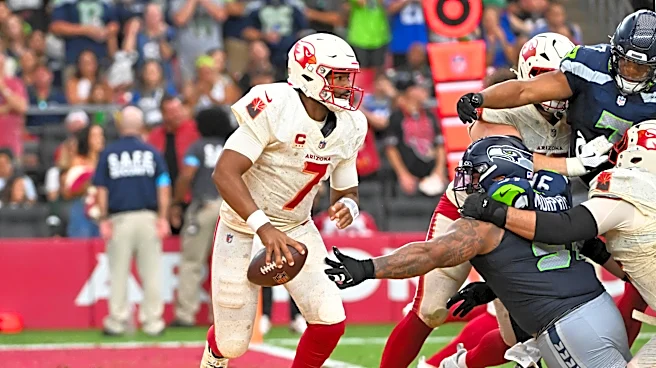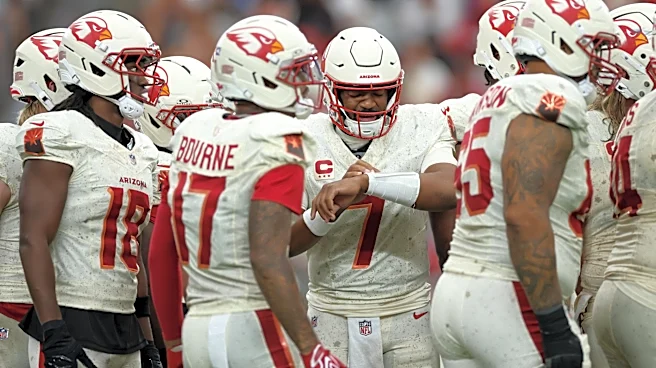



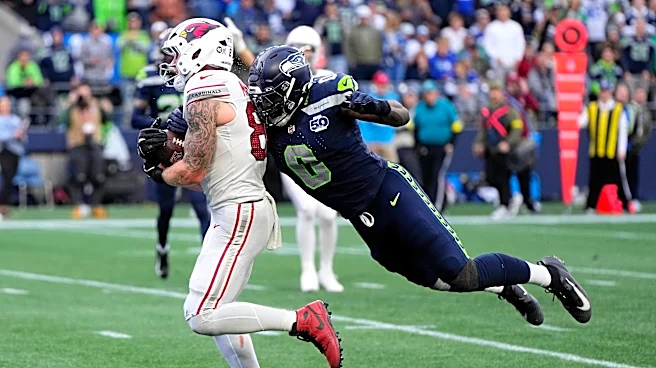
On his drive home from State Farm Stadium after the Arizona Cardinals’ Week 2 loss, Mike LaFleur thought back to each of his offensive play calls and wondered what he could have done differently.
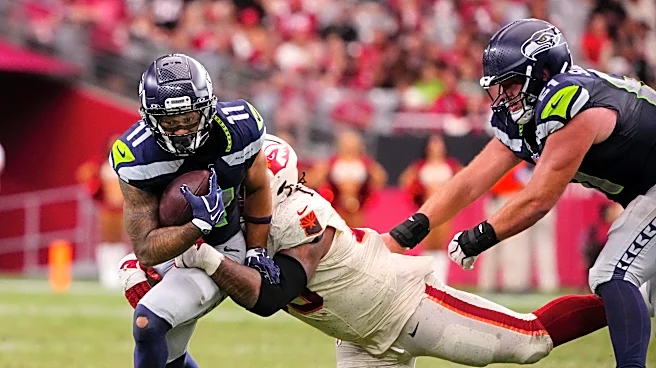
“You can’t dink and dunk” this Seattle Seahawks defense, LaFleur acknowledged, but that’s what the Cardinals did.
They attempted just four passes that traveled at least 10 yards downfield, and completed none. Until garbage time, they didn’t have a single play — run or pass — that went for more than nine yards.
Creating those chunk plays, though, is easier said than done. The Seahawks defense is built to prevent explosives, comfortable in the knowledge that its secondary can quickly rally to any checkdowns.
That’s especially true when the opponent’s ground
game struggles, as the Cardinals’ did. With limited concern about the run, the Seahawks played out of a two-high safety shell on 67.7% of pass plays, the seventh-highest rate of any team in a game this season, per Fantasy Points Data. They dared the Cardinals to beat them underneath.
Still, the Cardinals tried — conceptually — to push the ball downfield. Nearly every pass play featured some sort of deep or intermediate route combination. The Seahawks just took those options away.
LaFleur pointed to one telling first-quarter play, when Marvin Harrison Jr. beat Nehemiah Pritchett on an excellent out route, only for Devon Witherspoon to sink underneath and eliminate him anyway. That’s what the Seahawks did all afternoon.
And it’s why LaFleur stewed over the few chances that the Cardinals had to push the ball downfield. None loomed larger than their second play from scrimmage.
LaFleur thought the Cardinals should have had a touchdown to Marv here on the second play of the game.
— Theo Mackie (@theo_mackie) September 22, 2026
Didn't see it at first but he's right. DB playing the deep third was occupied by Bourne. Marv would have come wide open behind him, if the protection had held up. pic.twitter.com/TOWSLXBuiL
Anticipating the Seahawks' cover-3 look, LaFleur dialed up the perfect play: Kendrick Bourne on a deep out, with Harrison working behind him on a go route angled toward the pylon. That concept puts the defensive back responsible for the deep third of the field in conflict, and he chose to cover Bourne, leaving Harrison with leverage on the deep safety.
“If we execute, I do believe that's a touchdown,” LaFleur said.
Against defenses like the Seahawks, those are opportunities that the Cardinals can’t afford to miss.
Their pass protection, though, let them down. The play was designed for Jacoby Brissett to roll out to his right, with the entire offensive line sliding that way. But right tackle Elijah Wilkinson missed the assignment, blocking as if it were a normal dropback and allowing the edge rusher to get upfield. Immediately, the play was dead.
On the Cardinals’ few opportunities to push the ball downfield, these struggles in pass protection were the most consistent theme.
— Theo Mackie film (@theomackie_film) September 22, 2026
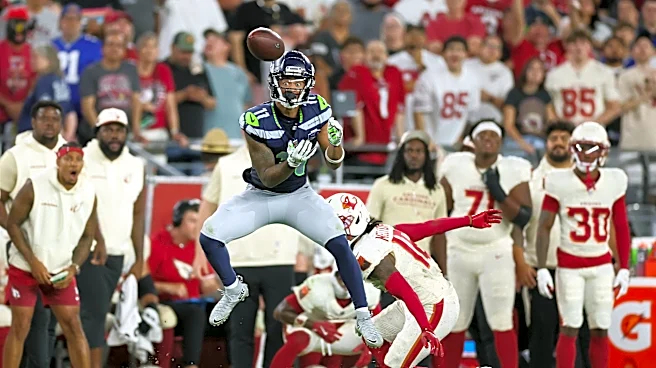
Here, the Seahawks had a rare defensive lapse, misplaying their assignments and leaving Bourne open on an intermediate over route.
But again, the Cardinals' pass protection failed. Right as Brissett set to throw, he felt pressure off his blind side, where left tackle Paris Johnson Jr. was beaten easily.
Entering the season, the right side of the Cardinals offensive line (Wilkinson and Isaiah Adams) was expected to be a weakness. In this game, the far more heralded left side of their line (Johnson and Isaac Seumalo) was equally culpable.
The Cardinals’ issues, though, didn’t all originate up front.
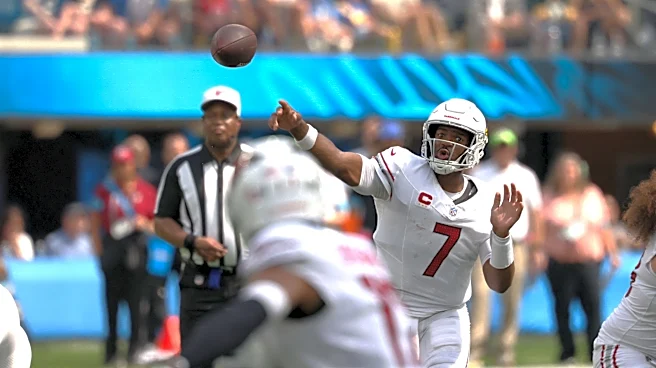
Brissett could have done more. Once the play broke down, he had an opportunity to reset and look back to Bourne, who remained wide open. Creating, though, has never been Brissett’s strength, and he threw the ball away.
Then there’s Harrison. On this play, multiple defenders bracketed him, making him unlikely to be an option. Still, his route turned into a jog midway through. That concern surfaced throughout the game, although LaFleur played it down.
“I don't see it that way,” LaFleur said. “I think his running style is different than some other people's.”
Marv's lone target against the Seahawks.
— Theo Mackie (@theo_mackie) September 21, 2026
Sure feels like he could've done more to get into his break quickly and make himself open before the pressure got to Brissett. pic.twitter.com/t5SCWEoWvk
All three problems again combined to produce an incompletion here.
First, the protection. Adams was beaten one-on-one, while Seumalo and Johnson failed to handle a stunt. That forced Brissett off his spot.
Second, the quarterback. Brissett could have slid to the right, reset and fired to Harrison on the backside of the play. But he struggles in these situations. Over the past two seasons, among 28 qualified quarterbacks, he ranks 12th in expected points added per dropback in rhythm, per Fantasy Points Data. When not in rhythm, he ranks 26th of 28.
Third, the route. Had Harrison exploded into his route, he could have been open before the pressure got to Brissett. Instead, he was slow to join the pass concept. When Brissett first looked his way, he was not yet open.
So, what’s the solution? In some senses, it’s simple.
“We've gotta execute,” LaFleur said. “We've gotta block a little bit better, we've gotta strain a little bit better, and when we have the opportunities, take the chance.”
That feels accurate for Brissett and the offensive line, even if the ceiling is limited.
At wide receiver, the picture is more complicated. Talent is not the issue for Harrison, nor his fellow pass-catchers. But while he had some positive flashes in this game, he did not separate well on go routes.
That begs the question of whether the Cardinals could manufacture more touches for Harrison, but LaFleur met that idea with skepticism.
“I know it's like, ‘Well, just get some easy completions to get going,’” LaFleur said. “And that's fine. You also have Trey McBride, who's one of the best underneath guys in the world. And there's only about 60, 65 plays a game. And you've gotta run the ball. And you've got Kendrick, who works underneath pretty well too. So everyone's kind of got their role.”
For Harrison, that role has been as a deep-ball receiver.
So far this season, 33.3% of his routes have been go routes, per Fantasy Points Data, up from 19.9% in 2025. And while he won on those routes at an above-average rate last season, he has not replicated that success this year. Even his lone reception came while draped in tight coverage.
That creates problems for the whole offense.
While Harrison’s role is often derided as “sacrificial,” it plays an important part in dictating the opponent’s coverage. Having a deep route on the back side of a passing concept takes at least one defender away from the front side, where the play is designed to go.
“Sometimes you're just distributing the field,” LaFleur said.
Against the Seahawks, that didn’t always happen.
— Theo Mackie film (@theomackie_film) September 22, 2026
This play is designed for the ball to go to either Bourne or Michael Wilson, as they run a scissors concept at the bottom of the screen, putting the deep safety in conflict. That defender is forced to choose between them, and he shades toward Wilson. In theory, Bourne should then come open on a deep post.
But look at the other safety. He immediately recognizes that Harrison lost his route against press coverage. So the safety fully turns his back to Harrison, focusing his attention on Bourne and Wilson. Because Harrison lost his route, the entire play was impacted.
These are the multi-faceted issues facing the Cardinals offense.
They have a quarterback, in Brissett, who is limited in his ability to create off-schedule. They have an offensive line that was overwhelmed by an excellent Seahawks front. And they have a key wide receiver, in Harrison, who has struggled to consistently separate and occasionally appears disengaged.
The plays — no matter the results — were not designed for the Cardinals to produce their least explosive passing day in 39 years. They wanted to push the ball downfield, with Harrison at the center of that plan. But against an elite defense, the Cardinals were outmatched in every facet.
This article originally appeared on Arizona Republic: Where is concern level for Cardinals offense after Week 2 dud?