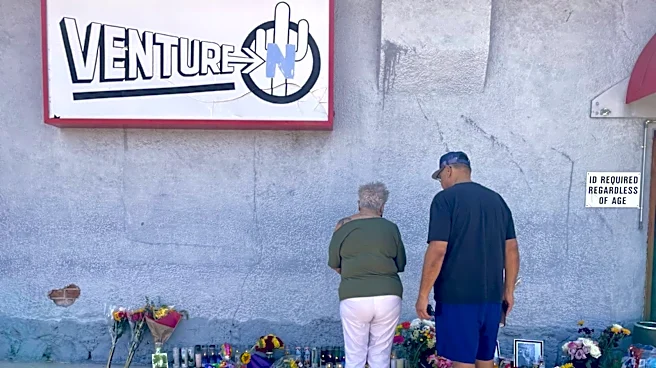





TUCSON — Over a thousand community members came together at Catalina Park the evening of Sept. 2 in a two-hour candlelight vigil in remembrance of Vincent Anthony Siqueiros and Cameron Davis Capara, the men who were killed outside a Tucson bar.
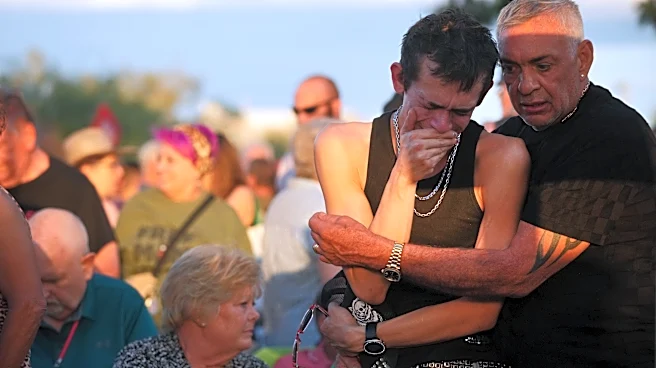
Clergy, elected officials, family members and friends shared messages of love, courage and unity, as well as their personal memories with the two men, who died at the hands of a gunman in what authorities are calling an anti-LGBTQ+ hate crime outside of Venture-N Bar in the early hours of Aug. 31.
Vincent (Vinny) Siqueiros, 42, was described by friends and family as ever-smiling, funny, friendly, exceptionally brave, complicated, fiercely loyal and “the life of any party.” He was a man who didn’t tone down
his authenticity and knew how to stand tall, they said.
Cameron Davis Capara, 33, affectionately known as “Cheese” among family, was described as selfless, compassionate, generous, a “professional hugger,” and a dedicated anti-war and social justice activist who always comforted people around him.
As the sunset skies darkened, the gathering grew denser and candlelight shone across the packed one-block-sized park. At the feet of the small stage, four large photos of Siqueiros and Capara were lined with flower bouquets and letters. In between speeches and moments of silence, sobs broke through the crowd.
“We hold one another because violence like this ripples outwards, leaving behind grief, anger, fear and those terrible questions about places that we have found belonging and whether or not they are still safe,” said Pastor Naomi Hartman, from the Lutheran Church.
Over 30 clergy members from a variety of denominations stood in support and solidarity with the mourners and greater community. Friends of Capara at the Arizona Palestine Solidarity Alliance and Siqueiros’ mom described the two men as spiritual.
“In my faith tradition, we teach that every human being bears the image of God and deserves human dignity,” said Hartman. “Your life is sacred. Your love is sacred. Your joy is sacred.”
Mourners reflect on the roots of anti-LGBTQ+ violence
The vigil was also attended by elected officials, including Tucson Mayor Regina Romero, Vice Mayor Lane Santa Cruz, Councilmember Miranda Schubert and Pima County Supervisor Andres Cano.
Romero said the tragic deaths were “a devastating reminder of the consequences of hate and homophobia.” Like others, she stressed that hate crimes don’t happen in a vacuum.
“Anti-LGBTQ plus violence is cultivated by anti-LGBTQ rhetoric, policies, laws and executive orders,” she said.
Siqueiros' sister, Kate Marquez, spoke at the vigil about who she knew her brother to be, but also about the need to "challenge the joke, speak when someone's being diminished, defend the person who isn't in the room, support organizations protecting the marginalized communities.
"Vincent and Cameron should be here tonight. They were taken from us because hatred is allowed to become violence. And that demands something of each one of us," Marquez said.
"Because hate does not begin with a gun. It begins much earlier. Our rhetoric matters. The jokes matter. The words we excuse matter. Silence matters," Marquez said. "And the way we love people matters. Because love with an asterisk is not the same as belonging. I love you, but. I accept you, but. You are welcome here as long as."
Tucson was described by speakers and attendees who spoke to The Republic as a "safe space" to be fought for, but also a reflection that progress in the fight for equal rights cannot be taken for granted.
“This is the place that I've felt the most connected to, it's home," Robert Stevenson, 50, told The Republic as the vigil concluded.
Over the years, he witnessed incremental progress in LGBTQ+ rights, like getting rid of the ban in the military, seeing more gay people represented in mass media, gains in transgender rights and marriage equality — "being able to marry the person you love because you just love them.
“There seemed to be more acceptance, but then there's just been this hammering away. I'm just tired of that. I'm tired of fearing what's coming next. What's around the next corner?"
The killing of Cameron and Siqueiros, who were close friends of his own, has upended a feeling of safety, Stevenson said. Pointing at his shirt, showing a small, colorful "love is love" sign, he asked: "Am I a target now? I hope I never have to come to something like this again," he said. "I hope no one here has to come to something like this again.”
Action beyond the vigil
Around the park, many people held flags and banners. Jeevan Rao, holding a sign that read “unite against anti-LGBTQ violence,” said he moved to Tucson just months ago to attend university, and that coming out that night to honor the lives of two men that he didn’t know was important to support the community and stand for their rights.
Cano, the county supervisor, said that he was "shaken" by the two acts of gun violence in the last month in Tucson, and was ready to have "serious conversations" about gun safety.
Debbie Navarro, vice president of the Coalition of Labor Union Women in Tucson, said the hate crime against Capara and Siqueiros was an "unspeakable shock, because it happened here more than anywhere else."
"As a young queer kid in the middle of rural Arizona, I learned from a young age that Tucson was where to go for safety, that Tucson would support you, that you were safe here," Navarro said.
"None of us should be afraid. This is still that city for other queer kids around the country, around the state, around everywhere," she said, adding that the union was committed "to fighting for a country where everyone has the freedom to safely shine bright as our true selves. Tucson is a safe place to be," she said. "And we will keep it that way."
Betsy Larson, a neighbor and activist who had close friends in common with Capara and Siqueiros and interacted with them on occasion, said these violent acts against the LGBTQ+ community are rare in Tucson. As president of the West University neighborhood association, and someone in the bar community, the crime felt "personal and deep."
"This doesn't happen often, and when it does we come out in force and we hold each other," Larson said. “(Capara and Siqueiros) were a foundation of this community, and I think what we saw tonight was such a great representation of that."
Clara Migoya is based in Tucson and writes about agriculture and water for The Arizona Republic.
This article originally appeared on Arizona Republic: Tucson mourns Capara and Siqueiros after anti-LGBTQ+ shooting