






When Tempe voters shot down a project to build an entertainment district and stadium for the Arizona Coyotes, the question swirled in the minds of residents, developers and city leaders alike: What will happen next?
The answer: Nothing.
Three years later, there has been no movement toward developing the land.
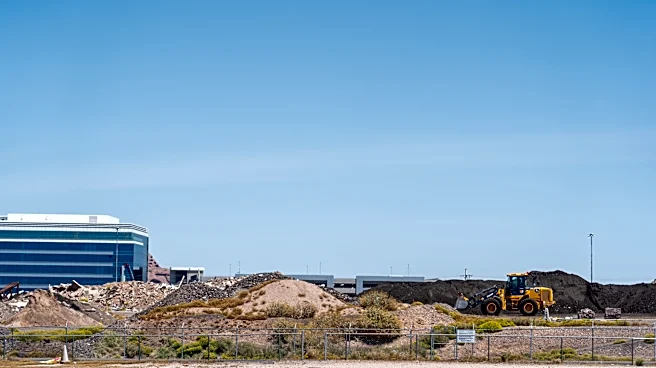
The 46-acre lot at the northeast corner of Rio Salado Parkway and Priest Drive had been hailed as a prime piece of real estate in metro Phoenix as land, especially contiguous land, becomes scarcer.
Despite it being the largest contiguous lot of undeveloped land in Tempe, developers have shown little interest in taking it on.
"Nobody's seen or heard anything about it," said State Sen. Lauren Kuby. She was on the council at the time the stadium
was proposed and voted against moving forward with the deal. She also led opposition efforts during the May 2023 vote.
But Tempe Mayor Corey Woods wasn't too worried.
"At the moment, there's currently nothing on the horizon," he said, "but eventually something will happen there."
Flashback: Coyotes fumble stadium deal
The lot, west of Tempe Town Lake, was home to a landfill ‒ and it still is.
It is a huge swath of city-owned land, from the northeast corner of Priest Drive and Rio Salado Parkway, north to the Salt River and east to Hardy Drive. The landfill takes up about half of that.
In 2021, Tempe began the process of attracting a developer for the land with requirements seemingly tailored for Arizona's National Hockey League team, which at the time was looking to relocate from Glendale to the East Valley.
Records showed the team had been meeting with Tempe leaders for two years before it was made public.
The Coyotes proposed a controversial $2.1 billion sports, entertainment and residential complex. It was approved by the City Council, but a citizen-led effort brought the issue to the ballot box.
Tempe voters shot down the project by a 12-point margin.
"The voters and the citizens of the city resoundingly said, 'We don't like what's being proposed. We want to be involved in it,'" said Ron Tapscott, a community activist involved in the campaign to defeat the Coyotes proposal. "I think that underscores everything. This should be the citizens' 46 acres being developed in accordance with what we desire."
And since then, nothing's happened to the site.
"It's really been mute," Tapscott said.
What happens next on former Coyotes' site?
Behind the scenes, Tempe staff have been figuring out the next steps for the site.
The lot requires environmental cleanup because it was historically used as a dumping ground. Tempe spokesperson Kris Baxter-Ging said the city received a grant of up to $250,000 to conduct an environmental study to figure out exactly how much work is needed to remediate the site.
Under the Coyotes proposal, the team was on the hook for the $70 million remediation. But now, the city could be.
The cost would depend on what the next proposal includes, Baxter-Ging said. Remediation requirements differ depending on the use of the land, and some developments, like housing, have more strict environmental regulations.
Housing is what Kuby would like to see, though she noted that there likely wouldn't be any affordable housing on the site because it is near Sky Harbor International Airport.
The proximity to the airport led Phoenix to sue Tempe over the housing component during the Coyotes proposal.
Tapscott and Woods, who often don't see eye to eye, both said housing may not be the right fit.
Woods pictured something similar to the Coyotes stadium but not to the same scale: an entertainment venue with retail components that could help generate sales tax revenue for the city.
"I don't have a specific idea in my head as to what could be there ... (but) it needs to be something that is very interesting and potentially iconic," he said.
Kuby floated ideas like an electric grid, solar farm or some infrastructure to help power Tempe Town Lake. She and Tapscott added there needs to be a community benefit, like a park, which Woods agreed with.
"There needs to be a component to it that actually does generate revenue," Woods said. "It doesn't mean that you can't have some open space or something that really provides community benefits for the people who live here."
Kuby also worked with Arizona State University students in 2024 to propose ideas for the lot, like:
- Stalls for a market
- A shopping center and soccer stadium;
- A park, library, recycling facility and mini-golf course;
- A multi-use development with a museum, as well as daycares, restaurants and playgrounds; or,
- Composting facilities, along with indoor and outdoor event sites, a community garden and a streetcar expansion.
So far, though, nothing has moved forward.
Woods said the lot has come up in casual conversation with developers, but nobody has approached him or any city staff with a "viable" plan.
"People are definitely aware in the business and development communities, and, just in general, they're aware that the site is still very much there and available," he said. "But I've not had someone sit down with me at this point or anyone at the city and say, 'I actually have a project that I think would really work here, and I really want to talk to you about it and show you all of the specifics.'"
Baxter-Ging and Woods said there was no timeline for a request for proposals, the first step in attracting a developer for the land. The lot will continue to be vacant.
Woods theorized that some developers are waiting for the limelight to dim before approaching the City Council or staff about the parcel.
Whenever the next proposal comes up, Tapscott and Kuby emphasized the need for resident input.
"We have to be very vigilant that the process really accommodates the needs of the voters who actually made the decision," Tapscott said. "This is our land, and we want to develop it in a way that suits us."
Lauren De Young covers transportation and the cities of Tempe and Chandler for The Arizona Republic. Reach her at ldeyoung@azcentral.com.
Like this story? Get more East Valley news straight into your email inbox by signing up for our free weekly East Valley Newsletter, which comes out on Wednesdays.
This article originally appeared on Arizona Republic: Whatever happened with the Tempe site slated for the Coyotes?