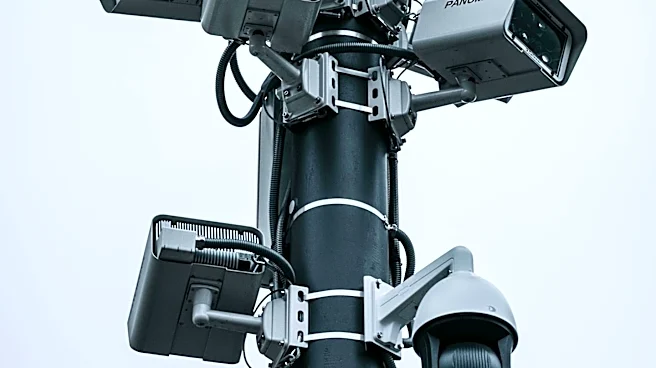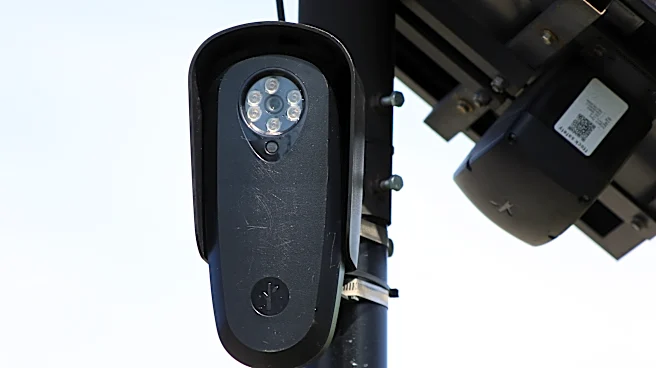









Tempe is among the first cities in the country and became the first in Arizona to ban automated license plate readers in a swift reaction to multiple police departments finding that officers misused the technology.
The ban, proposed by Councilmember Bobby Nichols, passed 6-1 on Oct. 15 despite initial wariness from the majority of the City Council. Vice Mayor Arlene Chin was the lone no vote, saying a "wholesale ban" was "short-sighted" and that appropriate guardrails could be implemented.
"We created technology. We can adjust technology. We can make rules about how to use technology," she said.
The ordinance prevents current and future councils or city departments from acquiring, operating or funding automated license plate readers for law enforcement.
It also adds that those who violate the ordinance could be fired or face civil or criminal penalties.
Earlier this year, Nichols, a first-term councilmember, campaigned on removing automated license plate readers from Tempe streets and won election in May. He has quickly spearheaded efforts to make good on his promise only three months after taking office.
About a dozen people spoke in favor of the law on Oct. 15, though a few said the ordinance does not go far enough. They claimed there are still "back doors" for police to use data from other departments in the ordinance as written. Only a handful of people spoke against the ordinance.
The approval comes despite the city's own police chief and police union disagreeing with the decision early on.
"ALPRs have proven to be instrumental in the work that we're doing on a daily basis," Police Chief Ken McCoy said at a City Council meeting Sept. 24. "I can tell you as the chief of police, the Tempe Police Department does not support that ban and cannot support this ordinance as written."
Originally, the ordinance required a search warrant to make use of any data from such readers, even if the agency didn't obtain it themselves. McCoy worried about tying officers' hands when working with outside agencies that do use automated license plate readers.
That concern was resolved in the approved version of the proposal, which said that such data obtained during a multi-jurisdictional task force can be used. The approved version also allows officers to use automated license plate reader data only under certain conditions, such as a judicial warrant, court order or federal or state law.
It also dictates that data held by any previous supplier of automated license plate readers, like Flock Safety or Axon, will be destroyed within 30 days.
Almost every city in the Valley used Flock Safety's automated license plate readers, but in August, after multiple cities announced police officers had potentially misused the system, a handful of cities quickly canceled their contracts.
Tempe canceled its contract with Flock Safety, a controversial company that provides the cameras, in late August. The city also participated in an automated license plate reader pilot program with Axon, a Scottsdale-based safety company best known for Tasers. Tempe leaders have repeatedly said that Tempe police officers did not misuse the Flock system and that cancelling the Flock contract was a precaution and an active response to community concerns.
But in most cities, city councils have taken no further action despite a wave of critics calling for bans of — or at the very least guardrails on — the technology. Queen Creek became the first municipality to penalize misusing the Flock system but did not axe its contract with the controversial company.
Tempe's ban will go into effect in 30 days. It could be repealed in the future only by a council vote.
However, Flock cameras aren't disappearing from Tempe. Arizona State University still uses the technology, and the ban keeps a carve-out for parking structures.
Lauren De Young covers transportation and the cities of Tempe and Chandler for The Arizona Republic. Reach her at ldeyoung@azcentral.com.
Like this story? Get more East Valley news straight into your email inbox by signing up for our free weekly East Valley Newsletter, which comes out on Wednesdays.
This article originally appeared on Arizona Republic: Tempe becomes first in Arizona to ban all Flock-like cameras