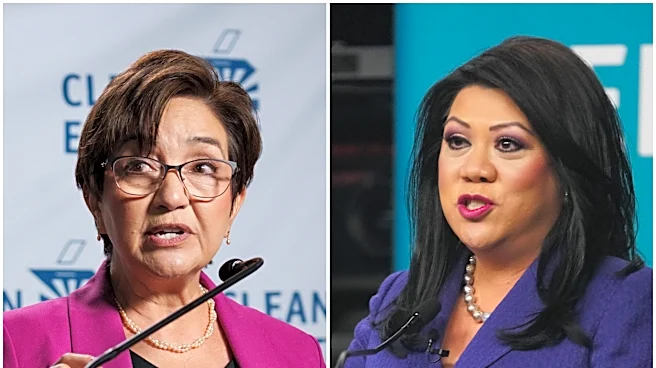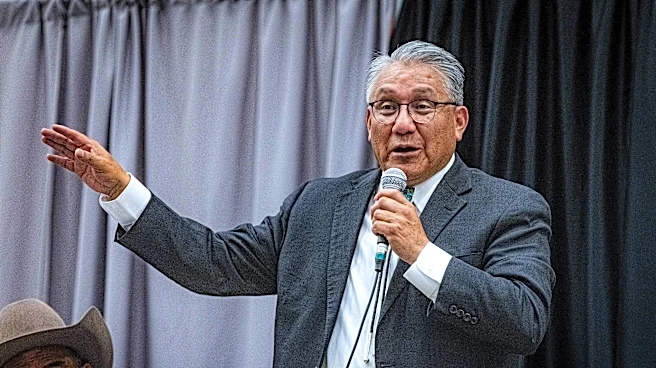




Navajo Nation Speaker Crystalyne Curley outlined her first 100-day plan during the opening question of the first Navajo Nation presidential debate, describing what she and her running mate, Chris Deschene, envision as their priorities if elected President and Vice President of the Navajo Nation.
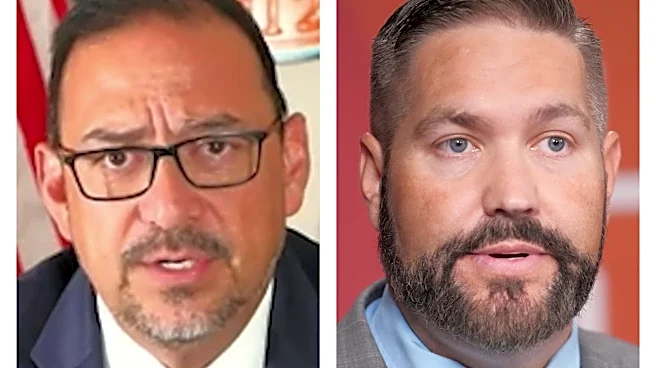
The Sept. 24 event featured Curley and Deschene debating Justin Jones and his running mate, Emily Ellison. It was held at Navajo Technical University in Crownpoint, New Mexico, and was the first of three presidential debates planned before the Nov. 2 general election.
Curley said her administration would reduce staffing in the Office of the President and Vice President, and reduce the salary associated with the office.
She said she would appoint an attorney
general "to stop the pathways of uranium transportation on our public highways." The same appointed attorney general will also be put to work to investigate the $24 million paid to ZenniHome for modular homes that never materialized— ambitious goals that address issues that have contributed to ongoing tensions between the current Buu Nygren–Richelle Montoya administration, the Navajo Nation Council and constituents.
"I will select and appoint an attorney general that will finally put on an investigation on the $24 million that council has been asking for," Curley said. "The list goes on and on, because we are actually prepared to present a plan to the Navajo people."
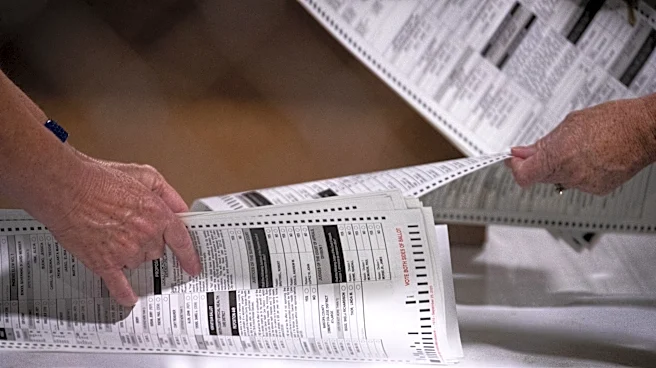
With 142,912 registered Navajo Nation voters, only 49,274 actually casted a ballot during the Navajo Nation primaries on July 21, according to the official primary results. Of the 16 presidential candidates, Jones came in first with 15,098 votes, and Curley trailed with 8,670 votes, with incumbent President Buu Nygren finishing third with 7,430 votes.
Candidates talk about highest priorities
Jones, who owns a law office in Farmington, N.M., ran for president in 2022, finishing third in the primary election behind Nygren and former President Jonathan Nez, who is now the Democratic nominee for Arizona’s 2nd Congressional District.
Curley has built her career working for the Navajo Nation and previously served in the Nez administration. She also made an unsuccessful run for the Navajo Nation Council several years ago. It was not until the current administration that she won a council seat in a race so close that her opponent requested a recount. Her opponent was an incumbent seeking his fourth term, making this Curley’s second campaign against him.
Curley become the first woman elected as a council delegate to represent the communities of Tachee/Blue Gap, Many Farms, Nazlini, Tselani/Cottonwood and Low Mountain. She later made history when her fellow council delegates selected her as the first woman to serve as speaker of the Navajo Nation, a position she held for the entirety of her tenure on the Council. She is now looking to become the first female Navajo president.
"Let's talk about real solutions today," said Curley at the start of the debate. "Not the ability to say that a woman cannot lead. It is 2026."

Jones said one of his first priorities would be to appoint division directors who were not part of the Nygren-Montoya administration or from the past three Navajo Nation Councils. That could also prove to be a significant goal, given that some of the individuals serving in these positions are longtime tribal employees who have worked for the Navajo Nation government for years and have served under previous administrations in various capacities.
"They're not going to be a part of this administration," Jones said.
During Curley's rebuttal, she said Jones had ample time to develop a plan and failed to do so, to which Jones responded: "You don't need to read a piece of paper to understand what is the problem. You don't need to read something because you live the problem every day. You deal with it every day."
How would they further economic development?
Throughout the exchange among all four candidates, the differences were evident. Answers frequently centered on contemporary issues facing the Navajo Nation and drew on ongoing disputes within the current administration, including the long-running issue surrounding the attorney general position. For nearly two years, the Nygren-Montoya administration has been unable to secure Council approval for an attorney general.
The questions for presidential candidates covered a range of key issues, including the candidates’ first 100 days in office, government effectiveness and accountability, job creation and economic development, support for university research, artificial intelligence and Navajo priorities, and the balance of power under Title 2. That part of the Navajo Nation Code outlines the three-branch system of the Navajo Nation — the legislative branch (Navajo Nation Council), the executive branch (Office of the President and Vice President) and the judicial branch.
One question posed to the candidates: Which specific laws, regulations, or departmental policies and processes would they change to make the Navajo government more effective, transparent, and accountable?
"The problem is that too many times a lot of people are hired that have no clue on what is going on on the Navajo Nation," answered Jones. "Because they don't live it."
Candidates were asked how they would create high-paying, permanent jobs and attract new investment and entrepreneurs to the Navajo Nation.
Jones said his administration would begin by issuing a series of directives and executive orders focused on several priorities. One of the first, he said, would be enforcing the Navajo Business Opportunity Act under Title 5, which establishes laws and regulations for business activities, economic development, and commercial operations within the Navajo Nation jurisdiction.
“I’ve heard this rhetoric over and over and over — Navajo preference, Navajo preference,” Jones said. "But when you look at the way that the contracts are being awarded under Title 12, and then under other contracts on the Navajo Nation. Non-Navajo companies continue to get the majority of the contracts."
Title 12 under the Navajo Nation Code deals with managing how the Navajo Nation plans, approves, adopts, implements, and controls its comprehensive annual budget. It sets fiduciary responsibilities and spending policies for public funds.

Curley pointed to the Navajo Nation’s reliance on public-sector employment, noting that the government has more than 2,000 job vacancies. Many of the available positions are in public service, including Navajo Nation government jobs. Schools are another major employer, followed by hospitals. She noted that less than 7% of jobs are in the corporate and private sectors.
"That statistic tells us we need to support our Navajo businesses and entrepreneurs," Curley said.
She said her administration would revitalize regional offices and refocus the Division of Economic Development on supporting businesses through technical assistance, startup planning and startup costs. Within her first 100 days, she said she would establish an advisory group of Navajo entrepreneurs and business owners to help shape economic policy from the grassroots level.
Data sovereignty and AI
The Naabik’íyáti’ Committee recently approved a position statement establishing a Navajo Nation Artificial Intelligence Policy Working Group to protect Diné traditions, cultural knowledge and data sovereignty. The measure affirms the Nation’s intent to protect its intellectual property and traditional cultural expressions while developing policies to address AI’s impact on Navajo people, culture and data.
A question posed was how the candidates would support research underway at Navajo Technical University in areas including water, energy, cybersecurity, artificial intelligence and health, and how that research could be incorporated into their economic plans.
"Anything and everything that this institution should be doing should be to protect and preserve," Jones said.
Curley referred back to the AI policy working group that had been passed under her speakership and said her team is committed to protecting Navajo sovereignty, including the Nation’s land, water, air, people and intellectual property.
"AI can already speak Navajo ... and that is a current threat that is real today," Curley said. "We want to protect the breach of data, we want to protect our data sovereignty, our data collection that is stored throughout this whole nation and off the nation. This administration will also create a security plan, to secure proper data management and operation. Within 100 days, this is what we're going to do and work on to address technology and the threat of AI."
Arlyssa D. Becenti covers Indigenous affairs for The Arizona Republic and azcentral.com. Send ideas and tips to arlyssa.becenti@arizonarepublic.com.
This article originally appeared on Arizona Republic: Navajo presidential hopefuls debate economic development, AI policies