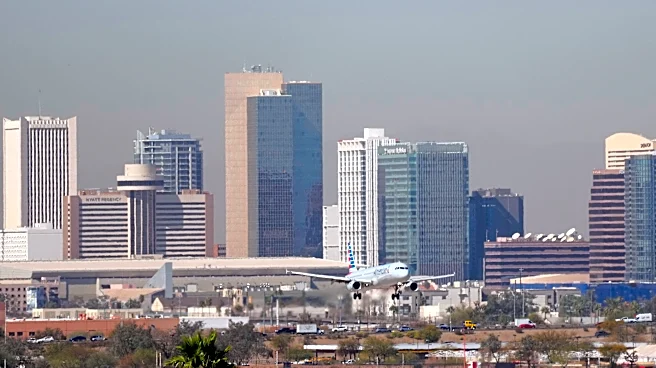

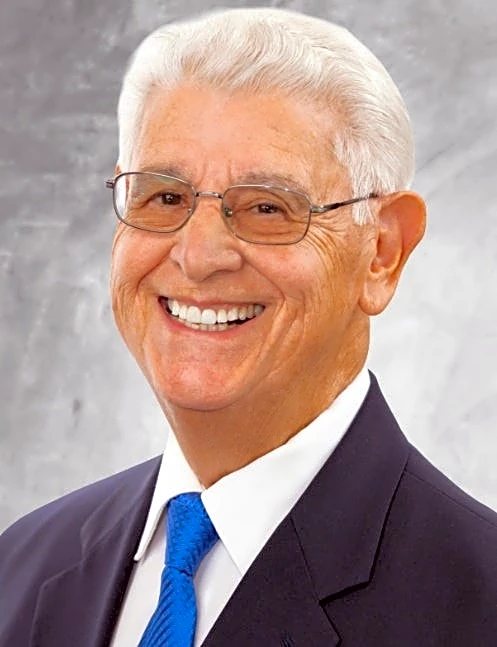
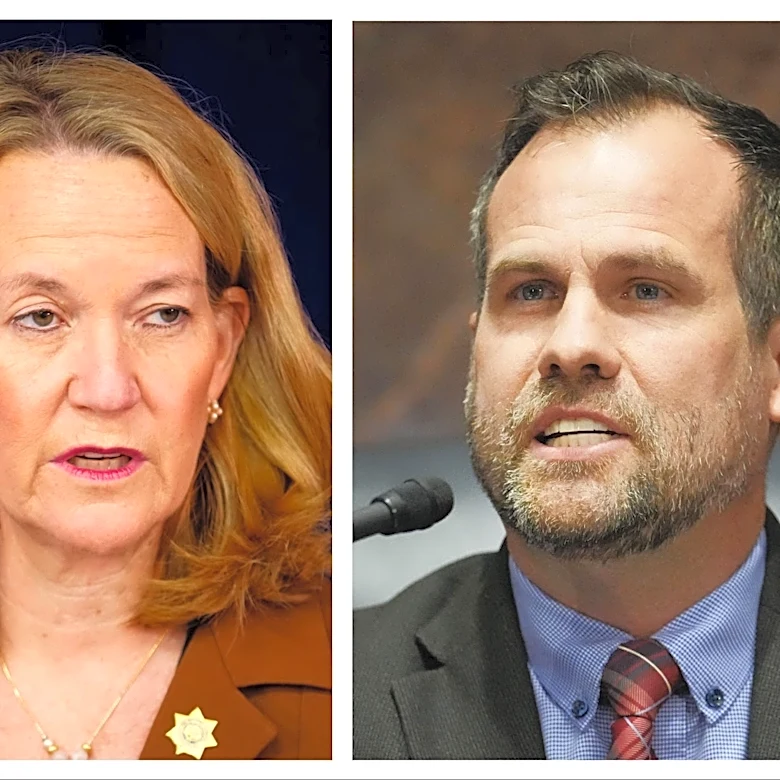
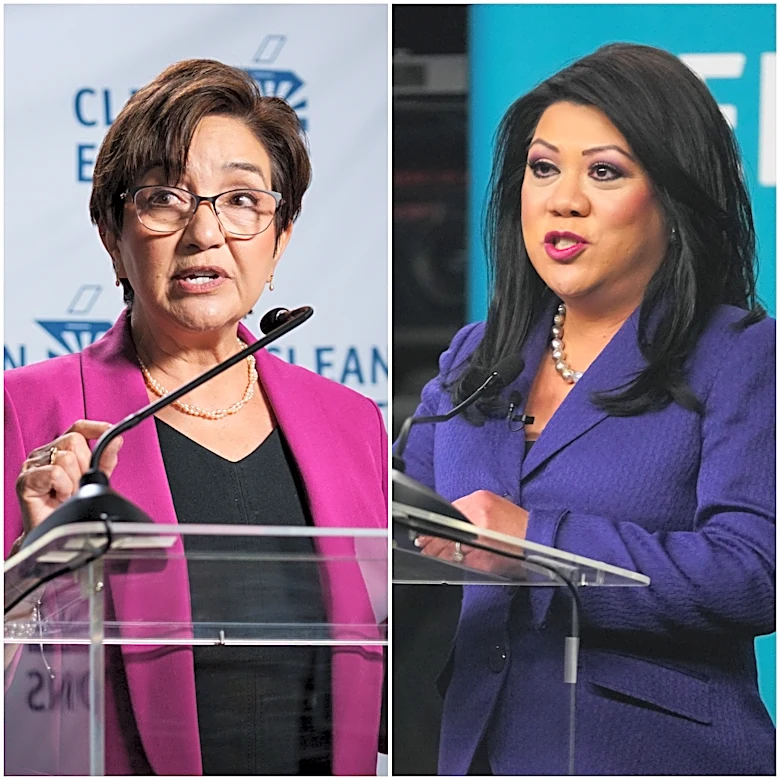


Voters across metro Phoenix will go to the polls in November to pick local leaders in the largest cities in the region.
Local elections are taking place as cities grapple with decisions over how to guarantee a dependable water supply, whether to regulate or limit data centers and how to curb abuses of automatic license plate reader technology such as that operated by Flock Safety.
City and town councils vote on development, taxes and street improvements. They approve deals to bring big employers to the area. They map out the long-term future of a community: the type, volume, density and location of new development. They set budgets that determine the level of police and fire service you get and which parks and libraries are maintained or built.
Elections may also dictate the tone, civility and possibly the effectiveness of local government. Increasingly, routine policy disputes on city councils across the region have become more personal and vindictive. Candidates are openly describing themselves in partisan ways as they seek offices that are non-partisan by design. There have been more accounts of elected officials making personal attacks on their opponents and targeting them with formal complaints and legal actions.
More than 900,000 actively registered voters will be able to elect leaders in Phoenix, Mesa, Scottsdale, Peoria and El Mirage.
Some 29 candidates are vying for 11 council seats, with two up for grabs in the contentious Scottsdale runoff race.
Peoria will get a new mayor, with two candidates seeking the seat vacated by Jason Beck.
Similarly, voters in El Mirage and two districts each in Phoenix and Peoria will have new councilmembers representing them, while the fractured Scottsdale City Council could get one or two new members, depending on results.
Two council races in Peoria are uncontested, depriving more than 35,000 voters the chance to pick their next council member.
Nearly 700,000 voters in Mesa, Tempe, Peoria and Chandler will decide the outcome of 11 local ballot measures to raise taxes, borrow hundreds of millions of dollars and change how cities are governed.
Residents have to be registered by Oct. 5 to vote in the Nov. 3 election. Early voting for the primary election starts on Oct. 7. The last day to request a mail-in ballot is Oct. 23, and the last day to mail it back is Oct. 27.
Here is who is running in the contested races for mayor and council in Maricopa County cities and towns.
Phoenix City Council
The state's largest city, with about 1.7 million people, approved a new redistricting map in 2023 that made mostly minor changes.
Four of the eight districts (4, 5, 7 and 8) have a majority Hispanic population and four have a majority non-Hispanic white population (Districts 1, 2, 3 and 6). A map of the districts can be found at phoenixredistricting.com.
There are competitive races in Districts 2, 4, 6 and 8, with two new council members certain to replace term-limited incumbents.
If no candidate receives a majority of the votes cast in the Nov. 3 election, the top two vote-getters will compete in a runoff election on March 9, 2027.
District 2 (Northeast Phoenix): Jim Waring, who has served as council member for the district for 15 years, is term-limited and cannot run again. Council members can be elected to and serve only three consecutive terms. Members appointed to fill a vacancy on the council, like Waring was back in 2011, can finish the term of the person they replaced, then serve up to 12 consecutive years if voters approve. Waring is a conservative and former Republican state senator.
Here's who's running to replace him.
Matt Evans: Evans is a senior technology developer for Parchment, a site that manages college transcripts, and has previously run for the City Council and for mayor. His campaign takes a political tack, emphasizing his endorsements by prominent Republicans and the conservative group Turning Point Action.
Danny Mazza: Mazza is a lawyer who specializes in estate planning and probate law. He's experienced in working with political campaigns, including making trips to Washington, D.C. during the 2008 presidential season and interning in college for the office of U.S. Sen. John McCain.
Julie Read: Read is a former special education teacher and a small business owner. The wife of a longtime firefighter, Read was portrayed as a hero by a TV news outlet in May for helping pull a man out of his car before it burst into flames.
District 4 (Covers downtown and midtown): Laura Pastor has served three terms since first elected in 2014 and is term-limited. The district is now the most competitive of the eight, with seven candidates.
Ashley Harder: The founder and owner of Harder Development, Harder is responsible for several projects in Phoenix, including the restoration of the Reverend Henry M. Campbell House in the Roosevelt Historic District. She's a member of the Downtown Phoenix Community Development Corp. board of directors and co-chair of the advocacy group Central City Planning & Development Committee, which is part of the nonprofit Phoenix Community Alliance.
Ed Hermes: Hermes is a lawyer with the state's biggest law firm, Snell & Wilmer LLP, the same firm used by the city in several active lawsuits, and has legal experience in housing, construction and gambling issues. He's in his second term as a member of the Osborn School District's governing board.
Cassandra Hernandez: Hernandez's mother has been a member of the Cartwright Elementary School District's governing board for over 20 years, and Hernandez followed in her footsteps, getting elected to the same board when she was 19. Having both family members on the board ran afoul of state law, though, and a recent court decision on the issue led to Hernandez's resignation in July. She told the Arizona Republic she's currently working as an assistant general manager at EoS Fitness.
Patricia Jimenez: Jimenez is a real estate broker who's been on the governing board of the Isaac Elementary School District since 2003. She's running for reelection on the board in addition to running for a council seat. The school district is under state receivership after significant financial problems that occurred during her tenure on the board.
Zachary Lauer: Lauer works in sales for USHEALTH Advisors, a Texas company that sells health insurance plans, and refers to himself as a health insurance expert on his campaign website. He also emphasizes his belief in Robert F. Kennedy Jr.'s "Make America Healthy Again" movement.
Michael Mazzocco: Mazzocco made a career in marketing, hospitality and catering, and was the former operating partner and president of The Herb Box Catering Company, according to his LinkedIn site. He's also worked as a faculty associate for Arizona State University, helping food entrepreneurs learn the business.
Robb Olivieri: Olivieri has worked at the Luminosity Lab at Arizona State University, which labels itself as "An interdisciplinary 'skunkworks' R&D engine," for eight years and has been its director since early 2025. He's also the president of the Melrose Community Alliance.
Megan Schmitz: Schmitz is a community advocate who previously worked for Arizona Public Service and was senior vice president at Horizon Strategies of Arizona, which was founded by longtime APS executive Jessica Pacheco and former Gilbert Mayor Jenn Daniels. She's got experience with the district, working as a research analyst and chief of staff for more than eight years under Councilmembers Laura Pastor and Tom Simplot.
District 6: (Arcadia neighborhood, Ahwatukee)
Kevin Robinson (incumbent): Robinson, a Phoenix police officer who retired as an assistant police chief, was elected to his first term in 2022 after successfully winning a residency challenge. He's put his experience to use since retirement: He works as a criminology and criminal justice instructor at Arizona State University, and he served as chair of the city's Public Safety subcommittee for two years. He's a former Republican, now unaffiliated to any political party, who considers himself a fiscal conservative.
Michael Del Prete: Del Prete is a real estate investor who works as the executive director of the Arizona Real Estate Investors Association. He owned We Heart Houses, a real estate company, until 2022, and he also owned a hair salon in Phoenix for 12 years with his wife.
District 8: (South Phoenix, Laveen, parts of downtown)
Kesha Hodge Washington (incumbent): Washington is completing her first term on the council. Her victory in the 2022 election made her the first female Black Phoenix City Council member, and in 2026 she was selected by the council to be vice mayor. She's a former Arizona assistant attorney general and lawyer who's an expert in intellectual property and other legal matters.
Frank Abasciano Jr: After moving to Phoenix in 2013, Abasciano started a demolition business he still owns.
Jarrett Barton Maupin Jr: The pastor and civil-rights activist has garnered wide attention for his support of people shot by police, claimed discrimination or suffered some injustice. He's also run into problems with the law, once serving a month in jail for violating probation after a 2009 conviction for making a false statement to the FBI about his false accusation of former Mayor Phil Gordon. In May, he was indicted on nine felony counts related to an accusation of fraudulently cashing checks. A trial date is tentatively set for Nov. 5.
Other coverage:
Candidates: Meet the 16 people running for Phoenix City Council in 2026
Arizona primary election 2026: Who is running for mayor, city council?
Scottsdale City Council (2 seats)
Three candidates are vying for the last two at-large council seats. One is seeking reelection. A fourth candidate did qualify for the runoff race following the primary election but withdrew to avoid splitting the vote among his political allies.
Barry Graham (incumbent): The south Scottsdale resident, who lives near Old Town, is a Certified Public Accountant and a father to two boys. He’s a Republican who was elected to the City Council in 2022.
Michelle Ugenti-Rita: The lifelong Scottsdale resident and commercial real estate agent is a mother of three. She was also a Republican state lawmaker who served in the Arizona House of Representatives from 2010 to 2018 and the Arizona Senate from 2018 to 2022.
Raoul Zubia: The south Scottsdale resident previously worked in the banking industry as a branch manager and a mortgage loan underwriter. He now serves on the boards of various charitable organizations.
Q&A: Candidates share their plans if elected to Scottsdale City Council
More coverage:
- Fighting words and war over water treatment: Why Scottsdale froze its water treatment plan over politics
- Axon influence on the Scottsdale election: PAC with ties to Axon campaigns against Scottsdale council candidates
- Watch combative Scottsdale candidate's forum: Scottsdale council candidates square off in Republic forum
- What the Scottsdale council candidates clashed over: Accusations, personal attacks fly in Scottsdale council debate
- More on Axon's influence and PAC money pouring into Scottsdale race: PACs exchange $335K to defeat Scottsdale council candidates
- Factcheck: The truth about Scottsdale's water supply: Fact-checking Scottsdale council candidates' claims about water
- Why one council hopeful withdrew from the runoff race early: Littlefield exits Scottsdale council race to boost allies' odds
Mesa City Council
Mesa has one city council runoff, two bond measures, and two city charter amendments. A first-term incumbent is trying to hold onto her northeast Mesa seat against a challenger calling for closer scrutiny of city spending.
District 5: (Northeast Mesa)
Alicia Goforth (Incumbent): The 18-year Mesa resident and corporate lawyer has made public safety and quality of life a centerpiece of her campaign. Goforth is also stressing making sure city government is fiscally responsible whole pushing to strengthen the economy.
Aleks Vranicic: The cosmetic consultant and contractor has pushed for more transparency around how tax dollars are spent. He's also pushed for fixing traffic in the Las Sendas and Red Mountain Ranch neighborhoods near the Power Road exit off North Loop 202.
Q&A: What are Mesa City Council candidates' priorities?
Other coverage:
How Mesa's primary election played out: Goforth heads to runoff in key Mesa council election
Peoria mayor
A sitting councilmember and a former police chief are running to be the city's next leader. Mayor Jason Beck opted not to run for a second term.
Michael Finn: Finn has been serving on the council for more than 10 years, representing the central region of the city known as the Palo Verde District. He is a top leader for a private equity-backed commercial heating and cooling company. Before he was elected to the council, he was chief financial officer for the Peoria Unified School District and he also held leadership roles at UPS and US Airways. He is backed by Beck.
Arthur Miller: Miller led the Peoria Police Department for five years before announcing his retirement in 2023. After that, he briefly served as Goodyear's interim Police Chief. Miller started his career with the Los Angeles Police Department and spent more than 30 years there before leaving in 2013 to be the South Pasadena police chief.
Q&A: Peoria mayoral candidates share their priorities
Other coverage:
- Jason Beck withdraws reelection bid: Jason Beck won't run again, plans to focus on family and business
- Peoria voters' options after Beck withdraws campaign: Who will replace controversial Jason Beck?
Peoria City Council
Three council seats are on the ballot, and Peoria is expected to get at least two new leaders to fill Finn's seat and another left by Councilmember Denette Dunn, who opted not to run for reelection. Only one council race is contested.
Palo Verde: There is one candidate running unopposed to represent the central region of Peoria.
Tad Snidecor: Snidecor is a retired U.S. Marine First Sergeant. He has led suicide prevention and mental health programs for service members and veterans and he is a board member for Soldier's Best Friend. He served on the Peoria Veterans Board. He has more than 30 years of leadership experience in business, logistics, crisis response, healthcare and government operations.
Acacia: One councilmember is running unopposed for reelection, but a write-in candidate is also trying to run for the seat to represent the southeastern region of the city.
Jennifer Crawford (incumbent): Crawford was first elected in 2022. She is a self-employed consultant with more than 30 years of private business and marketing experience. Crawford has overseen small businesses and a non-profit organization. Residents have recently challenged her reelection eligibility because of questions regarding her residency.
Emily Saeteurn (write-in): Saeteurn works in social work and higher education. She said she previously considered running but didn't. After questions were raised about Crawford's eligibility, Saeteurn put herself down as a write-in candidate.
Pine: There are two candidates running to represent the southwestern region of the city.
Eva Osuna: Osuna previously worked for the state's Division of Developmental Disabilities and Child Protective Services, and later went on to teach special education. She founded a nonprofit in honor of her sister, which provides scholarships to students in the Peoria Unified School District. Osuna served on Peoria's Historic Preservation Commission and the Downtown Peoria Revitalization Committee.
Joysaphine Waitman-Powell: Waitman-Powell is the director of strategic initiatives for Mentally Anonymous, a Peoria-based nonprofit that advocates for mental wellness and serves on the board of directors for Engaged Arizona, an Arizona nonprofit that works to register and educate voters. Waitman-Powell is also a leader within the National Coalition for Black Women's Phoenix chapter. She currently sits on the Peoria Planning and Zoning Commission.
Q&A: Peoria council candidates share their priorities
Other coverage:
- Questions raised about councilmember's eligibility: Peoria residents question legality of reelection bid
- Peoria leader running unopposed speaks out on residency: Jennifer Crawford refuses to say where she lives, citing safety fears.
- Last-minute candidate filing: How questions over Peoria council candidate prompted a write-in bid
El Mirage City Council
Two candidates are vying for the last at-large council seat. Both are newcomers to the council who will replace the seat left by Councilmember Anita Norton-McDaniel, who ran for mayor and came in second in the race. The two candidates did not side with the city's current leadership who were running for reelection, including Mayor Alexis Hermosillo, who won.
Todd Balash: Balash is a retired U.S. Army major and veteran of Bosnia, Kosovo, Iraq and Afghanistan. He is skilled in counterintelligence operations. He and former Councilmember James "Jim" McPhetres ran as the "Veterans for El Mirage City Council."
Cindy Gentry-Oliveres: Gentry-Oliveres is an insurance representative for the Maricopa Water District. She and another council candidate who was not elected ran in partnership with mayoral candidate John Garza, who sat last in the mayoral race.
Q&A: El Mirage council candidates share their priorities ahead of Arizona primary
Other coverage:
- Council infighting: El Mirage councilmember running for mayor sues her colleagues
Local ballot measures
Tempe Proposition 424: Asks voters to decide the fate of a 0.5% sales tax increase that is intended to backfill revenue lost from the Legislature's repeal of the rental tax. If approved, the tax would be split into three pools: 0.3% for public safety, 0.1% for preschool and 0.1% for transportation.
Other coverage: Tax expected to raise $50 million annually to cover $24 million deficit
Mesa Question 1: $150 Million Public Safety Bond: Mesa wants to borrow $150 million for new fire, medical and police training facilities, and to buy land for future fire stations. The money would also be spent on a new emergency communication system, renovation of the Central Police Station, and demolishing West Mesa Service Center Fleet Facility.
Mesa Question 2: $135 Million Street Improvement Bond: Mesa wants to borrow $135 million for street safety, including improving sections of Mesa Drive between Main Street and Brown Road, Broadway Road between Stapley Drive and Gilbert Road and Higley Road between Broadway Road and McKellips Road.
Mesa Question 3: Council Meeting Times: Mesa wants to change its charter to make sure its meeting times are in accordance with state law.
Mesa Question 4: Publish Ordinances Online: Mesa wants to change its charter to make sure its posting of ordinance on the city website and a physical location within the city comply with state law.
Chandler Proposition 430: Asks voters to approve "home rule," which would allow the City Council to set expenditures rather than a state formula. Voters have approved this every four years since 1982.
Other coverage: What is home rule?
Chandler Proposition 431: Clarifies that the Vice Mayor is selected at the first regular City Council meeting in January of each year, rather than within a specified number of days after a new council is seated.
Chandler Proposition 432: Brings the charter in line with state statute, which deems an incumbent to have offered themselves for nomination/election (triggering resignation) specifically on the "filing of a nomination paper."
Chandler Proposition 433: Eliminates the requirement that the City Council consider an ordinance twice.
Chandler Proposition 434: Continues residency requirement for city manager; requires other positions appointed by the City Council (currently the city attorney, city clerk, and city magistrate) to establish residency within 12 months of appointment (previously, six months); eliminates the residency requirement for department heads not directly appointed by the council; declares that all city employees must live within a "reasonable distance" of the city.
Peoria Proposition 417: Asks whether the city should enter a franchise agreement with Rose Water Valley Company, a water provider. The company has been providing water to more than 2,000 people in central Peoria, but a recent audit found there was no current contract in place. If approved, the company would continue to provide water services to central Peoria and pay a 2% franchise fee for 25 years. If rejected, water services will continue as the city and Rose Valley work on a temporary contract until the franchise agreement can be reintroduced at the next election.
Avondale Proposition 418: Avondale voters are being asked to either approve or deny a bond that would provide $55 million in funding for public safety facility improvement projects such as a new public safety headquarters, police firearms training facility, main police station expansion, city court office expansion, and a new fire/police substation to reduce citywide response times.
Maricopa County Proposition 413: County voters are being asked to renew the longstanding jail facilities excise tax of one-fifth of one cent ($0.002) on transactions for another 20 years. The tax helps cover public safety costs, such as staffing, maintenance and construction of county detention facilities, as well as adult and juvenile probation and correctional health. The tax was first approved by voters in 1998, renewed in 2002, and is set to expire in March 2027.
Tolleson Proposition 416: Tolleson voters are being asked to either approve or deny the council's ability to set its own expenditures rather than rely on the old state formula. The permanent base adjustment does not increase taxes or create new taxes. It allows the city to spend the money it already gets from existing sources such as sales taxes and intergovernmental revenues.
This article originally appeared on Arizona Republic: Metro Phoenix council, mayor candidates running in 2026 election