




Food banks across the world have helped to feed those in need, but this modern idea of charity started right here in Arizona.
While helping out those in need through donations and charity was never a new idea, John van Hengel, also known as the "Father of Food Banking," put a new idea to the test in Phoenix and unknowingly changed the world.
With a $3,000 loan from St. Mary's Basilica Church and an empty bakery building, Hengel started St. Mary's Food Bank in the 1960s and created the first food bank in the world.
The world's first food bank
Hengel started St. Mary's Food Bank in 1967 after spending time volunteering at the St. Vincent de Paul soup kitchen. Hengel would gather leftover citrus and crops from farms across Arizona in an old milk truck and deliver the produce
to missions across the state, but Hengel knew there had to be a more efficient way to collect this food.
After speaking with a young mother who told Hengel she depended on food from grocery dumpsters and soup kitchens, he realized more needed to be done to serve his community.

Hengel decided to set up a warehouse where people and companies could donate food, and people in need could come to get groceries free of charge.
Hengel would get donations from families, farms and local grocery stores giving away food that was still edible but could no longer be sold at stores. Staff still share the story from those early days in which Hengel was allegedly left to chase live chickens someone had donated around the parking lot.
Meet the father of the modern food bank
Born in Wisconsin in 1923, Hengel was somewhat of a nomad, traveling from his home state to California, working odd jobs as a beer truck driver, plastic rainwear designer and magazine publisher.
It wasn't until Hengel become partially paralyzed from breaking up a bar fight in Wisconsin that he came to Arizona and found his true calling with St. Mary's Food Bank.
Although St. Mary's was extremely successful, Hengel did not see any profit during the first decade of his food bank as he refused to take a salary.

Hengel's life revolved around helping others; he lived above St. Mary's food bank, wore donated clothes and got his groceries from the food bank.
"John was a very simple guy. He wore the same pair of shoes for 20 or 25 years. They were white loafers, and every year he would spray-paint them a coat of white and try to get another year out of them. That's the kind of guy that he was," said Jerry Brown, director of public relations at St. Mary's Food Bank.
Hengel's early methods still used at St. Mary's Food Bank today
In the first year of St. Mary's Food Bank in 1967, Hengel distributed 250,000 pounds of food; now St. Mary's distributes that amount daily. In 2025, they delivered 132 million pounds of food.
During the early days of St. Mary, Hengel relied strictly on donations. While St. Mary's Food Bank now has the help of government grants, Hengel's early methods are still the backbone of St. Mary's.
Even today, St. Mary's gets 30% to 40% of their produce from donations from local farms as well as leftover food from grocery stores, an idea that started with Hengel, Brown said.
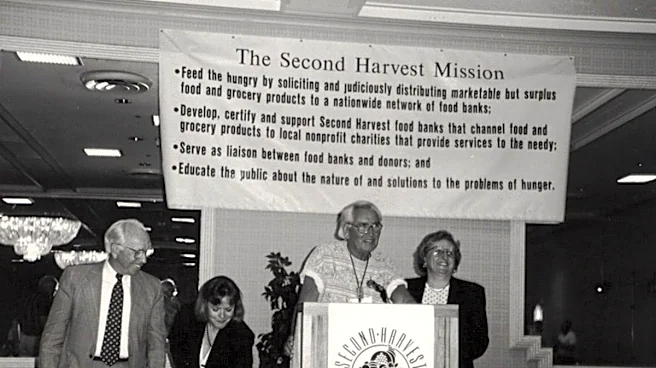
Hengel's model has since spread across the nation. In 1975, he accepted a $50,000 federal grant, which allowed him to expand his work to 18 food banks and establish America's Second Harvest (now known as Feeding America), creating food bank standards and training.
"A lot of what he did 60 years ago still works today," Brown said.
This article originally appeared on Arizona Republic: The world's first food bank started in Arizona. Here's how