




TUCSON — A treatment plant responsible for the long-term cleanup of contaminated groundwater that poisoned southside residents from the 1940s to the late 1970s, will now also clean the aquifer of “forever” PFAS chemicals.
Tucson Water, elected officials, government partners and community members celebrated the completion of the expanded Tucson Airport Remediation Project treatment facility, or TARP, in a ribbon-cutting ceremony in the morning of Sept. 1.
The plant has operated since 1994 to clean a plume of trichloroethylene or TCE, a volatile organic compound that is linked to several types of cancer, left behind by companies leasing land for industrial and military defense-related activities.
Neighbors of southside Tucson unknowingly drank and
bathed with highly contaminated groundwater for decades. Their pressure to government officials, and the evident death toll, prompted the U.S. Environmental Protection Agency to declare the area a national priority for cleanup, orSuperfund site, in 1983. Families say the toll of death and disease has been multi-generational.
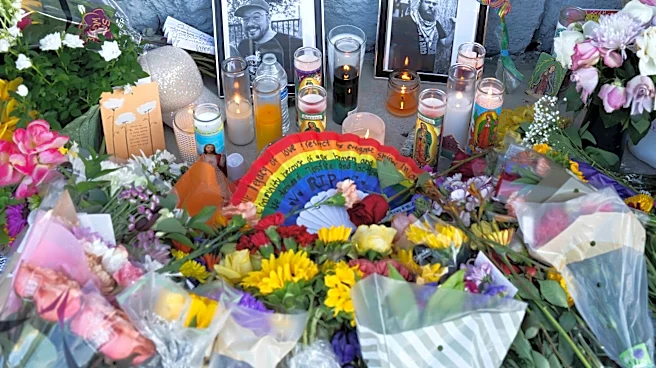
"I don't think they'll ever be able to put a number on how many people died — that continue to die," said Yolanda Herrera, a southside resident who has lost multiple friends and family members to diseases that health experts have linked to TCE exposure.
Thousands of pounds of TCE have been removed from the water since 1994. But over the years, water testing has revealed the presence of other harmful, and often unregulated, chemicals related to industrial and military activities. In the early 2000s it was 1,4 dioxane. About 17 years later, they detected high levels of PFAS.
Testing has improved, and Tucson Water has been a proactive partner in finding and treating these new contaminants, said Herrera, who spoke at the ceremony and has volunteered for 31 years in a board of residents and agencies that meets quarterly to track the cleanup progress. One of her biggest concerns is ensuring that work continues through changes in administrations.
"Every single time we get a new elected official, they need to come to the table. They need to do their homework," Herrera said.
As community co-chair of the Unified Community Advisory Board, Herrera went through 30 years of board minutes "making sure everybody was honored," in a 30 anniversary celebration last year, to name every community member that volunteered. It was interesting to see what elected officials had actually come a meeting, she said.
"Even if it's to just two (board) meetings, so they can hear what we're doing, hear the accomplishments, see what work needs to be done," she said. "Because without them, we're not gonna get financing for things like this to continue to deliver safe clean water."
Southside Tucson residents have recived water from Avra Valley wells, a recharge basin west of the city, since 1981.
The remediation plant once sent water to the taps of about 60,000 customers north of the Superfund site. When water testing revealed PFAS levels so high that they could interrupt TCE treatment and pollute the water source of current customers, Tucson briefly suspended and corrected the plant's operation. Since then, it has sent treated water down the Santa Cruz River for recharge and habitat restoration. A portion is also used as reclaimed water.
"If it works perfectly, like we're hoping it does, then the community can have a conversation about returning this water back to the drinking water supply," said John Kmiec, director of Tucson Water, about the future of the plant.
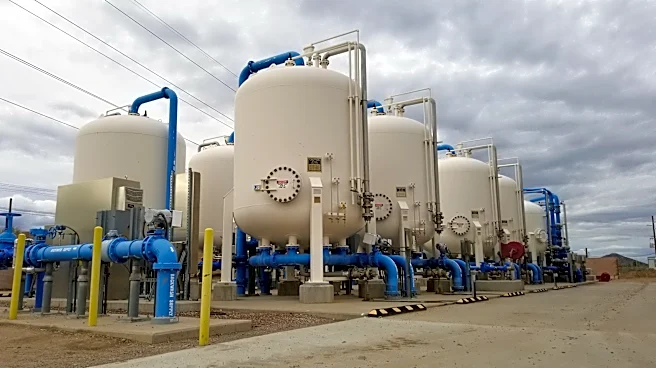
The plant expansion and new PFAS treatment includes 10 new ion-exchange vessels that treat groundwater for PFAS before it goes to the advanced oxidation plant for TCE and 1,4 dioxane removal. It was paid for with $25 million in federal American Rescue Plan Act funding, allocated by former-Gov. Doug Ducey in December 2022 and reaffirmed by Gov. Katie Hobbs, and with $2 million more from Tucson's budget.
At the ceremony, Hobbs stressed that investment in PFAS treatment is also water security.
"With these new facilities, we're not just protecting clean drinking water. We're building a more water-resilient Arizona by bolstering the city's water portfolio and strengthening the system reliability during drought, shortage, and any other supply disruptions that may come our way," she said.
"In the coming years, that need for reliability is going to be more important than it ever has been."
Utility took action ahead of federal standards
Tucson began treating groundwater for 1,4 dioxane and PFAS despite the lack of a federal rule or drinking water standard for the contaminants at the time.
"I was in the room when 1,4 dioxane became a problem," Tucson Mayor Regina Romero recalled. The mayor and City Council decided then that they would not wait for regulatory agencies to investigate who was responsible for the contamination, but "step up" and pay it from their coffers.
This time around, Romero and the council also made that decision. The city has paid over $60 million up front to test, monitor and treat groundwater from PFAS. Settlement funds from a class action lawsuit against 3M and Dupont, major manufacturers of PFAS-containing products, gave the city about $27 million back.
"As a council member and now mayor, I have always remained vigilant in protecting Tucson's water and ensuring that every family can trust the coming the water coming out of their tap," Romero said.
"That responsibility carries particular importance on Tucson's southside."
The EPA has established no standards for 1,4 dioxane in drinking water, but in 2024 finalized a rulewith maximum contaminant levels for four PFAS chemicals, as well as limits for a combination of two or more of those PFAS. The Trump administration is proposing to keep standards for only two of those PFAS and provide some extensions on the compliance deadline, which was set for 2029.
Tucson Water has shut down dozens of PFAS-contaminated wells and monitors for the contaminant across its service area.
The Tucson airport remediation plant was filtering and treating PFAS to a level where the contaminant was not detected by tests. But thorough ongoing tests from 2017 to 2021, revealed that water at the source, in wells near the airport and air base, had concentrations of over 10,000 parts per trillion.
The EPA limit is between 4 to 10 ppt depending on the PFAS chemical. The utility decided to pull the plant offline for a while to avoid contamination in customers' taps. Later, they established treatment to send the water to recharge instead.
Mike Montgomery, director of Superfund and emergency management division at EPA's Region 9, said the story of Tucson and its community is one of resiliency.
In the early 1980s, the EPA declared five parties responsible for cleanup and remediation, resulting in the creation of the TARP plant.
"The resilience part of this story has to do with the things that came after that system operated," said Montgomery. "Local leadership made a huge difference."
Because of Tucson Water's experience and because of UCAB volunteers, "who've held regulators like us accountable for years," the EPA got an agreement in place to have liable parties determine the nature and extent of PFAS contamination. There are still ongoing negotiations to have all parties participate and pay for the operation of the PFAS treatment at TARP, Montgomery told The Republic.
Insufficient funding to treat PFAS in Arizona
Tucson is not the only city struggling with high PFAS levels in groundwater. Nearly 100 utilities in Arizona found PFAS levels in drinking water above the limit established by the EPA.
The state will have received a total of $104 million in federal funding by the end of the year to deal with PFAS and other emerging contaminants in the drinking water of small and disadvantaged communities. But most of that funding is already committed.
The Arizona Department of Environmental Quality has funded 24 projects to deal with PFAS contamination in Gila, Maricopa, Navajo, Pima, Pinal, Santa Cruz, Yavapai and Yuma counties, either helping communities connect to alternative sources of water, or helping them pay for the construction of treatment plants.
"To date, $8 million has been allocated toward the planning and design phases for 22 projects and the completion of two projects. The remaining $96 million will fund the construction phase for those same projects, as well as additional future projects," ADEQ's communications director Caroline Oppleman told The Republic.
Project funding was prioritized by contamination severity and by need of assistance. There are dozens of other affected water systems that don't have federal or state funds to deal with the contamination. Millions of people rely on groundwater contaminated with these chemicals, both in Arizona and throughout the country.
"I would love the state legislature to be able to find funds to bring to this kind of effort," said Sen Priya Sundareshan, D-Tucson, after the ceremony. Most of these projects are federally funded but the Trump administration has undone many attempts to support environmental quality, she added.
"I would love for the state to take a look at what funds are available, but anybody who's been watching the state budget for the last few years knows that we have very limited revenues, until we resolve ... big ticket items that are draining our state resources, it becomes very difficult to see where that money's going to come from," she told The Republic.
State money that could help water resiliency and reliability is no longer there, said Sundareshan, who has acted as an advisory member of the Water Infrastructure Finance Authority for the past three years.
"We were supposed to have that billion dollars into the water augmentation fund, and only the first piece of that went in and 600-plus million dollars never made it in," she said.
At the plant in southside Tucson, Herrera stood at the podium and asked other volunteers to join her at the stage to remind attendees of the collective effort behind cleanup.
In her short speech, she mourned the young people that the community has lost from inherited contamination; "The battle here for all of us is going to be for the future generations," she told attendees.
Long after the ribbon-cutting concluded, Herrera stayed talking to reporters and EPA partners.
"Everyone thinks 'water is life' but it's not," she told The Republic after. "Safe drinking water is life."
Clara Migoya covers agriculture and water issues for The Arizona Republic and azcentral. Send tips or questions to clara.migoya@arizonarepublic.com.
This article originally appeared on Arizona Republic: Tucson expands plant to treat water tainted by 'forever chemicals'