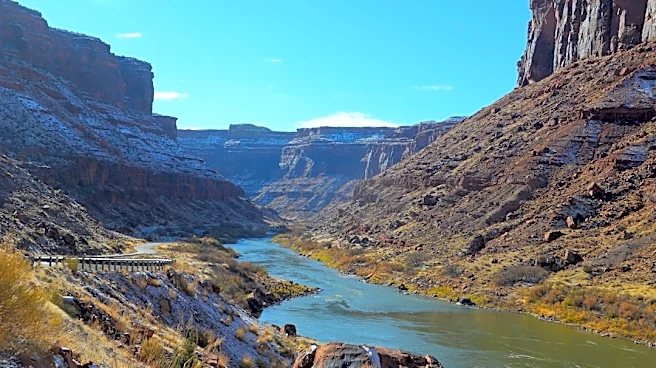




The United States and Mexico have signed a Colorado River treaty amendment under which Mexico will share in the water-use reductions to be imposed on Arizona, California and Nevada over the next two years, the International Boundary and Water Commission announced.
The U.S. Interior Department previously announced that it would withhold 1.25 million acre-feet of water from the three U.S. states in each of the next two years to slow declines in reservoir storage. That plan aligned with what the states had offered, and called on Mexico to take another 250,000 acre-feet per year in reductions. The temporary amendment, formally known as Minute 334, confirms that reduction.
“Given scarcity conditions faced by the Colorado River, additional measures
are needed to preserve the basin’s sustainability to benefit all users,” Mexico’s IBWC commissioner, Adriana Reséndez, said in a statement released Sept. 9. “We will continue monitoring the evolution of basin conditions and working with interested parties to seek the best solutions during scarcity.”
An acre-foot, the volume it would take to cover an acre to a 1-foot depth, is 325,851 gallons, enough to support a few American households for a year. Most of the water from the river is applied on farms, both on the United States side and in Mexico’s Mexicali Valley.
Under a treaty signed by the two nations in 1944, Mexico’s share of the Colorado is normally 1.5 million acre-feet. Arizona, California and Nevada shared 7.5 million acre-feet before the cutbacks. Wyoming, Utah, Colorado and New Mexico also theoretically have allocations of up to 7.5 million acre-feet, though they have not used that much historically and there has been insufficient mountain snowmelt to support it as the river has declined in this century.
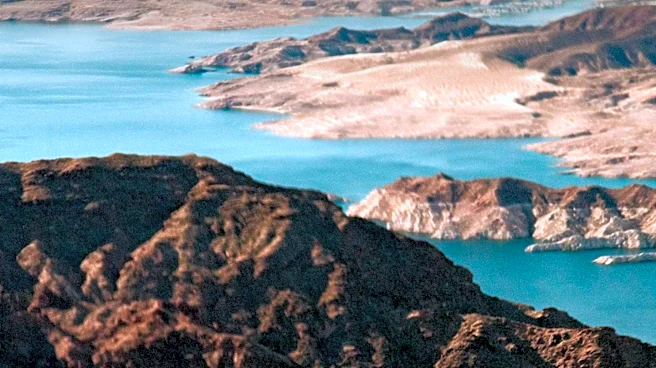
Mexico’s commitment follows previous such agreements for sharing in shortage and keeping water in Lake Mead, the last of which was expiring along with Interior’s previous, less austere shortage guidelines for the states.
Arizona Water Resources Director Tom Buschatzke applauded Mexico for its help with the crisis, and noted that the country has committed to give up still more water if Lake Mead’s elevation reaches critical levels in the next two years. Likewise, the reduction could be scaled back if wet weather substantially raises Mead’s surface.
“I am pleased to see that pursuant to the terms of Minute 334, Mexico yet again is stepping up to protect the Colorado River system by agreeing to take reductions in its water use in parity and equity with water users in Arizona, California and Nevada,” Buschatzke said.
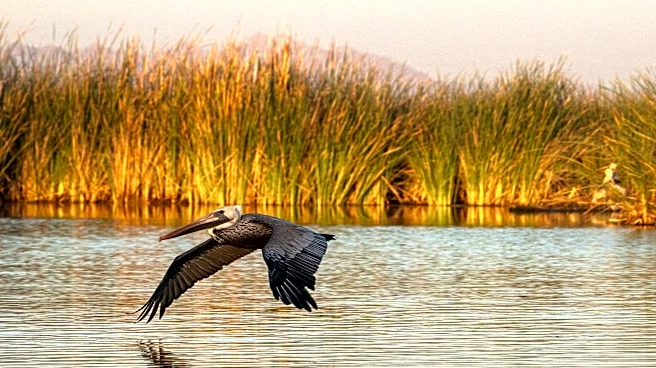
The agreement also ensures a continuation of environmental restoration projects in the river delta in Mexico, the Audubon Society’s Colorado River program director, Jennifer Pitt, wrote in a blog post.
Audubon has worked with United States and Mexico partners collectively known as Raise the River to replant and water some 1,300 acres of wetland forest using water purchased from Mexican irrigators. The trees and water provide critical habitat for migrating birds where previously only a dry riverbed and brush awaited them. Audubon’s research has found that 27% of North America’s tree swallows migrate through these areas.
Minute 334 includes commitments for more than $5 million to continue the environmental program over two years, she said, a cost to be shared equally among the two federal governments and Raise the River member organizations.
Mexico’s commitment to reduce its use is a win in itself, Pitt wrote. “The more water users that share in Colorado River water shortages, the less the burden of those shortages on any one user, sector, or geography.”
Brandon Loomis covers environmental and climate issues for The Arizona Republic and azcentral.com. Reach him at brandon.loomis@arizonarepublic.com.
Environmental coverage on azcentral.com and in The Arizona Republic is supported by a grant from the Nina Mason Pulliam Charitable Trust.
Follow The Republic environmental reporting team at environment.azcentral.com and @azcenvironment on Facebook and Instagram.
This article originally appeared on Arizona Republic: Mexico will share Colorado River shortage with Arizona, other states