





This is part of a monthly series answering readers' climate-related questions and highlighting Arizona's climate leaders. The stories aim to help connect and inspire Arizonans who care about protecting a livable climate. You can ask a question or nominate an Arizona climate leader by filling out this form at https://forms.gle/isK4e3Ym5KnS4dgE8 or by emailing climate reporter Joan Meiners at joan.meiners@arizonarepublic.com .
Maybe you've heard the news: People are fighting over the Colorado River.
For years, the seven Western states — and 30 tribes — that share its flows have not been able to agree on how to modify a 2007 shortage plan that was based on agreements set out a century ago when there was simply more water in the river. Negotiators
missed deadline after deadline until, in late August, the federal government stepped in and finalized necessary cuts.
Within days, Nevada sued. The following week, in early September, the Central Arizona Water Conservation District's directors authorized its legal counsel to potentially take action against changes that, with 760,000 acre-feet stripped from the state's allocation, fell hardest on Arizona.
Readers of The Arizona Republic have been following this reshaping of water policy in the American West like the condors circling watchful over the Colorado River's meanderings. And they have not been shy about swooping in with suggestions. The latest, answered here, is whether desalination could be a meaningful part of the solution.
It's the third in a mini-series on options to mitigate Colorado River cuts that is part of The Republic's larger, monthly series answering your climate-related questions or profiling local climate leaders. (Submit your question or nomination here: https://forms.gle/isK4e3Ym5KnS4dgE8.)
In May, experts in water law and infrastructure weighed in on reader Lisa Nelson's question about whether a "type of channel or aqueduct or pipeline (could) move water (from areas facing flooding) to areas in AZ facing water shortages."
In July, reader Tim Holley's question about whether "active or inactive coal slurry lines that already span the U.S. (could) be an option" prompted lessons from engineers and the conceptually similar Cadiz water project.
In both cases, the verdict (spoiler alert) was essentially the same: that while these options could technically be feasible with a lot of funding and some serious changes to water rights and infrastructure permitting, looking first to agriculture and conservation to scale back use would make a lot more sense, and cents.
Then the questions about desalination flooded in. Two readers named Gregory wrote in to suggest that removing salt from ocean or brackish groundwater "might be worth a detailed column sometime" or, phrased more strongly, that "desalination plants utilizing California or Mexico water is the long term answer for Arizona. Investment now would resolve issues for generations later."
A third reader, named Dean, reframed what, perhaps, both Gregs were getting at.
"The 'Elephant in the Room' for me," Dean wrote, "has always been why not desalination plants? I've heard so many excuses. Too expensive. Too energy intensive. Right-of-way for the pipelines. I guess my point is: when you don't have water, what is too expensive or too hard to expedite?"
A fair point, because what wouldn't we pay for water if faced with truly running out?
For answers about why Arizona has not made more headway on desalination, The Republic reached out to three experts on western water supplies and various ideas to increase them.
“My take is that desalination can be an important part of the solution," said Brian Richter, a hydrologist who managed the Nature Conservancy's Global Water Program and teaches water sustainability principles at the University of Virginia and through his own organization, Sustainable Waters. "But there are three considerations that I think everybody needs to understand. The first one is that it is very energy intensive."
The process of removing the salt from the water and then pushing that water through pipelines takes "a tremendous amount of energy," Richter said.
How we source that energy becomes really important when considering that climate change, caused by greenhouse gas emissions primarily from burning fossil fuels for energy, is one cause of this water crisis, he said. But it can be done.
In 2022, the Hawaii Authority's Natural Energy Laboratory used a $2 million grant from the Department of Energy to develop a solar-thermal desalination plant that "can produce fresh water at a higher recovery rate than conventional plants allow, which means significantly less salty brine is returned to the ocean," according to its DOE success story.
Which brings us to Richter's desalination issue number two: brine disposal.
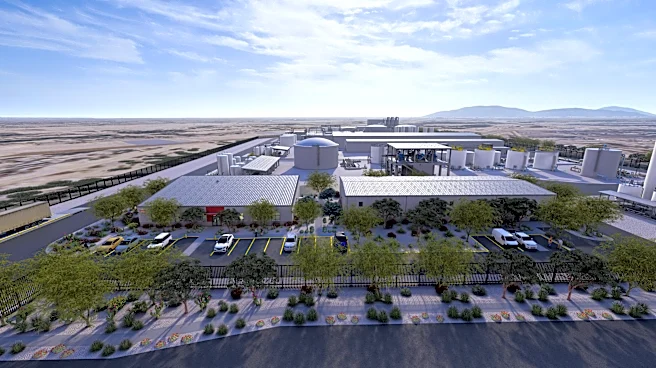
Producing fresh water from salt water yields about a gallon of brine, or concentrated salty water, for every drinkable gallon. When importing seawater or pumping up brackish groundwater for local desalination in the desert, there's no clear answer for where to put that massive volume of waste liquid so it doesn't contaminate soil or waterways.
Current options include deep well injections or giant surface ponds where it sits until the water evaporates and the salt crystalizes, said Andrea Achilli, a professor of chemical and environmental engineering at the University of Arizona. The desalination process is one of Achilli's main research areas. But that doesn't mean he's a hype-man for it.
“Seawater desalination is essentially the most expensive option to get water," he said. "I think it should be really reserved for where and when it’s needed. Even in California, they are still using it as a last resort after all the advanced purification projects."
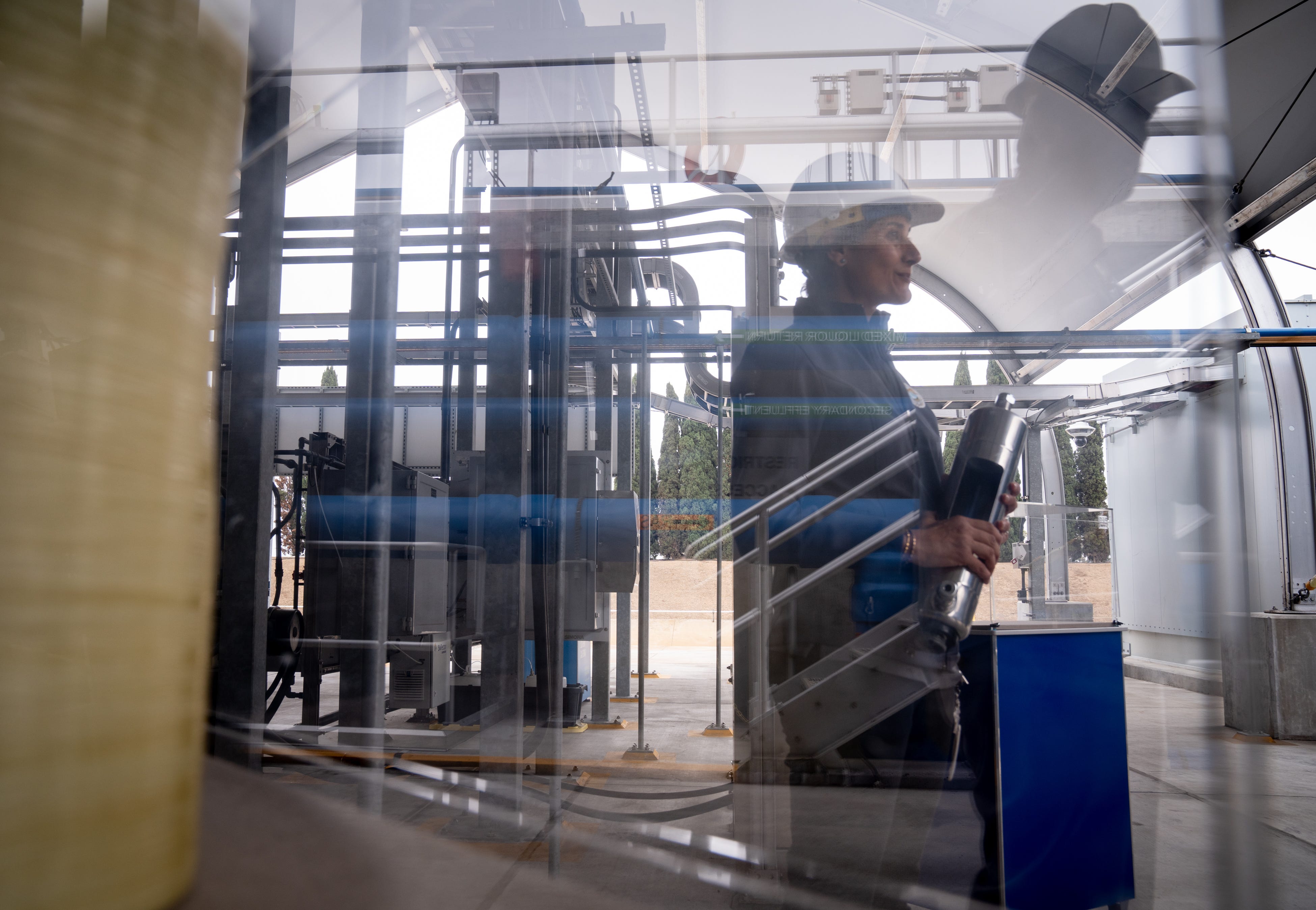
The San Diego County Water Authority is the entity doing the most water desalination in the U.S. right now, operating a plant in nearby Carlsbad. But when Arizona tried to get in on that with its own coastal plant, it ran into limitations related to permitting, environmental review and Californians not wanting an Arizona facility in their neighborhood.
So the Grand Canyon state started looking south to Mexico, said Sharon Megdal, who directs the Water Resources Research Center at the University of Arizona and is "a very small part," in her words, of a team examining potential in the Sea of Cortez.
Her thinking on desalination started in the late 1990s when Karl Kohloff, a candidate for the Central Arizona Water Conservation District board, published an op-ed in The Arizona Republic about opportunities with Mexico.
Then there was a workshop in 2006, a full conference about desalination in 2011, and a financial study commissioned by the Central Arizona Project that was completed in 2020, Megdal said. In 2025, The Republic wrote, the Water Infrastructure Finance Authority of Arizona advanced several proposals for water solutions, desalination among them.
Many of these ideas revolve around convincing California or Mexico to desalinate water at their coasts for local use and then allowing Arizona, which foots the bill, to take a portion of their Colorado River water in exchange.
“My point is, desalination has been on the horizon, it’s been discussed," Megdal said. "But it hasn't happened, and in my view, the reason is because it’s very hard to make a binational (or bistate) project like this happen. We are not in control in Arizona. We have to deal with legal agreements about exchanges, and these things take time. That fact means it is certainly not going to be a near-term option."
Achilli thinks importing desalinated seawater or trading it might also not be particularly secure.
“It gets complicated because of international treaties," he said. "There are risks that Mexico or California would just take ownership of it. And exchanges depend on there still being water out of the Colorado River to share."
"The Colorado River has always been overallocated," Achilli added. "Climate change doesn’t help. When there’s no winter and no snowpack, there’s no water in the river. That’s pretty straightforward."
Megdal agreed that banking on future abundance in the Colorado River Basin would be unwise.
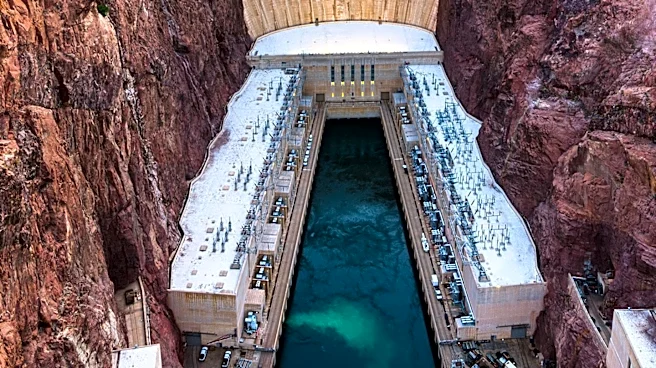
“With the possibility of reaching dead pool in Lake Mead, what does it mean to be dependent on an exchange if the water for the exchange may not be there?” she said.
Discussions about desalination in Arizona are ongoing, and more complex than can be covered in any one story or workshop. The bottom line, these three experts say, is that it could be (an enormously expensive) part of the solution. But it's not the solution.
Achilli wants to see more focus on advanced water purification, the option of treating and reusing local water, something Phoenix has recently made moves toward with its Cave Creek Water Reclamation Project, due to be completed in 2027. This modern process can produce drinking water more pure than what's in the Colorado River, which is downstream of many toilets and agricultural operations. Sometimes purification plants even have to add minerals and salts back into the water "to make it taste right," said Richter, who supports this option too.
Both Richter and Achilli mentioned that reforms in groundwater regulation and agricultural use will also be necessary. The amount of water going to crops like alfalfa that get exported overseas was Richter's third main consideration when weighing how big of a help desalination could be in the overall problem. As he nears retirement, he's making a last push for staying within the water budget nature provides, by setting a new cap on use every five years based on current flows.
“I just think that this whole debate has gone sideways and has become very unproductive," Richter said. "I think a fresh start of looking at the entirety of the water in the Colorado River system in a more holistic way is going to be absolutely essential now."
Megdal has been busy writing analyses and giving presentations about Colorado River solutions. In them, she emphasizes that "there is no single ultimate solution, and we need to be working on multiple fronts simultaneously."
"And, of course, one of them is increased conservation," she said, "which is at the top of my list.”
Joan Meiners is the climate news and storytelling reporter at The Arizona Republic and azcentral.com. Send tips or questions to joan.meiners@arizonarepublic.com or follow her work on Instagram at @joan_bikes_arizona.
This article originally appeared on Arizona Republic: Could desalination help offset Arizona's Colorado River water cuts?