


A story about New Mexican chili got me thinking about elections.
Attorney and Laguna Pueblo community member Casey Douma recalled a feast day where different New Mexico tribes shared a meal and shared ideas about that state's redistricting plan. He said the cooks know better than to make just one pot of chili during feast day. It has to be many pots, with varying heat levels, so that it can be fairly divided among all those present.
People coming together with different ideas over a meal. That's the essence of democracy. The payoff in New Mexico was shared unity among all tribal nations and a message that led to the creation of the first-in-the-nation New Mexico Native American Voting Rights Act. That law gives tribes and pueblos a say in polling
locations and the creation of new precincts during redistricting.
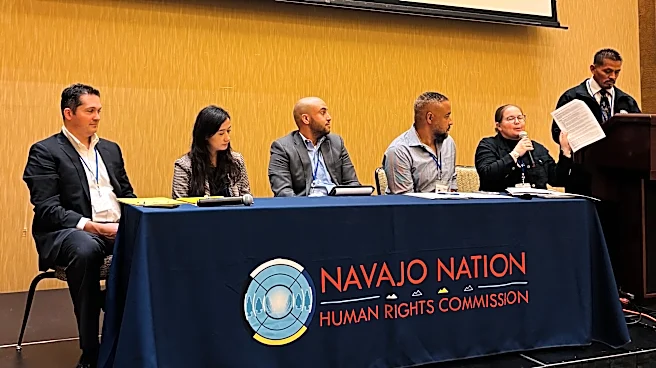
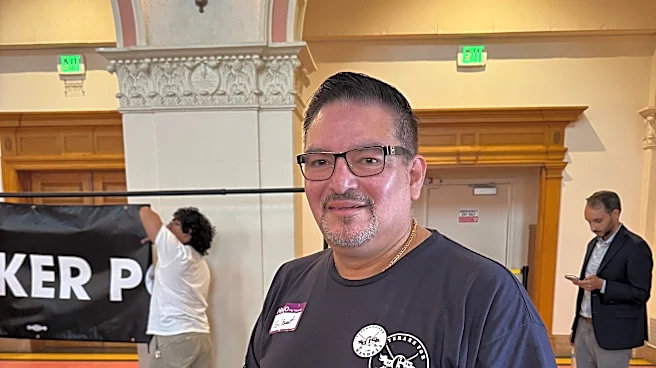
Earlier this week, I was at a two-day conference at Twin Arrows, near Flagstaff, hosted by the Navajo Nation Human Rights Commission and the ACLU. I was sitting in a room full of lawyers, county and tribal officials and community members.
During one of our panels, the news broke that the U.S. Supreme Court had ruled on mail-in voting. Several folks started talking about it mid-panel. It's a strange thing, getting national breaking news about how an election is run while sitting next to the people who actually run your voter registration and elections.
My first reaction was negative. More bad news, and I was worried.
One of the ACLU lawyers ― in the middle of a panel on state and federal election law ― stopped to address it directly. Instead of letting the moment spiral, the officials in that room did what I wish would happen more in politics: They calmed people down with facts instead of adrenaline.
The message was simple. Yes, this case sounds bad and confusing, especially if you're only reading the headlines. But there are no changes for the voter right now. Mail-in voting is still safe and still available.
We were in a room of county, tribal and state officials who emphasized that it's the counties and states that have the authority to run voter registration and elections, not the U.S. Postal Service or the president of the United States.
This was critical, especially for folks like me and other voters who vote by mail, and especially when a large number of Arizona tribal and rural community members vote by mail.
There’s a clear message here: Chaos and confusion are a tactic. The antidote is to vote.
A lot of that day's headlines got the story wrong. Some outlets did the real work of explaining what the ruling did and didn't do. Others reached for the scariest possible framing because fear travels faster than nuance. Either way, the effect on people who are already anxious about elections was the same: more confusion, more fear and less trust. This comes right when we can least afford it.
At this meeting, there were conversations that most Arizonans never hear. The idea that election officials take their jobs seriously and work together across tribal lines, across counties and, in this case, across states. The Navajo Nation stretches across Arizona, New Mexico and Utah.

There were also discussions around the state of Native voting rights, Navajo voting history, challenges, solutions, data and so much more. My colleague Triston Black presented on Arizona Native Vote's grassroots work in rural and tribal communities.
It was inspiring to see so many folks from the community and with different perspectives visit with county and tribal officials. These conversations and the lessons learned matter well beyond the reservation borders.
Of course, there are election problems. And every speaker concluded that the problems of geography are huge. Polling places on the Navajo Nation are overwhelmingly located at chapter houses — the local government buildings that anchor each of the Navajo Nation's 110 communities. These are places where people already gather. That's complicated because chapter houses vary wildly in condition. Some are new and fully accessible, while others aren't compliant with the Americans with Disabilities Act and are hard to reach, especially when summer monsoons or winter mud wash out the roads.
Arizona's counties face similar challenges of serving rural communities that have transportation or other kinds of barriers.

The shift to vote centers this year is a real help, something the county officials see as a step forward. A vote center gives Navajo Nation citizens more flexibility about where and when they can cast a ballot. But it also comes with a catch — vote centers require more resources, equipment, staff and space.
Nearly every panelist raised the same issue: It's hard to find and keep qualified poll-site translators and workers. We are trying to recruit more people from our community to be present and serve voters during the election process.
Coconino County's Native American Outreach Program trains poll workers not just in vocabulary, but in cultural protocol, such as greeting elders properly or understanding that a blunt recitation of rules reads as disrespect in a way that can shut a conversation down before it starts.
Coconino, Apache and Navajo counties do use technology where they can and have electronic voting machines that translate instructions on how to cast your vote to assist Navajo and Hopi speakers. There is room for improvement, and it's a great step forward.
None of this is cheap ― some officials were candid that convincing county commissions and state legislatures to fund translation and outreach work is a recurring fight.
What stood out most wasn't any single fix; it was the habit of cross-jurisdictional problem-solving itself. Three states, 12 counties and one tribal nation are part of a broader goal. This could be a network of officials calling each other for advice and coordination.
That's a genuinely useful model, and Arizona voters — not just Navajo Nation citizens — have a stake in it working. Coconino, Navajo and Apache counties serve tens of thousands of Arizonans on and off the reservation. A county that runs voter registration and elections smoothly for one community runs better elections for everyone. Investing in rural and tribal election infrastructure should be a real budget line rather than an afterthought.
What’s the takeaway? Two things. First: Elections are better when counties, states and tribes work together. And the second one? Think about Arizona's version of chili. Perhaps it's steamed corn stew and frybread. But the point is we can come together as different tribes and different communities and think of new solutions. Why not an Arizona Native American Voting Rights Act?
Jaynie Parrish, Navajo Nation, is the founder and director of Arizona Native Vote, a nonprofit helping to boost Native American civic participation.
This article originally appeared on Arizona Republic: Arizona needs its own Native American Voting Rights Act | Opinion