






Paul Bender, a constitutional scholar who joined the U.S. government’s top appellate team in two stints decades apart and became dean of Arizona State University’s law school, has died. He was 93.
Bender, who died Sept. 11, was a Brooklyn native with close professional ties to the legal scene in Washington, D.C., and Ivy League academia, who brought a star-studded legal pedigree to the desert when he joined ASU in 1984.
His presence helped elevate ASU’s stature and offered Bender, a lifelong progressive, a view of evolving legal issues in a new part of the country.
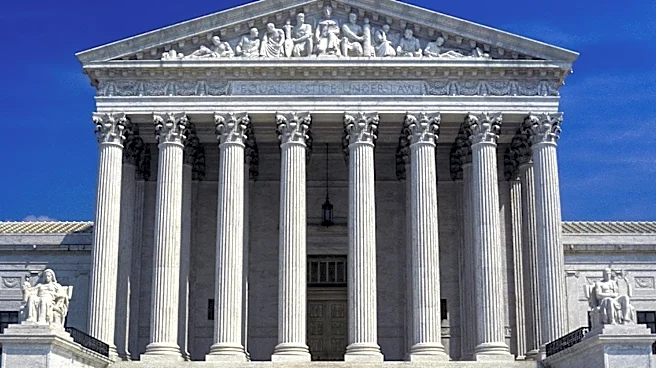
During a legal career that began in the late 1950s and stretched well past the millennium, Bender argued nearly two dozen cases before the U.S. Supreme Court. He won the groundbreaking
1996 case that opened the all-male Virginia Military Institute to women and lost a 2011 case that challenged Arizona’s tax credits for private school tuition.
Bender reflected on his career choice in a 2023 retrospective on Arizona PBS.
“Without law if everybody just does what they want to do, at the moment they want to do, that can be chaotic and really bad for most people,” he said.
“The law to me is the way of organizing life and taking things that people do all the time and trying to make sense out of it and make rules about what you can and can’t do.”
Dan Barr, Arizona’s chief deputy attorney general, said Bender was “highly intelligent but was always open to new ideas or arguing various positions.”
He praised Bender for becoming an expert on U.S. and Arizona constitutional law, long before state constitutions took on greater significance in the courts.
“Whether you agreed with him or not, he taught (his students) how to think like lawyers, and they respected him for that,” Barr said.
On social media, one of them, Adam Kwasman, a Republican member of the Scottsdale City Council, paid tribute to someone he called a “legal icon.”
“Paul was a progressive’s progressive. We couldn’t have disagreed more philosophically,” Kwasman wrote. Despite their political differences, Bender agreed to serve as academic mentor to Kwasman for a thesis on Arizona constitutional law.
“I’m proud to say I aced it, and I’m proud to have gotten to know Professor Bender. May his memory be a blessing and may the Author of Life comfort the mourners,” Kwasman wrote.
A legal career that spanned decades
Bender’s legal training involved degrees from Harvard University and clerkships in 1958 for Learned Hand, one of the most prominent federal appellate judges in U.S. history, and in 1959 for Supreme Court Justice Felix Frankfurter. Both jurists helped instill in Bender an attention to detail and focus on the legal questions at hand.
For 24 years, Bender taught law at the University of Pennsylvania. It was a run that could have easily capped a distinguished career by that time.
Instead, he came to ASU to begin a new phase of his work.
On his watch, ASU’s law school became more diverse, adding minorities and women to a discipline notably lacking both. He helped shape the ballot measure that created the state’s independent redistricting commission to bring more competition to political races, and he was a frequent guest on Arizona PBS’ “Horizon,” weighing in on issues of the day.
Bender added his expertise to legal systems for the Hopi, Fort McDowell Nation and San Carlos Apache tribes.
Bender was born in Brooklyn, N.Y., where future Supreme Court Justice Ruth Bader Ginsburg was among his classmates. They weren’t especially close, but they intersected again when she wrote the opinion ordering VMI to allow women in its ranks.
For his part, Bender remembered that case as the highlight of his career.
“It was my favorite argument of all time,” Bender later told the New York Post. “At the end of the argument, I had a really good feeling.”
While at Harvard, he married Margaret Thomas in 1955. The couple remained together until her death 70 years later. They had two sons whose middle names each reflected Bender’s regards for his judicial mentors: Learned and Felix.
Early in his career, Bender spent the summers of 1963 and 1964 working with the solicitor general’s office, which argues the government’s position in cases before the Supreme Court.
He joined the office full-time as an assistant to the solicitor in 1965. It overlapped with some of the court’s most momentous decisions in the 1960s.
This was when the justices established a right to privacy that allowed women freer access to contraception, the Voting Rights Act of 1965 survived initial scrutiny and an Arizona case established the principle of informing suspects of their legal rights.
Bender began his teaching career at Penn in 1960 and rejoined the school after leaving the solicitor general’s office in 1966. He remained with the school until jumping to ASU in 1984.
In between, Bender remained active in high-profile legal matters.
He was the project director for a study of criminal justice reforms in Philadelphia, beginning in 1967. A year later, he served as general counsel to the U.S. Commission on Obscenity and Pornography.
'ASU has a very good reputation'
He welcomed the chance to burnish ASU’s law school’s reputation.
“ASU has a very good reputation,” he told The Arizona Republic at the time. “The fact that in 15 years it’s gone from no school at all to a school that’s very well thought of is remarkable.”
He helped grow the law school and upgrade its facilities and resources, then blindsided many by joining a wave of top administrators at ASU that left top administrative position at the school in the 1988-89 school year.
Bender remained a professor at ASU, a role he kept for years, though he continued to pursue other legal roles as well.
During the Clinton administration, Bender rejoined the solicitor general’s office as principal deputy solicitor from 1993 to 1996. The VMI case he argued was among the most memorable for the office during Bender’s second stint there.
For decades, Bender served as a kind of constitutional referee, weighing in on wide-ranging matters, such as whether the then-impeached governor, Evan Mecham, could run again in a recall election to lectures for federal judges on the Equal Protection Clause.
He served as co-special counsel to the Federal Election Commission in a landmark 1976 case that equated spending on politics with free speech. He worked with the left-leaning American Civil Liberties Union in many cases.
In 1983, he testified before Congress on a proposed constitutional amendment regarding prayer in schools.
Bender was a trained pianist who enjoyed classical music.
Donations in Bender’s honor can be made to the Arizona Humane Society or to public media organizations like KAET and KJZZ.
He is survived by his son, Matthew.
This article originally appeared on Arizona Republic: Paul Bender, legal scholar and former ASU law school dean, dies at 93