


There's no such thing as a free sign.
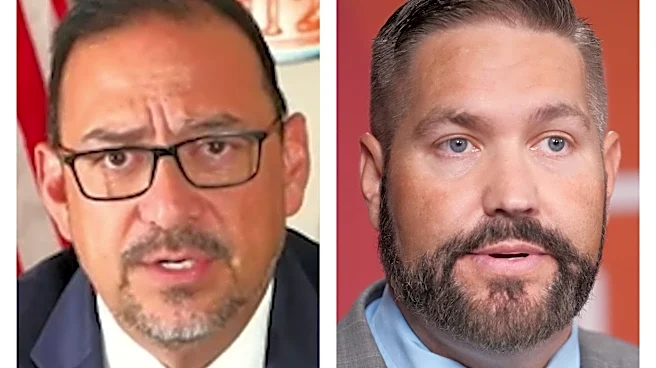
Arizona Corporation Commission candidates Nick Myers and Kevin Thompson's eco- and wallet-friendly decision to reuse signs from the 2022 election cycle quashed one campaign finance complaint, but spurred another.
The Citizens Clean Elections Commission on Sept. 24 voted unanimously to dismiss one sign-related complaint against Thompson and Myers, but found there was reason to believe their reuse of signs violated Clean Elections rules.
A complaint alleging Thompson and Myers failed to report their full spending on signs and on a consulting firm whose phone number was listed on those signs fizzled after the candidates explained the signs were paid for during the 2022 election cycle and included an out-of-date
contact. But a second complaint, which claimed they should have paid back a portion of the original cost before reinstalling the signs, stuck.
Counsel for Myers and Thompson at the Sept. 24 meeting said the two commissioners, first elected in 2022, want to settle the issue “efficiently, for a price that’s fair.”
“As a Clean Elections candidate, I take the responsibilities and the rules as a participating candidate seriously,” Thompson said, appearing virtually. “And I know Mr. Myers does as well.”
Incumbent Thompson is fighting to keep his seat on the five-member Arizona Corporation Commission. Myers was narrowly ousted by challenger Ralph Heap in the Republican primary.
In a response to the complaint, Myers and Thompson wrote that they were unaware of the rule.
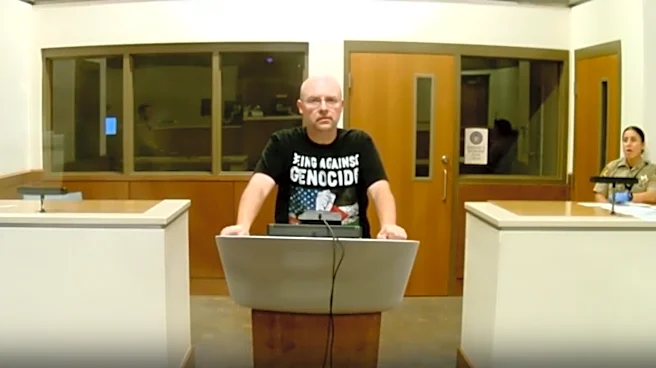
That didn’t satisfy Merissa Caldwell, the conservative activist who filed the complaint against Myers and Thompson. In a public comment, Caldwell said the rule helps level the playing field for challengers, who compete against incumbents who often enjoy advantages in fundraising and name recognition.
“I myself, as a private citizen, was able to know that this rule existed,” Caldwell said at the Sept. 24 meeting. “And I’ve been a candidate before, but not a Clean candidate, so if I was able to know this rule existed, I don’t think that lawyers or other candidates, especially ones that serve in office, should be given a pass that it’s okay for them not to know the rules.”
Caldwell also said she felt the commission had unfairly targeted Heap, who is facing a campaign finance complaint of his own. Caldwell said part of her motivation for submitting the complaint was to ensure “equal justice.” Caldwell said she felt the commission had devoted more time and energy to Heap’s complaint. At a recent meeting, Clean Elections Executive Director Tom Collins clarified that several meetings were scheduled at the request of Heap’s attorney.
“The number of meetings that you’ve attended respecting Dr. Heap are a direct result of Dr. Heap’s motions,” Collins said in response to similar criticisms at an early September meeting. “And so that balance you’re asking for is based on figuring the math incorrectly.”
Heap qualified for Clean Elections funding in late July. But because he hadn’t signed a sworn statement affirming the accuracy of his campaign finance requests, the funding was temporarily frozen.
Prohibited from obtaining private financing and unable to access the public dollars, Heap eventually submitted the statement and the funds were released.
At the same time, Heap was facing a campaign finance complaint that alleged he had spent more on signs than he reported. His reports showed a roughly $600 transaction for large campaign signs.
His counsel later explained that the signs were provided on credit. As the commission investigates the complaint, Heap has repeatedly — and unsuccessfully — tried to withdraw from the program.
The commission didn’t take any action Sept. 24 on a letter submitted by Heap’s attorney, Timothy La Sota, asking to settle the complaint and end the investigation. La Sota wrote that the continuing investigation was putting Heap at risk of another campaign-finance violation. Collins said at the meeting there was “no basis” to terminate the investigation, which he anticipated would be completed by the end of the year at the latest.
La Sota wrote that Heap planned to pay for the costs of the signs using Clean Elections funds but was also willing to cover the expenditure personally. La Sota wrote he was notifying the commission “in the interest of transparency.”
But Collins said Heap, who returned roughly $148,000 in primary funding to the program, is in a bind. He can’t pay for the signs with private dollars, Collins said, but can’t cover the primary expenditure with funding set aside for the general election. La Sota did not immediately respond to a phone call from The Arizona Republic.
“Neither of those is an appropriate action,” Collins said.
This article originally appeared on Arizona Republic: Candidates saved their old signs. That created a new problem