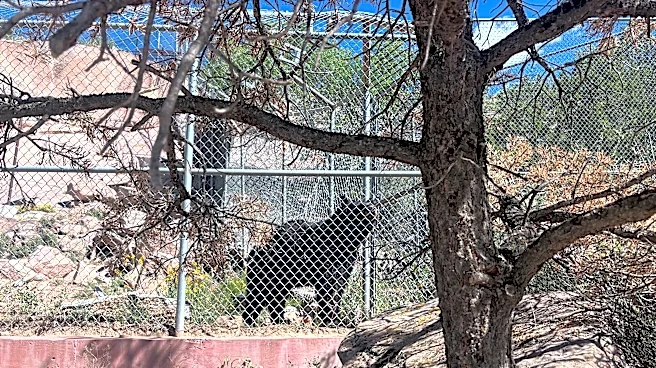





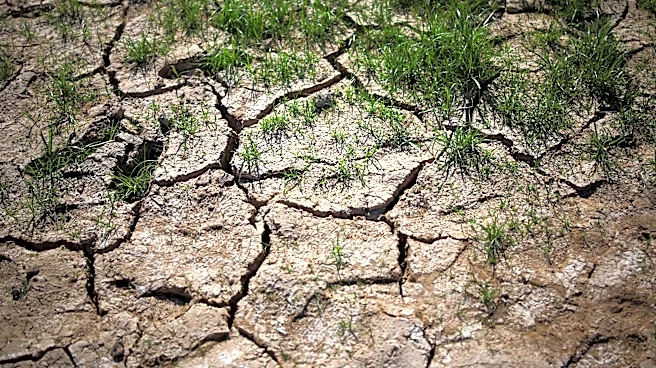

Bear sightings and encounters are becoming more frequent in populated areas of the Navajo Nation after an exceptionally dry winter and continued drought conditions slowed the growth of plants and seeds and disrupted natural food supplies for the hungry animals.
A rare and fatal Aug. 20 bear attack in Crystal, N.M., a Navajo Nation community in the Chuska Mountains, is the worst-case scenario to emerge from this summer’s increase in bear sightings.
Benjamin Halona was attacked by the bear inside his home, according to authorities. The bear was shot and wounded by Navajo Nation Police but managed to flee into nearby woods, where authorities later located and "neutralized" the bear, according to the Navajo Nation Department of Fish and Wildlife and tribal
police.
The elderly victim succumbed to injuries sustained in the attack.
This would be the first time since 2001 where there had been a known fatal bear attack on the Navajo Nation. The region is home to American black bears, though at one time grizzly bears roamed what is now known as the Navajo Nation. They gradually disappeared in the mid-1800s to the early 1900's.
"American black bears are 90% vegetarian," said Chad Smith, a biologist who works at the University of New Mexico-Gallup and who was a former biologist with Navajo Fish and Wildlife. "They will eat meat, but they really do mostly rely on plant foods. Bears coming around homes or coming down into communities when normally they stay up in the forest, usually that's related. This time of year from late August, towards the end of October, early November, is what the bears are doing is, they're eating as many calories as they can find."
Over the past several weeks, community members throughout the Navajo Nation have taken to social media to warn others about black bear sightings. Some residents have shared photos and videos showing where the bears were spotted, including near homes, subdivisions, main roads and open areas where bears rarely venture.
Bears are intent on finding enough food
The sightings come after the Navajo Nation experienced a prolonged period of dry winter and spring conditions, on top of an ongoing drought that has affected tribal communities across the region. On June 9, the Navajo Nation declared a state of emergency because of severe drought conditions. The Hopi Tribe declared an exceptional drought on its tribal lands through a June 29 executive order.

The availability of things like acorns and piñons is closely tied to climatic conditions. Smith noted that winter and spring snow and rainfall are critical for acorn production, an important food source for black bears during the summer months. Bears also rely on piñon nuts and juniper berries for food. With limited precipitation, the availability of these natural food sources has been disrupted, prompting bears to search farther for nourishment.
"They're preparing for winter," Smith said. 'This period of time in a bear's year is the time when bears are sort of most focused on food. They are hyper fixated on getting as many calories in their bodies as they can and building up as much fat as they can for winter."
In a typical year in New Mexico or Arizona, Smith said, they're getting the food mostly from piñons and acorns, "probably more acorns than piñons, but both of those things, so nuts for the most part."
Smith said while working with the Navajo Department of Fish and Wildlife, he can't remember a year when bears were more of a problem. He said bears get themselves into trouble all the time, especially in the fall, "when they’re 100% focused on calories."
Bears will dig up wasp nests and get stung all over their faces just to get at the larvae, he said. Recently, on a nature walk, Smith saw a yellow jacket hive that had been dug up by a bear.
"They’ll do whatever it takes to get calories," said Smith. "Sometimes that means breaking into houses, garbage bins, and cars, or even stealing pumpkins from a farm."

After the fatal bear attack, the Navajo Nation Department of Fish and Wildlife posted a warning for community members that "black bears are wild animals and should always be considered unpredictable and potentially dangerous. Bear attacks on people are uncommon, but any bear may defend itself or become aggressive."
The department warned people never to approach, feed, follow or attempt to photograph a bear at close range. The department also highlighted that food is the cause of most human-bear conflicts. A large portion of a bear's summer diets consists of grasses, roots, plants, berries and insects.
"The likelihood of conflicts with people rises during dry periods in late spring and early summer especially during periods of prolong drought. When a bear's normal food supply is decreased, they seek alternate food sources," according to Navajo Fish and Wildlife.
Another warning comes from Navajo Nation Department of Agriculture. Bear sightings near homes and livestock have prompted the department to share tips for livestock owners on what to do should a bear attack livestock. The department advised livestock owners and communities to remain alert as bears may move from mountainous areas into lower-elevation plateaus in search of food and water.
"Livestock owners should not set traps, wait near a carcass with a firearm, or attempt to remove the bear without authorization," warned Department of Agriculture.
The department urged residents to protect people first by moving to a secure building or vehicle and keeping children, elders, and others away from the bear. Residents should not approach or attempt to capture the animal, disturb livestock carcasses or the scene without authorization, and should secure things that could attract bears, such as livestock feed, pet food, garbage, meat scraps and carcasses.
Trash attracts bears to populated areas
Although bears depend on natural food sources, they will find something else if they have to, Smith said, and that could include bears raiding someone's "peach orchard, garbage bins at a chapter house, or other sources of food. They need the calories, and they will go wherever they can find them."
Fish and Wildlife warned communities to secure household garbage and livestock feed, bring pet food indoors, clean grills after use, remove other food, keep homesites and campsites clean, remove brush and cover around homes and corrals, never intentionally feed a bear and keep doors and windows closed.
Illegal trash and waste dumping remain an issue across the Navajo Nation. Handmade signs can be found throughout communities warning residents that open areas are not designated dumping sites. Residents also frequently share photos of illegally dumped trash on social media, urging others not to dispose of garbage in remote areas.
"Over time, people have dumped trash like old mattresses, couches, tires, and have used spots as late night party areas. Trash has accumulated and it’s hurtful to see," said Loren Anthony, founder of the mutual aid group Chizh for Cheii, in a June 17 post seeking donations to purchase supplies for cleanup efforts in remote areas of the Chuska Mountains. "The Chuska mountains are my home and enjoyed by many. As Navajo people, our values have been 'to walk in beauty' yet these are the epic problems we see and not much gets done."
Anthony said his group has removed about four tons of trash from the Chuska Mountains so far. He was also among several people throughout the past few months who shared on social media photos of a bear spotted near his family’s landsite in May in the Chuska Mountains, warning others to remain aware of their surroundings.
But with the Navajo Nation facing challenges in maintaining an adequate trash and waste disposal system, combined with changing climate conditions that have disrupted natural food sources, black bears are increasingly roaming in search of food to survive.
Smith said that if keeping communities clean for its own sake isn’t enough of a motivator, emphasizing that proper trash disposal can help keep bears away from homes and could make a difference.
"Dry, droughty years, bears tend to find themselves in trouble more," said Smith. "They end up sort of conflicting with humans more. They get into places where you don't see them as often. It doesn't mean there's more bears. It just means the bears are doing different things and you're noticing them."
Arlyssa D. Becenti covers Indigenous affairs for The Arizona Republic and azcentral.com. Send ideas and tips to arlyssa.becenti@arizonarepublic.com. Follow her on Bluesky at @abecenti.bsky.social.
This article originally appeared on Arizona Republic: Hungry bears are wandering into Navajo communities. Why it's happening