



The PBS science series "NOVA" will explore Indigenous sciences and how traditional ecological knowledge has nurtured biomes and ecosystems, developed navigation systems using the stars and seas and domesticated foods now consumed worldwide in a new episode featuring Navajo hogan builders and created by a Quechan filmmaker.
"Knowledge Keepers," which will air Sept. 23, was written, produced and directed by Hokan Media LLC, headed by longtime filmmaker Daniel Golding, a member of the Quechan Tribe.
Golding is a longtime filmmaker whose last project for PBS was the series "Native America," which aired in 2023. Golding produced all four episodes of the series' second season.
He's also made films on Indigenous peoples, histories and cultures that have
aired on public media, at festivals and theaters for decades. This will be his first time making an episode of the long-running science series.
And it's also the first time any Native filmmaker or production company has produced a film for NOVA.
"It's great to see a major series taking interest in Indigenous science," Golding said.
He said PBS gave him the freedom to produce the episode according to his vision. One part of that vision, Golding said, was the opportunity to showcase Indigenous sciences to an entire new audience.

"We are deconstructing the myth that Indigenous people didn't have science," he said.
That audience included some PBS producers. "The executive producers were curious about Indigenous sciences," Golding said. After watching the episode, he recounted them saying "'Now I get it!'"
Golding also said that, unlike Western science, Native sciences are inclusive of a person's experience. "It has to be seen on its own level."

Solutions to 'bring us back in balance'
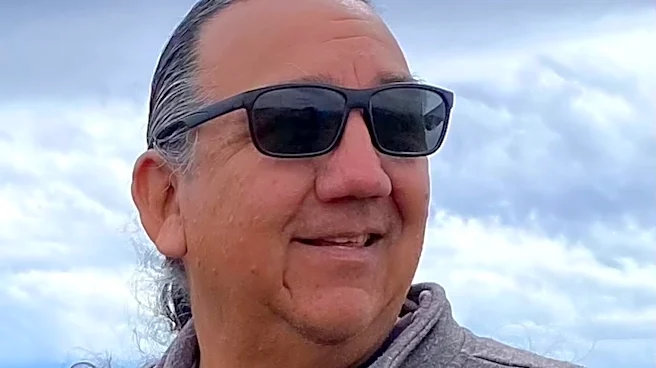
One of the featured characters is Roberto Nutlouis, a Navajo Nation farmer and executive director of Nihikeya, a grassroots organization focused on restoring regenerative Diné ecological, cultural, social and economic systems, and lifeways guided by traditional knowledge.
Nutlouis is using those teachings and practices to help deal with climate change and the global ecological disaster that is occurring.
"Americans have not fully acclimated to this place as a home," he said. "But hopefully what we see as a disaster is an opportunity for us to seek solutions that will bring us back into balance."
He shows one path to regaining balance: the Navajo hogan as an example of how to reduce energy costs by building naturally-cooled and warmed homes. Building the hogan also shows how humans build relationships with the earth, he said.
The film also highlights how Northwestern First Nations are reviving ancestral aquaculture, the navigational skills of the Dene peoples in the Northwest Territories and a Choctaw basketmaker's quest to pass on the art and science of rivercane basketry, which also requires reviving canebreaks that sustain healthy watersheds.
All the Native people featured in the episode are committed to restoring ecosystems that have been devastated by colonization as well as sustaining the cultures that have lived with their environments for millennia.
Golding hopes he'll be given the opportunity to make more such films to share Native lifeways and Native knowledge embedded in cultures after thousands of years and generations of living with the earth with audiences worldwide.
"Knowledge Keepers" will air Sept. 23 at 8 p.m. on KAET-TV, Channel 8, in Phoenix, and 9 p.m. on KUAT-TV, Channel 6. in Tucson. The episode will also be available on pbs.org/nova
Debra Krol reports on Indigenous communities at the confluence of climate, culture and commerce in Arizona and the Intermountain West. Reach Krol at debra.krol@azcentral.com. Follow her on X, formerly known as Twitter, @debkrol and on Bluesky at @debkrol.bsky.social.
This article originally appeared on Arizona Republic: Quechan filmmaker explores Native sciences in PBS 'NOVA' episode