





Millions of peoples' lives will be affected however the U.S. Bureau of Reclamation decides to manage Colorado River flows over the next 10 years, beginning Jan. 1.
That includes tribes in Arizona, who hold nearly 40% of senior water rights. And at least one tribe is becoming warier of what Reclamation will come up with, and still without meaningful interaction or discussion with those tribes.
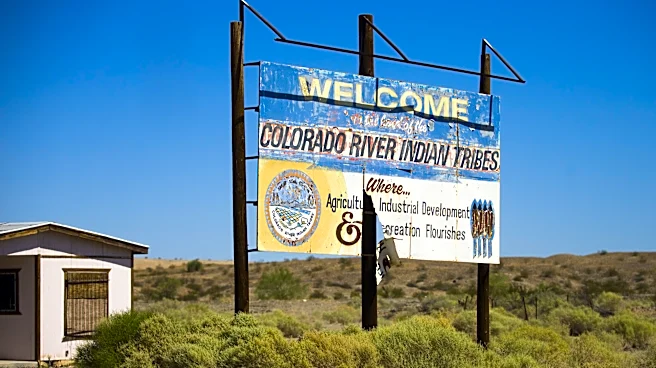
The Colorado River Indian Tribes, Arizona's largest water rights holder, issued a second call for the feds to delay action and conduct substantial talks with it and the other 29 tribes in the Colorado's basin. Collectively, those 30 tribes hold about 20% of water rights across the basin, even as some still have yet to quantify those rights or use what they
have.
Leaders of the 4,300-member tribe, whose lands are in the Colorado River Valley, said in a statement that Reclamation should postpone issuing the final plan, known as a record of decision, at least 45 days after it published the final environmental impact statement July 31.
Federal officials have not said when they plan to issue a final decision or an operating plan for 2027.
The plan outlines several alternative paths to preserving water levels in the Colorado's two major reservoirs, Lake Mead and Lake Powell, and preventing catastrophic "dead pool" conditions that would halt hydroelectric production or water passage past Glen Canyon and Hoover dams.
The tribe said it also seeks a "legitimate opportunity" to consult or be included in developing the finished product.
"The agency’s compressed review schedule denies CRIT a meaningful opportunity for review and comment," the tribe said. "It also ignores promised government-to-government consultation."
That statement includes thousands of pages of revised analysis, appendices, modeling assumptions and technical materials.
CRIT had previously requested at least a 45-day comment period on the final document and asked that any new alternative be circulated for public review before a final decision.
And the tribe said any plan must take into account that the river be protected not only to ensure taps produce water for homes and businesses and to irrigate crops, but also as CRIT's cultural, spiritual and ecological lifeline.
CRIT Attorney General Rebecca Loudbear said, “Any plan for Lake Powell and Lake Mead must respect CRIT’s senior water rights, honor the federal government’s trust obligations, and include true government-to-government consultation with the Tribe.”
"The tribes have to be actively involved at the table, so that's just a key point that has to be made." Rep. Greg Stanton told The Arizona Republic Aug. 4. He also said that although the state is bracing for the worst scenario, in which some believe Arizona's Colorado River supply will be virtually cut off, he believes Reclamation will accept the suggestions offered by Lower Basin states. Some of those include accepting deeper cuts, more than 1 million acre-feet per year, to get over the short term.
However, he said, "we need a long-term solution" to managing the river.
Debra Krol reports on Indigenous communities at the confluence of climate, culture and commerce in Arizona and the Intermountain West. Reach Krol at debra.krol@azcentral.com. Follow her on X, formerly known as Twitter, @debkrol and on Bluesky at @debkrol.bsky.social.
This article originally appeared on Arizona Republic: Tribal officials ask feds to delay Colorado River decision