



John Lennon is my favorite artist in the history of rock ’n’ roll – a distinction based in large part on the music he recorded with The Beatles but also his solo career, especially those first two albums, which remain my favorite solo efforts by a former Beatle.
He’s the reason I got my first guitar in sixth or seventh grade, the reason I became a music journalist, the reason I write songs and play in bands and have devoted my entire life to music.
And I tell you this to let you know that when I say these are what I believe to be the best John Lennon songs, I'm speaking strictly as a fan whose very understanding of what constitutes a "best" song has been largely shaped by a musical journey that began with my discovery of The Beatles when a Pittsburgh
TV station aired the movie “Help!” after Thanksgiving dinner.
I was in grade school, and The Beatles had been broken up for six or seven years by then.
A few years later, I was traumatized to learn that the man who'd only asked us to imagine all the peoplelivin' life in peace had been gunned down outside the apartment he shared with Yoko Ono on his way home from the studio.
The only thing that got me through it was his music.
As a fan, I know we all have different songs that speak to us in different way for different reasons. I can’t imagine many fans would come up with the same exact list of his best work. This is more a celebration of his legacy than anything as his birthday once again approaches on Oct. 9.
It’s sad to think how many songs he could’ve added to this list by now.
40. ‘Nobody Told Me’ (1984)
Lennon was shot to death by a deranged fan outside The Dakota, the New York City apartment building he and Ono had called home for seven years, as he and Ono were returning from a mixing session at the Record Plant on Dec. 8, 1980. A little more than three years later, a song he had been working on for years but never finished to his liking was released as the first single from the posthumous collection, “Milk and Honey.” A loopy reflection on “strange days indeed” with a playfully sardonic chorus of “Nobody told me there’d be days like these,” it features references to “Nazis in the bathroom, just below the stairs” and UFOs over New York (“and I ain’t too surprised”). Lennon started working on the song that would eventually become “Nobody Told Me” in 1976. At one point, he envisioned Ringo Starr recording it. When he and Ono started work on “Double Fantasy,” his return from a five-year recording sabbatical, “Nobody Told Me” was among the first songs Lennon tackled — on the second day of sessions. It was ultimately set aside, though, possibly because that loopy energy that makes it so contagious would’ve been an awkward fit for “Double Fantasy.” But that didn’t stop it from finding an audience eager to hear a new Lennon song in 1984. It peaked at No. 5 on Billboard’s Hot 100 (his final Top 10 single in the States while also hitting U.K. No. 6 and going Top 10 in Australia, Norway, Ireland, Luxembourg and Canada.
39. ‘Give Peace a Chance’ (1969)
Having turned their honeymoon into a Bed-In For Peace at the Queen Elizabeth Hotel in Montreal, Lennon and Ono recorded this absolute anthem with friends who happened to be visiting their room that day, including Tommy Smothers, who plays guitar on the record, Timothy Leary and Petula Clark. The chorus is brilliantly simple: “All we are saying is give peace a chance.” The verses may be best described as utter nonsense. The opening verse, for example, is “Everybody's talking about Bagism, Shagism, Dragism, Madism, Ragism, Tagism, This-ism, That-ism, Ism-ism, -Ism.” Bagism is a playfully satirical school of performance art practiced primarily by Lennon and Ono in which the artist is concealed inside a bag so as not to be judged by the physical characteristics that so often lead to prejudice. I’m not sure those other words mean anything at all. But to be fair, the verses are just filling space until that chorus comes around again, and that’s what ultimately matters here. All they are saying is “Give peace a chance.” It’s right there in the lyric. Credited to the Plastic Ono Band, it was released on the Fourth of July in 1969, becoming Lennon’s first hit as a solo artist when it peaked at U.K. No. 2 and No. 11 on the Billboard Hot 100. It was also sung by half a million demonstrators in Washington, D.C. ,on Vietnam Moratorium Day in 1969 and became an anthem of the anti-war movement in the ’70s.
38. ‘How Do You Sleep?’ (1971)
In the interest of full disclosure, I’d have rated this much higher in my freshman year of high school, when I picked up the “Imagine” album on cassette and discovered this withering takedown. It was easier to get behind the wicked sense of humor he invests in savaging his former friend and writing partner, Paul McCartney, as a kid well-versed in schoolyard taunts who may have lacked the empathy to think about how much that had to hurt McCartney. To be fair, McCartney may have brought it on himself, gently mocking his old friend’s political activism on “Too Many People.” But this isn’t merely a case of replying in kind. It’s far too cruel for that. And not just cruel but childish. Having said that, it’s an absolutely brilliant work of childish cruelty that makes a mockery of “Sgt. Pepper” and sneers “Those freaks was right when they said you was dead” on its way to the evil genius of that final verse. “A pretty face may last a year or two,” he scoffs. “But pretty soon they'll see what you can do/ The sound you make is Muzak to my ears/ You must have learned something in all those years.” And bringing in George Harrison to add a slide-guitar break that screams “And now, a word from George” to the pile-on only makes it that much more effective, as does Nicky Hopkins making his Wurlitzer sound so much like something Billy Preston might have played if they had done this on the rooftop.
37. ‘Nobody Loves You (When You’re Down and Out)’ (1974)
There’s no mistaking just how down and out he’s feeling on this melancholy highlight of the “Wall and Bridges” album. Every detail speaks directly to the desolation in his deeply wounded soul, from the downtrodden tempo to the weepy orchestration of the Philharmonic Orchestrange and a vocal treatment intimate enough to make it feel like he’s confiding in you one on one at 3 a.m. He’s clearly missing Ono. They were separated at the time, Lennon drowning his sorrows with binge-drinking buddies on an infamous “Lost Weekend” in Los Angeles. But the pathos runs deeper than that, from “from “All I can tell you is it’s all show biz” to “I’ll scratch your back and you knife mine.” The judge presiding over Morris Levy’s lawsuit against Lennon over superficial similarities between the Beatles’ “Come Together” and Chuck Berry’s “You Can’t Catch Me” is said to have quoted the lyric “everybody's hustling for a buck and a dime” in opening remarks. The song is beautifully arranged, especially the unexpected shift in tone on that impassioned bridge, where Lennon’s vocal really comes alive before retreating once more to the melancholy shadows on the final verse before whistling his way through the fade-out.
36. ‘Aisumasen (I’m Sorry)’
Another heartbreaking ballad inspired by marital strife, “Aisumasen (I’m Sorry)” addresses Ono by name in the lyrics, telling her “And when I hurt you and cause you pain, darling, I promise I won't do it again.” “Aisumasen” is Lennon attempting to say “I’m sorry” in Japanese. Apparently, it’s not quite right but it’s still a sweet gesture. Making a chorus hook of “All I had to do was call your name,” an unmistakable callback to “Oh Yoko!,” is an even sweeter gesture, recalling simpler times in their relationship. It’s also one of his prettier melodies, delivered in a gentle voice that underscores how vulnerable he’s being. He even slips in and out of a fragile falsetto at times. It was all for naught, though. By the time the song appeared on “Mind Games,” he and Ono had begun a separation that would last 18 months.
35. ‘Whatever Gets You Through the Night’ (1974)
Released as the first single from the “Walls and Bridges” album, this was Lennon’s first chart-topping entry on the Billboard Hot 100, recorded with a group he dubbed the Plastic Ono Nuclear Band. It also features Elton John on guest piano, organ and vocal harmonies. There’s no mistaking what it was about this song that made it such a giant pop hit at that point in music history, with disco on the rise and Elton-mania in overdrive. It’s not a disco song, per se, but that slinky funk groove all but dares you not to hit the dancefloor. And although it doesn’t necessarily come through in the mix, it was inspired by the early disco classic “Rock Your Baby,” a recent No. 1 for George McCrae that had been written and produced by Harry Wayne Casey and Richard Finch of KC and the Sunshine Band. Lennon’s song is feistier, with Bobby Keys leading the charge on tenor saxophone. In the studio, Elton John bet Lennon it would top and charts, and Lennon was so utterly convinced it wouldn’t, he agreed to join his friend on stage in the unlikely event that the piano man was right. That’s how the former Beatle came to appear at Elton John’s Thanksgiving gig at Madison Square Garden in 1974, his last major concert appearance, singing this song, “Lucy in the Sky With Diamonds” and “I Saw Her Standing There,” introduced as a song “by an old estranged fiancé of mine called Paul."
34. ‘Bless You’ (1974)
This jazz-tinged ballad from the “Walls and Bridges” album is the sound of Lennon resigning himself to the idea that his marriage seemed beyond repair and wishing Ono well. He even spares a word of kindness for her new love: “Bless you whoever you are, holding her now / Be warm and kindhearted.” There’s a quiet dignity to what he’s singing here that doesn’t necessarily mask the pain – a heartache driven home by the singer’s exquisitely soulful delivery. It’s all beautifully arranged, from the smooth jazz guitar vibe of Jesse Ed Davis’ opening slide and the way it’s greeted by Ken Ascher’s dreamy electric piano accents and a gently strummed acoustic, all before Lennon takes the mic. And there’s still hope of reconciliation on the bridge, where Lennon sings, “Some people say it's over now that we spread our wings, but we know better darling.” Turns out he was onto something there. He and Ono officially ended their 18-month separation within a few months of the album’s release and renewed their wedding vows on March 20, 1975. Lennon himself once said he felt this was the best song on the album.
33. ‘New York City’ (1972)
Unless you count those three experimental albums he and Ono released in the early days of their relationship, “Some Time in New York City,” credited to John & Yoko/Plastic Ono Band with Elephant's Memory and the Invisible Strings, is Lennon’s only studio release that failed to go Top 40 on the Billboard album chart (although it fared much better in the U.K. and Australia, hitting No. 2 in Norway). It was also savaged by the critics at the time, dismissed in Rolling Stone as “incipient artistic suicide.” And this is coming off the chart-topping success of the “Imagine” album. What happened? As Rolling Stone would later sum it up in a far kinder if no less dismissive look back in 2010: “Lennon’s early wit and gift for aphorisms had temporarily turned into agitprop rhetoric that numbed the mind. Though its intentions were noble, ‘Some Time in New York City’ just didn’t work.” As true as that may be, this loose-limbed highlight finds Lennon and Elephant’s Memory boogeying their way through a song he could just as easily have titled “Another Ballad of John and Yoko” with a multi-cultural chorus hook of “Que Pasa, New York?” The lyrics bring us up to date, reporting on the couple’s life in New York City, hanging with fellow subversives and getting hassled by the man. The music wears its deep respect for the early works of a Mr. Chuck Berry on the sleeves of Lennon’s Army jacket. It also boasts a spirited rebuttal to the Nixon administration’s soon-to-fail attempts at sending Lennon back to Liverpool: “If the man wants to shove us out, we gonna jump and shout ‘The Statue of Liberty said come!’” If that’s not the timeliest lyric on the album, I don’t know what is.
32. ‘I Know (I Know)’ (1973)
There’s no mistaking the similarities between that guitar riff and “I’ve Got a Feeling” by The Beatles. But that only adds to the Beatles-esque charm of this tender “Mind Games” highlight, which finds him once again apologizing, hat in hand. “And I know just how you feel,” he tells the person he’s wronged here. “And I know now what I have done/ And I know, and I'm guilty, yes I am/ But I never could read your mind.” It could be argued that he could’ve kept that last part to himself, but the sincerity is obvious. And there’s no mistaking his true feelings when the sun breaks through the clouds on that breathtaking bridge, where Lennon sings “Today, I love you more than yesterday/ Right now, I love you more right now.” He also squeezes in another Beatles reference on the final verse with “And I know it's getting better all the time” (which is closely followed by an extremely McCartney-esque bass run courtesy of Gordon Edwards). There are many fans who take those Beatles references as clues that this is Lennon sending McCartney an apology in song after “How Do You Sleep?” Or it could be another song inspired by his strained relationship with Ono. In a 1980 interview with Playboy, Lennon famously dismissed this song as “just a piece of nothing.” But he always was his own worst critic. I say trust the art.
31. ‘Stand By Me’ (1975)
“Rock ‘n’ Roll” is the final album Lennon would release before retreating from the spotlight to focus on raising his first child with Ono, having barely been a presence in the life of Julian Lennon, the child he had with first wife Cynthia Powell in the early days of Beatlemania. The album served two functions – paying tribute to the music of his youth and satisfying the terms of an-out-court agreement in the copyright infringement lawsuit brought by Morris Levy over Lennon’s “Come Together” having referenced a line about “old flattop” from a 1956 Chuck Berry song whose publishing was owned by Levy. Part of the agreement was that Lennon would include three songs owned by Levy on his next album. “Ya Ya” was included on the “Wall and Bridges” album, where it made no sense, but it did feature Julian Lennon on drums, which was sweet. A second recording of “Ya Ya” was featured on “Rock ‘n’ Roll,” as was “You Can’t Catch Me,” the song that inspired the lawsuit. Levy did not own the rights, though, to the single that became the only hit from “Rock ’n’ Roll,” a cover of the Ben E. King song “Stand By Me” that played directly to his strengths as one of the great soul interpreters of the British Invasion. It peaked at No. 20 on the Billboard Hot 100 and No. 30 on the U.K. singles chart as Lennon’s final hit before his return to public life with 1980’s “(Just Like) Starting Over.”
30. ‘Woman’ (1980)
The second single released from “Double Fantasy,” an album-length collaboration with Ono that marked his return from a five-year recording hiatus, “Woman” is among his most successful solo hits. Released a month after his murder, while the world was still in mourning, “Woman” topped the U.K. pop charts, hitting No. 2 on Billboard’s Hot 100. In an interview with Rolling Stone three days before his death, he explained the inspiration behind this sweet, unguarded ballad. “One sunny afternoon in Bermuda, it suddenly hit me,” he said. “I saw what women do for us. Not just what my Yoko does for me, although I was thinking in those personal terms.” In the opening verse, he takes himself to task for his own thoughtlessness, going on to say, “I will try to express my inner feelings and thankfulness for showing me the meaning of success.” Lennon himself referred to “Woman” as his update on the Beatles’ “Girl,” but I’m assuming what he meant is that the lyrics are a more mature reflection on “the other half of the sky,” as he whispers over the chiming guitars of that opening riff. Like “(Just Like) Starting Over,” the album’s first single, this song is steeped in echoes of the music Lennon cut his teeth on growing up in Liverpool, if filtered through an early ’80s easy-listening sheen by Jack Douglas, who co-produced the album with Lennon and Ono.
29. ‘Intuition’ (1973)
There’s a carefree sense of optimism to this beyond-contagious pop gem that opens side two of the “Mind Games” album, a welcome retreat from the overly topical approach to world events that made his previous release, “Some Time in New York City,” such a hard sell. Here, he celebrates the benefits of letting intuition guide the way. “As I play the game of life,” he sings, “I try to make it better each and every day/ And when I struggle in the night, the magic of the music seems to light the way.” He’s written deeper songs. But rarely has he tapped into his hopeful side with such a light touch, reminding himself “it’s good to be alive” as his marriage is falling apart and the Nixon administration is doing its damnedest to have him deported in a shameless bid at silencing his outspoken support of the anti-war movement – at least on U.S. soil.
28. ‘Beautiful Boy (Darling Boy)’ (1980)
His first and only child with Ono was born Oct. 9, 1975, Lennon’s 35 birthday, after which he famously retreated from the spotlight, assuming the life of a “househusband,” as Lennon liked to call it, baking bread and looking after Sean. It’s only natural that when he returned to public life with “Double Fantasy,” he included a song he’d written as a lullaby for Sean, the unabashedly affectionate “Beautiful Boy (Darling Boy).” A breathtaking ballad whose tenderness is gently underscored by steel drums, it opens with Lennon comforting the child after a nightmare (“Close your eyes/ Have no fear/ The monster’s gone/ He’s on the run/ And your daddy’s here”) and ends with a whisper of “Goodnight, Sean. See you in the morning, bright and early.” Because he would be murdered in the archway of his home just three weeks after the release of “Double Fantasy,” an album he autographed that same day for his killer, “Life is what happens to you while you’re busy making other plans” became a far more haunting (and certainly more prescient) lyric than intended.
27. ‘I’m Losing You’ (1980)
The toughest-sounding track on “Double Fantasy," with stinging lead guitar from Earl Slick and Hugh McCracken, this was written in Bermuda following a failed attempt at getting Ono on the telephone, effectively exposing Lennon's paranoia as the two were reconnecting. "Somehow the wires have crossed," he sings. "Communication lost / Can't even get you on the telephone." There's real frustration in his voice as he responds to her complaints with "What the hell am I supposed to do? / Just put a Band-Aid on it and stop the bleeding now?" After tossing off a quick reference to primal-scream therapy rocker "Well Well Well," he spends the final verse complaining about Ono holding onto all the pain he caused her in the '70s. "I know I hurt you then," he growls. "But hell, that was way back when / Well, do you still have to carry that cross? / Don't want to hear about it." He quickly returns to being concerned that he's losing her, though, confiding “Don’t wanna lose you now” as the song begins to fade. In wrestling with those very real, if conflicting, emotions, the song recalls the introspective bloodletting of “Plastic Ono Band” in ways that couldn’t help but make it feel like something of a welcome outlier on “Double Fantasy.”
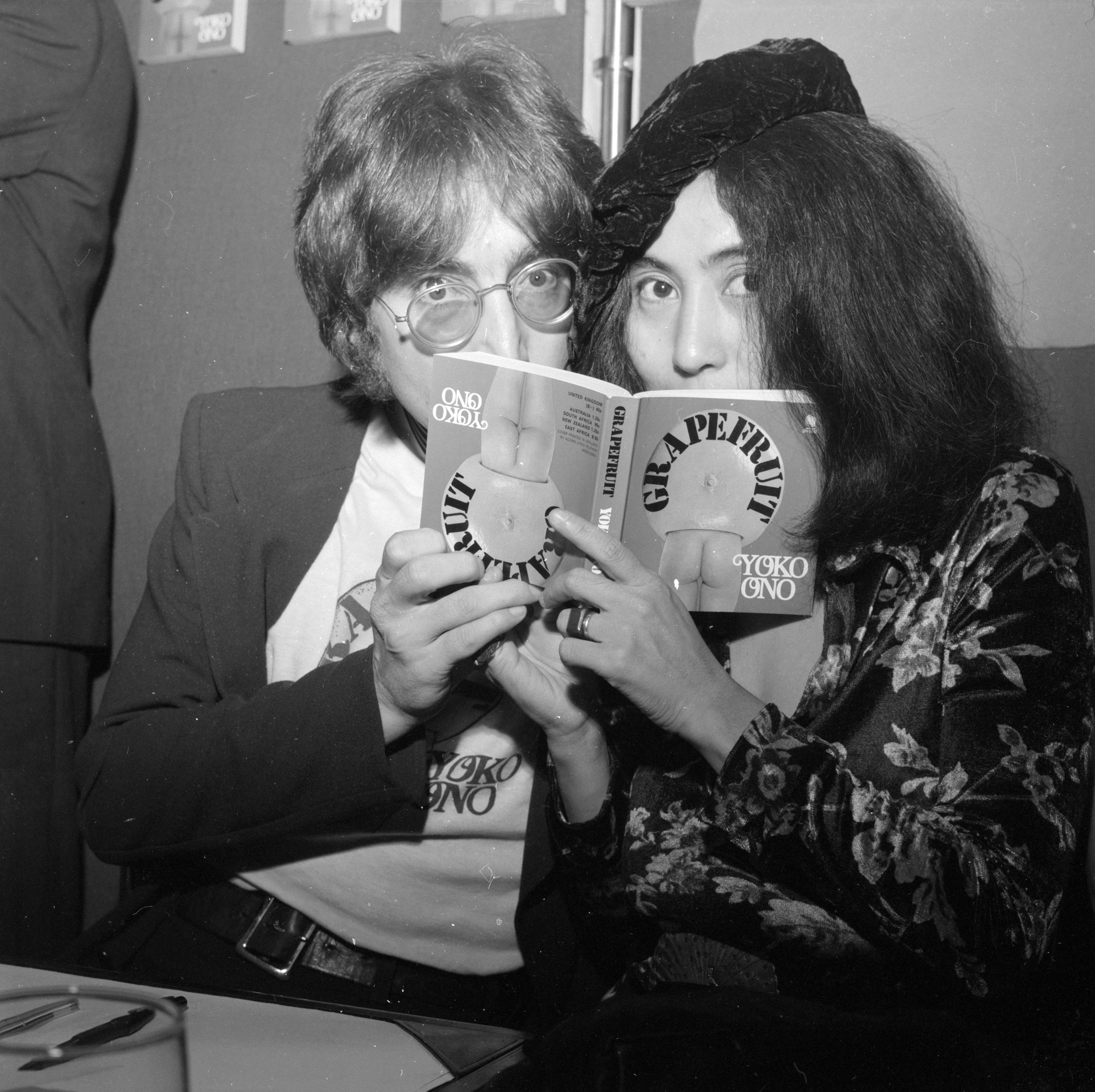
26. ‘Oh Yoko!’ (1971)
This tender folk-rock tribute to the strength of his undying love for Ono brings "Imagine" to a close with Lennon on the most distinctly Dylan-like harmonica he'd ever played. The words are sweet and simple, the voice as vulnerable as anything on “Plastic Ono Band” as Lennon vows his love will turn her on while running down a laundry list of possible scenarios in which he might find himself calling her name — in the middle of the night, in the middle of a shave, in the middle of a cloud and so on. It’s all so very Lennon — unapologetically romantic in a way that almost leaves me wondering if most songwriters would be comfortable sharing a love song as unguarded as “Oh Yoko!” with their Yoko, let alone the world. Lennon wrote another song with Yoko in the title for 1980’s “Double Fantasy,” the Buddy Holly-channeling “Dear Yoko,” an undeniably charming sequel that like so many sequels doesn’t quite recapture the magic that made the original seem like it was worth repeating in the first place.
25. ‘Power to the People’ (1971)
Among his more effective instances of taking social activism to the masses, “Power to the People” was a Top 10 single in the U.K., peaking at No. 11 on the Billboard Hot 100 in the States. It opens with an a cappella choir repeating the title line, accompanied only by the sound of marching feet. Then, the Plastic Ono Band kicks in with Bobby Keys on saxophone, making a glorious racket. When he sang of revolution on the Beatles single, “Revolution,” Lennon sang, “But when you talk about destruction, don’t you know that you can count me out” (although on an earlier pass at the song released as “Revolution 1” on “The Beatles,” he follows “you can count me out” with “in”). On “Power to the People,” there’s no hint of ambiguity. “Say we want a revolution?” Lennon sings. “We better get it on right away/ Well, get ya on your feet/ And into the street/ singing ‘Power to the people.’” Lennon later disavowed this song, recorded a day after a conversation with two writers for a Marxist newspaper who challenged the singer’s belief in giving peace a chace. In “Skywriting by Word of Mouth,” a posthumous collection of his writings, he writes, “We’d got a bit of a reputation for hanging out with the Cambridge Graduate School of Revolutionaries in the U.K. They made us feel so guilty about not hating everyone who wasn’t poor that I even wrote and recorded the rather embarrassing ‘Power To The People’ ten years too late. ... We kept the royalties, of course.”
24. 'How?' (1971)
This richly orchestrated highlight of "Imagine" is Lennon's emotionally naked response to the same primal therapy work that had inspired the exposed-nerve introspection of the previous year's "Plastic Ono Band." He'd undergone that therapy with Arthur Janov, whose technique was based, in large part, on reliving repressed childhood traumas. That includes the primal screams you hear on "Well Well Well" and "Mother." But there's no screaming this time out, just lots of probing questions left unanswered by the time the song is through." "How can I go forward when I don't know which way I'm facing?," he asks before following through with "How can I go forward when I don't know which way to turn?" and "How can I go forward into something I'm not sure of?" He's still riddled with self-doubt and looking for answers, nearly giving in to hopelessness on the bridge, which is gorgeous. "You know life can be long," he sings. "And you got to be so strong / And the world is so tough / Sometimes I feel I've had enough." It’s a beautiful recording with vibraphone and a tasteful string arrangement brought to life by the Flux Fiddlers.
23. ‘One Day (At a Time)’ (1973)
Among the many things I love about this "Mind Games" highlight is it shows a more vulnerable side of Lennon's voice than fans were used to hearing. He sings in a fragile falsetto that plays to the strengths of this delicate ballad in which he pledges his devotion to Ono in lines as unabashedly romantic as "You are my weakness, you are my strength / Nothing I have in the world makes better sense / 'Cause I'm a fish and you're the sea.” It was Ono who suggested that he try to sing it in falsetto. He’s joined on backing vocals by a singing group called Something Different, whose harmonies add to the sweetness of the chorus hook. Elton John recorded his own version as the flipside to another Lennon composition, The Beatles classic “Lucy in the Sky with Diamonds.”
22. ‘Grow Old With Me’ (1984)
A home recording of Lennon playing his piano to a rhythm box in the bedroom he and Ono shared, this endearingly delicate ballad didn't see the light of day until the 1984 release of the "Milk and Honey" album. Drawing inspiration from a Robert Browning poem, the song was written in response to Ono's "Let Me Count the Ways" (which was, in turn, inspired by an Elizabeth Barrett Browning poem). The plan was to include the songs on "Double Fantasy," but they ran out of time, which may be just as well. In 1998, George Martin went back in and added orchestration at Ono's request, effectively killing the intimate vibe that made it feel so special in the first place, underscoring the purity of the singer's sweet delivery. Lennon and Ono envisioned the song as a standard, the kind that would be played in church every time a couple gets married, with horns and other arrangements. When my wife and I got married, we honored Lennon’s wishes. But we used the raw, unvarnished home recording, because it’s more romantic, and it sounded perfect.
21. ‘(Just Like) Starting Over’ (1980)
This effervescent throwback to the early days of rock ‘n’ roll is the song that was chosen to herald the singer’s return from a five-year recording sabbatical with “Double Fantasy” in 1980. Released in late October, it had worked its way to No. 3 on Billboard’s Hot 100 by the time of Lennon’s murder, hitting No. 1 the last week of December and staying there for five weeks to become his biggest U.S. solo hit. The song was chosen not because he felt it was the best song on the album so much as he found it a suitable way to tell the world he was starting over, a lyrical theme he echoed in the music, which finds him embracing his roots in early rock ‘n’ roll, complete with doo-wop backing vocals. In a 1980 interview with Rolling Stone, he said, “All through the taping of 'Starting Over,' I was calling what I was doing 'Elvis Orbison'. ... I'm a born-again rocker, I feel that refreshed, and I'm going right back to my roots — Elvis and Roy Orbison and Gene Vincent and Jerry Lee Lewis.” The lyrics, of course, are about starting over with Ono after going through a rough patch in the ’70s. The opening track on “Double Fantasy,” it sets the tone with four strikes of a small Tibetan wishing bell, a stark contrast to the funereal tolling of a church bell that had welcoming listeners to “Plastic Ono Band” a decade earlier.
20. 'Crippled Inside'
The upbeat shades-of-"Nashville Skyline" vibe of this countrified rocker from "Imagine," complete with honky-tonk piano fills from Nicky Hopkins and pedal-steel guitar from Harrison, is at odds with the lyrical content, Lennon repeating "One thing you can't hide is when you're crippled inside." But there's some darkly comic humor, too. See the bridge, in which he sings, "Well now you know that your cat has nine lives/ Nine lives to itself/ But you only got one/ And a dog's life ain't fun." That's classic Lennon, as are the digs he gets in at religious hypocrisy: "You can go to church and sing a hymn/ Judge me by the color of my skin/ You can live a lie until you die/ One thing you can't hide/ Is when you're crippled inside." Lennon himself would eventually dismiss this song, as he was wont to do, writing it off as “very corny country and western.” But those corny country touches are what makes it what it is.
19. 'Watching the Wheels'
The strongest track on "Double Fantasy" finds Lennon addressing the people who couldn't seem to wrap their heads around his admittedly unusual decision to semi-retire from music to focus on being what he called a "househusband." "When I say that I'm OK, well, they look at me kinda strange," Lennon sings before responding in the voice of everyone who ever questioned his decision, "Surely, you're not happy now, you no longer play the game." But as Lennon reveals at the end of the chorus, "I just had to let it go." And as this song clearly illustrates, even after all that time away, he could still play the game with the best of them, completely with a piano intro in the grand tradition of “Imagine.” It also features one of Lennon’s strongest vocals on the album, slipping into a soulful falsetto on the gospel-flavored climax. Released as the album’s third and final single, this one peaked at No. 10 on Billboard’s Hot 100, hitting No. 30 in the U.K.
18. 'Love'
The poetic device is simple yet effective, as established in the first verse: "Love is real, real is love/ Love is feeling, feeling love/ Love is wanting to be loved." In lesser hands, it may have seemed a little trite. But this is Lennon at his most romantic, fading in on a tender piano ballad paying tribute to his love for Ono. That's producer Phil Spector on piano, by the way, Lennon strumming acoustic guitar chords, his voice an understated, soulful rasp. This isn’t the world-changing love he said was easy in The Beatles’ “All You Need is Love.” This is the scarier kind of love – the kind in which you give yourself completely to another human being, as he’s hoping he can do for Yoko. Part of the power of “Plastic Ono Band” is the way song as vulnerable and sweet as “Love” can follow the explosion that brings that brings the curtain crashing down abruptly on the final chorus of “Remember” an, in turn, be followed by the primal screams and distorted guitars of “Well Well Well.”
17. '#9 Dream'
This "Walls and Bridges" highlight more than lives up to its title, the dreamy production values dutifully underscoring the atmospheric essence of a song about a dream that "seemed so real to me" that came to Lennon, as it turns out, in a dream. The seemingly meaningless mantra of "Ah! böwakawa poussé, poussé?" Apparently, he woke up from a dream and wrote those lyrics down before they disappeared. And when it sounds like it's probably deep in a language you can't even place, why not just run with it, right? The majestic string arrangement here is based, in part, on Lennon's gently used arrangement for a Jimmy Cliff song Harry Nilsson covered on the legendary album, "Pussy Cats." Lennon told his lover at the time, May Pang, that he produced the track to lull the listener into his dream. And bonus points for the "#9" reference, another clue for you all.
16. 'Well Well Well' (1970)
No song on “Plastic One Band” made more inspired use of the primal scream therapy he’d undergone with Arthur Janov than this trance-inducing scream fest, which features the singer repeating the title line in a series of tortured howls that had to do some damage to his vocal cords. And the whole thing is built on a raunchy, distorted guitar riff as deserving of the title proto-punk as anything on that first Stooges album while recalling Lennon’s own “Cold Turkey.” But “Well Well Well” is a much slower beast than “Cold Turkey.” It plods, the way that first Black Sabbath album plods, Ringo Starr and Klaus Voorman reduced to a menacing, minimalistic thud on the verses as the star takes stock in his and Yoko’s recent activism. “We sat and talked of revolution,” Lennon sings. “Just like two liberals in the sun / We talked of women’s liberation / And how the hell we could get things done.”
15. 'Mother' (1970)
He sets the tone for “Plastic Ono Band,” his dark night of the tortured soul, with the ominous tolling of funeral bells to ring in this cathartic tale in which he grapples with the pain of having lost his mother, Julia, at 17. Lennon's mother was struck by a car and killed as she was walking to the bus stop after visiting with his Aunt Mimi, who raised him. There’s no mistaking the raw emotion in the former Beatle’s vocal as he lays it on the line with "Mother, you had me/ But I never had you/ I wanted you/ You didn't want me /So I, I just gotta tell you goodbye." In the second verse, he addresses the father who abandoned him. In the third verse, his “children” (although at the time, he only had one child). It ends in desperate cries of "Mama, don't go. Daddy come home," inspired by Lennon’s experiences in primal scream therapy. The album’s only single, it peaked at No. 43 here in the States, which seems a bit high a record as blatantly anti-commercial as "Mother."
14. 'Look at Me' (1970)
Among the more inspired songs on “Plastic Ono Band,” this introspective ballad was actually written much earlier, during the sessions for the Beatles’ 1968 release, a self-titled effort more commonly known as “The White Album.” And truthfully, it would have sounded right at home on that release, making use of the finger-picking technique Lennon learned from Donovan in India while studying the teachings of the Maharishi Mahesh Yogi, as heard on such “White Album” classics as “Julia” and “Dear Prudence.” Lyrically, it finds him questioning his own identity, asking “Who am I supposed be?” and “What am I supposed to do?,” questions that wouldn’t have had the same impact if this song had been recorded when the answers were “You’re Beatle John” and “You’re supposed to write another hit.” As Lennon recalled in an interview quoted in a recent “Plastic Ono Band” reissue, “A couple of tracks, which one would suppose were written under therapy, like 'Look At Me,' were written pre-Janov, about a year before therapy. But the theme was the same: ‘look at me,’ ‘who am I?,’ all that jazz. So that’s why I stuck it on that album.”
13. 'Out the Blue'
One of countless Lennon classics extolling the virtues of his ideal woman, Ono, “Out the Blue” was written and recorded (for the “Mind Games” album) while the two were separated. Which explains the sense of urgency in Lennon’s vocal as he pledges his undying love for the woman he credits with having blown away life’s misery. “I was born just to get to you,” he tells her, going on to add, “I survived long enough to make you my wife.” He also references the UFO he claims to have witnessed from the balcony of his apartment, singing “Like a UFO, you came to me.” Musically, the song is of a piece with Lennon’s more majestic moments, from the Beatles to “Imagine,” constructing a Spectoresque Wall of Sound complete with pedal-steel guitar, piano and a gospel choir after easing the listener in with a finger-picking pattern performed on acoustic guitar.
12. 'Oh My Love' (1971)
Like many of his more enduring ballads, this “Imagine” highlight begins with a simple finger-picking pattern. Before the singing starts, the vocal melody is foreshadowed by stately piano. And that piano part becomes more fluid as Lennon starts to sing. “Oh my love,” he sings, his voice as calming as the music. “For the first time in my life, my eyes are wide open/ Oh my lover, for the first time in my life/ My eyes can see.” It’s yet another ode to Ono, who’s given a co-writing credit on this one. But the words are non-specific to their situation, making this a far more universal love song than “Oh Yoko!,” for example. That guitar, by the way, was supplied by Harrison, with Nicky Hopkins and Lennon himself on piano. And if that finger-picking pattern sounds a bit like something he’d have written on the Beatles’ trip to Rishikesh to see the Maharishi, that tracks. “Oh My Love” was written and demoed in 1968 after the Beatles completed “The White Album.”
11. 'Cold Turkey'
This harrowing rocker was inspired by the feelings of withdrawal he experienced while coming down off heroin cold turkey. This is Lennon at his edgiest, from the subject matter to those icy shards of distorted electric guitar to the unhinged primal screaming over a minimalistic art-punk groove laid down by Starr and Voorman. And yet, it somehow charted, hitting No. 30 in the States, as credited to Plastic Ono Band like his previous single, the far less abrasive protest song, “Give Peace a Chance.” Lennon offered the song to the Beatles for use as a single as they were wrapping work on “Abbey Road,” but they declined. The single also played a role in one of Lennon’s more amusing acts of protest, returning his Most Excellent Order of the British Empire award in protest to Buckingham Palace with a note that read, "I am returning this MBE in protest against Britain's involvement in the Nigeria-Biafra thing, against our support of America in Vietnam, and against Cold Turkey slipping down the charts."
10. 'Gimme Some Truth' (1971)
He’s certainly more confrontational in advancing his social agenda on this Nixon-baiting protest song than he is on “Imagine,” the title track for the album that produced this revolutionary rocker. That stinging slide guitar part is, of course, Harrison. But Lennon’s lyrics here are just as biting. “I'm sick and tired of hearing things from uptight, short-sighted, narrow-minded hypocritics,” he sings. “All I want is the truth / Just gimme some truth/ I've had enough of reading things/ By neurotic, psychotic, pig-headed politicians/ All I want is the truth.” If it weren’t for the Tricky Dicky reference, it could almost be mistaken for a timely comment on what passes for political discourse in 2026. When Pearl Jam took to performing it live in 2003, Eddie Vedder changed the name to Georgy Porgy. Billy Idol didn't have to change the Nixon reference when his U.K. punk band, Generation X, famously covered the song in 1978.
9. 'I Found Out' (1970)
This gritty blues-punk track from “Plastic Ono Band” finds a profoundly disillusioned Lennon lashing out at a variety of targets, from his parents (dismissed with a withering “They didn’t want me so they made me a star”) to the freaks on the phone who won’t leave him alone, snarling “don’t give me that ‘brother-brother-brother,’ brother” in their general direction. He wouldn’t imagine no religion until the following album, but he writes off Hare Krishna and spiritual gurus as “pie in the sky” here. And he spares no rod on Christianity, which had neither shrunk nor faded as he once predicted. “There ain’t no Jesus gonna come from the sky” rhymes with “Now that I found out, I know I can cry.” And in the final verse, he sings, “I seen through junkies, I been through it all/ I seen religion from Jesus to Paul.” Does he mean Paul the gospel writer? Or his Paul, the former Beatle? I’m no conspiracy theory, but my money’s on the former Beatle.
8. 'Isolation' (1970)
One of several early Lennon songs that appear to be drawing on gospel, “Isolation” brings side one of “Plastic Ono Band” to a powerful close as Lennon shares the fears and insecurities of “a boy and a little girl trying to change the whole wide world.” With Starr and Voorman as his rhythm section, the singer accompanies himself on Hammond organ and piano, setting the tone with a melancholy piano figure, followed by a trembling vocal that does a brilliant of job of underscoring the vulnerability of “People say we got it made/ Don’t they know we’re so afraid?” Four verses in, it kicks into a gritty, soulful climax, pounding out accents that stop on a dime like “Jailhouse Rock” as retrofitted for a funeral march with Lennon at his bluesiest, sneering, “I don't expect you to understand/ After you've caused so much pain/ But then again, you're not to blame/ You're just a human, a victim of the insane.”
7. 'Working Class Hero' (1970)
You could hear the Dylan creeping into Lennon’s writing style as early as “You’ve Got to Hide Your Love Away.” But “Working Class Hero” was Lennon’s most Dylanesque triumph, a stark acoustic ballad that shows his sympathies lie squarely with the working class to whom he still relates despite whatever fortunes he’d amassed by that point (The Beatles, I’m told, had a pretty good run). The song’s most damning lines are in the final verse: “There's room at the top, they are telling you still / But first you must learn how to smile as you kill / If you want to be like the folks on the hill.” But Lennon didn’t let his fellow revolutionaries off without a warning, either. “You think you’re so clever and classless and free,” Lennon famously sneered. “But you’re still (expletive) peasants as far as I can see.” As the singer explained when he talked to Rolling Stone back in ’71 : "Nothing changed, except that we all dressed up a bit, leaving the same bastards running everything."
6. 'Happy Xmas (War is Over)'
The power couple of protest-rock use Christmas to promote their anti-war agenda with Spector co-producing an arrangement rich with yuletide magic. Baby Jesus would be proud. But no one gets off easy here. "And so this is Christmas and what have you done?," Lennon demands as the wall of guitars does its best imitation of waltzing in heaven. Then, Ono has her say and when the chorus comes around again, Lennon's words are underscored by the kids of the Harlem Community Choir singing "War is over if you want it." A beautiful thought for a beautiful day that should be more concerned with waging peace than commerce, it’s become a Christmas standard in the years since Lennon’s murder. That “War is Over! If You Want It” slogan was repurposed from a Christmas billboard and poster campaign the couple undertook in 1969, having given the anti-war movement an anthem with “Give Peace a Chance” while staging a Bed-In For Peace that summer.
5. 'Jealous Guy' (1971)
This richly orchestrated ballad detailing the insecurities that plagued him in the early days of his relationship with Ono is one of Lennon's most enduring love songs. “I didn’t mean to hurt you,” he sings in the chorus. “I’m sorry that I made you cry/ Oh my, I didn’t want to hurt you/ I’m just a jealous guy.” The unguarded emotion in Lennon’s delivery cuts to the bone. He started writing “Jealous Guy” in 1968 on that same trip to India I mentioned earlier. But at the time the song had different lyrics and was titled “Child of Nature,” inspired by the same lecture that led to McCartney writing “Mother Nature’s Son,” which the Beatles opted to record instead. It's good that he made to let this marinate a while, because those original were nearly as moving. No fewer than 92 artists have gone on to cover this one, Roxy Music being the most notable example, having topped the U.K. charts in 1981.
4. 'Imagine' (1971)
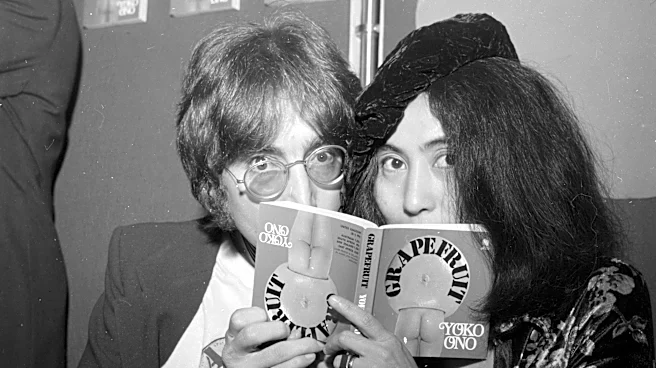
This is Lennon's most iconic hour as a maker of big statements — or a dreamer, as he puts it in this tender plea to just imagine life without assorted constructs that tend to divide us, from nationalism and capitalism to religion. In Lennon's Utopian vision, there's nothing to kill or die for and no need for greed or hunger. "You may say I'm a dreamer," Lennon sings on the soulful chorus, "but I'm not the only one/ I hope some day you'll join us and the world will live as one." Spector co-produced the stately, gospel-flavored track with Lennon and Ono, whose book of poetry, "Grapefruit," inspired the lyrics. It’s become fashionable in recent years to adopt a more cynical view of “Imagine,” as though the former Beatle’s self-made fortune should preclude him from advancing a Utopian ideal that invites you to imagine no possessions, as though he’s telling anyone to rid themselves of all their worldly possessions. It’s a silly argument that’s disingenuous at best when what he’s clearly saying is imagine how much nicer life would be if it were possible to get beyond these obstacles to “all the people sharing all the world.” If you don’t think nationalism, religion and the ever-widening gulf between the haves and have nots are dividing us as much as ever, if not more so, in 2026, I don’t know what to tell you. But I hope someday you'll join us.
3. 'Instant Karma'
The idea of instant karma is quintessential Lennon. And so are the lyrics. “You better get yourself together,” he cautions, because, after all, “pretty soon you’re gonna be dead.” But the single’s most Lennon-esque moment is probably “Why in the world are we here? Surely not to live in pain and fear.” The chorus is the perfect blend of Lennon optimism and the man’s ability to make whatever message he was sharing at the moment feel completely universal. “Well, we all shine on,” Lennon sings, “like the moon and the stars and the sun.” The masses responded to the universal nature of that message, making this the first song by a former Beatle to sell a million copies in the States. It’s also a brilliantly realized Spector recording, from the choir they imported from a local nightclub to make the chorus feel more like an instant singalong to Alan White’s amazing drum fills, which manage to provide the missing link between Moon and Starr. But getting back to “instant” for a moment, the song was written and recorded in a single day and in stores 10 days later. As Lennon described the recording experience, “We booked the studio, and Phil came in and he said, ‘How do you want it?’ And I said, ‘1950s,’ and he said, ‘Right,’ and boom, I did it, in about three goes. He played it back and there it was.”
2. 'God' (1970)
Never one to mince words when it came to adopting provocative stances concerning religion, the man who scandalized a nation at the height of Beatlemania by telling a reporter “We’re more popular than Jesus now” begins this gospel-flavored triumph with a withering “God is a concept by which we measure our pain.” But this isn’t a song about God so much as a case of the singer debunking his own powerful mythology as a rock 'n' roll god. The song builds to a climax with Lennon denouncing everything he once believed in, from "I don't believe in Elvis" to "I don't believe in Zimmerman," working the throat-shredding rasp in his voice to dramatic effect as he declares his independence from the past. "I don't believe in Beatles" he finally declares, the music stopping cold before returning with a hushed "I just believe in me — Yoko and me. And that's reality." With that, the stage is set for an emotionally vulnerable, soulful finale that sounded especially haunting on those tributes that flooded the airwaves in the wake of Lennon's murder. "The dream is over," Lennon sings. "What can I say? The dream is over. Yesterday, I was the dream weaver, but now I'm reborn. I was the walrus, but now I'm John. And so different, you'll just have to carry on. The dream is over."
1. 'Mind Games' (1973)
On “Imagine,” he sings, “You may say I’m a dreamer.” On “Mind Games,” it sounds like he’s actually singing from inside a dream state, floating on a cloud, thanks to the pillowy production, while effortlessly picking up the dream right where "Imagine" left off (although he started working on it prior to “Imagine”). There’s a demo of Lennon performing a skeletal version of the song in 1970. At the time, all he had was the achingly beautiful “Love is the answer” bit and the "make love, not war” part he sings on the fadeout. But the wonderfully poetic verses, imagining “some kinda druid dudes lifting the veil” and “millions of mind guerillas putting their soul power to the karmic wheel,” took shape after reading a self-help psychology book titled “Mind Games: The Guide to Inner Space” by Robert Masters and Jean Houston. The “Mind Games” album marked a clear return to form in the wake of the overly topical protest-rock of the previous year’s "Some Time in New York City." And this song led the way as the opening track and lead single. This one peaked at No. 18 on the Billboard Hot 100 in the States and was a No. 26 hit in the U.K.
Ed has covered pop music for The Republic since 2007, reviewing festivals and concerts, interviewing legends, covering the local scene and more. He did the same in Pittsburgh for more than a decade. Follow him on X and Instagram @edmasley and on Facebook as Ed Masley. Email him at ed.masley@arizonarepublic.com.
This article originally appeared on Arizona Republic: Best John Lennon songs of all time. His 40 greatest hits, post-Beatles