






Arizonans will have the final say on a sweeping slate of ballot proposals this November, weighing proposals on education spending, photo radar, drug cartels, election rules and more.
At least eight measures are on the ballot, with another potentially on the way. Lawmakers have often relied on ballot measures as a way to put laws on the books while avoiding Democratic Gov. Katie Hobbs' veto stamp.
Two measures referred by Republican lawmakers have been struck down in court. That includes a proposition that would have significantly limited labor organizations and another that sought to shield the state's universal school voucher program from future reform.
Republican leadership has appealed to bring back House Concurrent Resolution 2048, which prevents
the state from sweeping unused voucher funds from children of military families. The measure also included a key provision that would have nullified a citizen-led ballot initiative looking to implement income caps and other restrictions on the state's $1 billion school voucher program known as the Empowerment Scholarship Account.
That ballot initiative, also known as the Protect Education Act, is defending its more than 400,000 signatures collected from Arizona voters after conservative think tank the Goldwater Institute sued in mid-July. Advocates for the measure say the added regulations are needed to rein in the state's ESA program, which has ballooned to enroll more than 100,000 students.
Here are the remaining measures on the November ballot.
Proposition 141: Car mileage tax ban
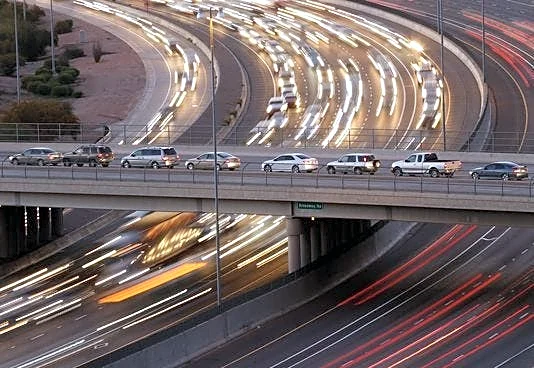
Senate Concurrent Resolution 1004 seeks to prohibit all municipalities from imposing a tax based on a person’s car mileage. The measure was put on the ballot by lawmakers in 2025 and will appear as Proposition 141. It bars any laws that would limit how many miles a person drives or monitor their mileage without their consent.
A carveout in the measure exempts agreements related to fuel taxes and registration fees for certain commercial and government-owned vehicles.
Proposition 142: Expansion of anti-DEI laws
House Concurrent Resolution 2044 would amend the Arizona Constitution by substantially expanding on existing affirmative action bans.
It would bar government agencies and schools from forcing employees and students to endorse any kind of preferential treatment on the basis of race. Schools and public agencies would also be barred from requiring diversity, equity and inclusion training or allowing any public funds to support DEI.
The measure faced a legal challenge from advocacy group Will of the People, which argued it violated the state’s constitution by covering more than one amendment and violating free speech protections. A Maricopa County judge disagreed, allowing the measure to continue on the ballot.
Proposition 144: Election regulations
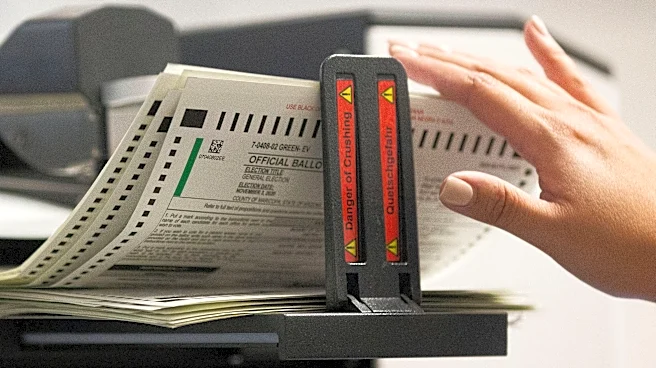
House Concurrent Resolution 2001 would require all voters show government-issued ID before casting a ballot in any election, including people who vote by mail. It would also guarantee all Election Day voters have the option to have their ballot tabulated at their polling location and bans all foreign spending from being invested into Arizona's elections.
Critics, including Democratic Secretary of State Adrian Fontes, have said the measure is too broad and would threaten the state’s mail-in voting system.
Proposition 316: Grocery tax restrictions
House Concurrent Resolution 2021 would stop cities and towns from increasing their taxes on food past 2%. If a municipality does want to increase the rate, it must be approved by voters and cannot surpass 2%. Municipalities with a tax rate of 2% or more would not be permitted to increase it.
Similar legislation was vetoed by Gov. Katie Hobbs in 2023, citing concerns from local leaders that the loss in tax money would mean cuts to critical services.
Prohibition 317: Drug cartels as terrorist organizations
Passage of House Concurrent Resolution 2055 would require the state to declare all drug cartels as terrorist organizations. The measure defines drug cartels as a group of people engaged in any human smuggling or drug trafficking for profit. The authors of the legislation said it was needed to address “the public safety crisis at Arizona’s border.”
The measure also instructs the Arizona Department of Homeland Security to do everything in its power to address threats posed by drug traffickers. The department’s current responsibility is to “enhance the ability of the state to prevent and respond to acts of terrorism and other critical hazards.”
Proposition 318: Transgender student athlete ban
House Concurrent Resolution 2003 would bar transgender students from competing in single-gender sports that correspond with their identity. It defines sex as a person’s “biological status as male or female as recorded at birth on the individual’s original birth certificate,” and stops schools from opening up a single-gender sport to students who do not align with that definition for girls' and boys' sports.
The measure was challenged in Maricopa County Superior Court, with attorneys from Will of the People arguing that the proposal included unrelated provisions. A judge disagreed, ruling that restrictions on transgender students in both sports settings and school bathrooms were sufficiently related to appear in one ballot measure.
Proposition 319: Photo-radar enforcement restrictions
Senate Concurrent Resolution 1004 seeks to require cities and towns to receive voter approval before implementing photo-radar enforcement on the roads. The measure will appear on the ballot as Proposition 319. It would also require cities that have already started to use photo-radar systems to get voter approval in the next general election after the resolution becomes law.
Several cities across the Valley use photo radar to enforce speed limits and red lights. That includes Phoenix, Scottsdale, Mesa and several others. Under the measure, cities would need to seek voter permission every 10 years. The motivation behind the change, lawmakers said, was to ensure that Arizona’s laws would be enforced solely by law enforcement officers.
Proposition 320: School spending regulations
Senate Concurrent Resolution 1032 would require larger school districts to devote at least 60% of their budget to direct instructional expenses.
Any school district not hitting that requirement would be required to increase classroom spending by 0.5% each year until it reaches its goal. Critics of the measure have argued that it would take funds away from resources like school counselors, while supporters said it would help secure raises for classroom teachers.
Helen Rummel covers state politics and higher education for The Arizona Republic. Reach her at hrummel@azcentral.com. Follow her on X, formerly Twitter: @helenrummel.
This article originally appeared on Arizona Republic: What's on Arizona's November ballot? Key measures explained