

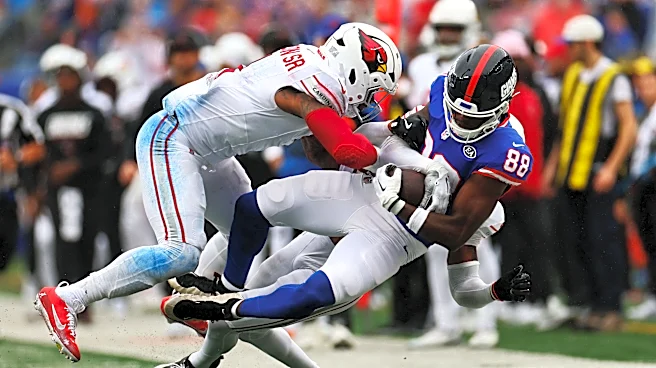
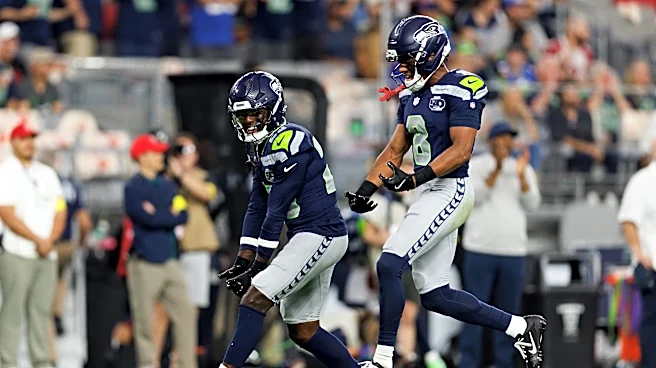
The first quarter of the Arizona Cardinals season has not gone according to plan.
The 1-3 record is one thing — any more than one win from their opening slate would have qualified as a significant surprise. But it’s difficult to find bright spots anywhere on their roster. The next generation of stars has not yet materialized, whether because of underperformance or injury. The offense has not fulfilled its preseason promise, at least not consistently. Identifying the future building blocks requires some squinting.
But it’s not all bad. Here is a look at our first stock up, stock down report of the young season.
Stock up
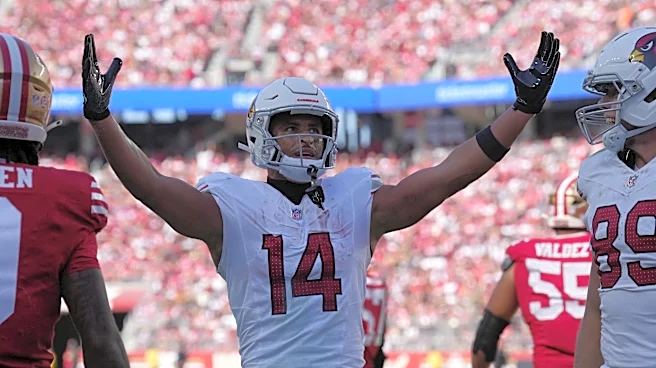
Wide receiver Michael Wilson
When the Cardinals signed Wilson to a three-year, $75 million extension in late August, it felt as if one side
would quickly look like a clear winner. If Wilson built off his second-half 2025 breakout, that number would represent a steal for Arizona. If he regressed to the statistical profile of his first two and a half seasons, it would become a significant overpay.
A month later, the Cardinals have to be feeling good about their investment. Wilson ranks sixth among all wide receivers in receptions and 14th in yardage. With Marvin Harrison Jr. healthy — which he was not during Wilson’s 2025 breakout — Wilson has still dominated the target share, earning 41 targets to Harrison’s 11.
Even with Harrison’s career in Arizona teetering off the tracks, Wilson gives them a reliable WR1 alongside Trey McBride.
Run defense
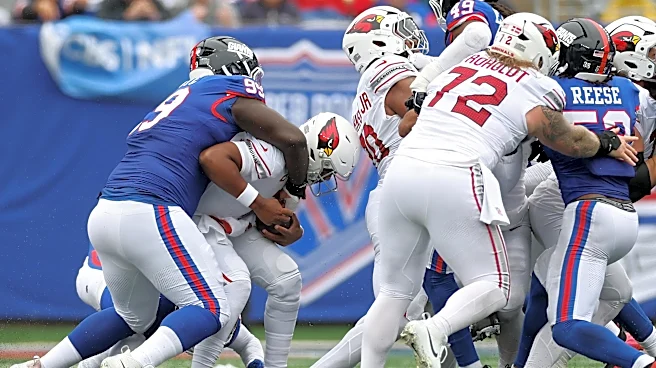
The Cardinals defense, overall, has been terrible. They’re bottom 10 in nearly every metric and bottom five in most of them.
But on the ground, that unit has been surprisingly effective. They’re allowing just 4.2 yards per carry and rank in the top 10 by both expected points added per rush and success rate allowed. That starts up front, where they’re allowing just 0.77 yards before contact per attempt.
Part of that is philosophical. The Cardinals have played with extra big bodies on the field at a higher rate than nearly any other team.
But it’s also a product of improved performances up front. Darius Robinson still struggles to anchor against more powerful offensive linemen, but he’s been able to slip past blocks better than ever before. If he can even be a solid rotational run defender, that would be a success given how poor his first two seasons were. Dante Stills has also been solid at times, while both Mack Wilson and Jack Gibbens have been effective coming downhill to fill gaps.
The clear standout, though, is Roy Lopez, who looks like an excellent signing, at $10.5 million over two seasons.
“His ability to anchor a double team and then, when that double team releases, show up and hit the ball, has impressed me a lot," defensive coordinator Nick Rallis said. "He’s been big for us in that regard.”
2027 draft capital
Another silver lining to the Cardinals’ slow start: Their position in this spring’s draft. With a beaten-up offensive line, a struggling secondary, minimal pass-rush, middling quarterback play and a brutal schedule, it’s difficult to imagine this team racking up the wins.
And if they’re heading for another top-five pick, it appears as if this year’s draft will have bountiful quarterback options. One recent Yahoo mock draft projected three quarterbacks inside the top 10: Arch Manning, Drew Mestemaker and Austin Simmons. Trinidad Chambliss also snuck into the first round, at 21.
It’s early, of course, but that reflects the consensus: This is looking like the best quarterback class since 2024.
If that comes to pass, the Cardinals’ primary task this season is setting the foundation for that quarterback to succeed. Unfortunately, the results there are mixed.
Stock down
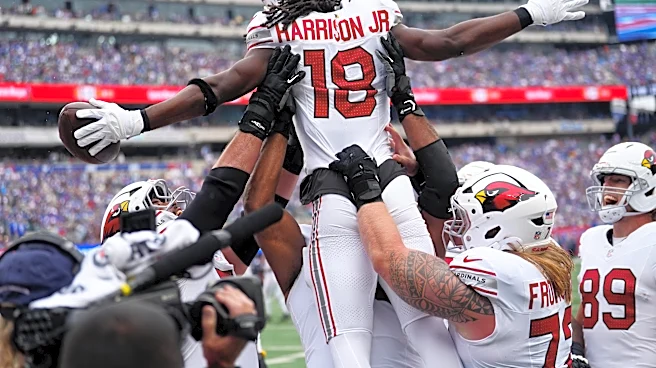
Wide receiver Marvin Harrison Jr.
Harrison currently has five catches for 85 yards and a touchdown on 13 targets. No, that’s not one game. It’s his production for the entire season.
Here’s where that ranks across the league: 170th in receptions, 127th in yardage, 50th in touchdowns, 137th in targets. The two most similar stat lines across the league belong to Jonnu Smith and Demarcus Robinson.
The root causes here are myriad. Harrison hasn’t done enough to get open or to make difficult catches. Mike LaFleur has largely deployed him as a field-stretching wide receiver on go routes, a role that does not provide many opportunities for easy catches. Jacoby Brissett has sometimes failed to spot him coming open.
But regardless of where you want to point blame, the reality is that the Cardinals have not found a way to maximize the player they once drafted No. 4 overall. That’s the type of wasted pick that ruins rebuilds and gets general managers fired.
The entire offensive line
The Cardinals offense, while effective on a down-to-down basis, has lacked an explosive element all season. And the biggest culprit has been their offensive line.
It’s difficult to find a bright spot for that unit.
At the positions where the Cardinals did invest, their key players have either underperformed (Isaac Seumalo), been injured (Chase Bisontis) or both (Paris Johnson Jr.). In Johnson’s case, that complicates the Cardinals’ decision this offseason, when he is up for a contract extension. And at the positions where they didn’t invest, they have been punished, getting subpar play at right tackle in particular.
Plus, the Cardinals continue to be marred by communication issues up front. They struggle with blown assignments and have been poor at handling stunts and twists from opposing defenses.
It’s difficult to know who from this group can be a core part of the future. Maybe Johnson, if the Cardinals feel comfortable extending him amid his injury issues? Maybe Bisontis, who’s never played an NFL snap? Maybe Hjalte Froholdt, who’s off to his slowest start in Arizona?
And if the plan this offseason requires an overhauled offensive line and a new quarterback, the Cardinals may run out of resources to spend on the other depleted parts of their roster.
Defensive stars
The Cardinals’ defense has two veterans widely viewed as — and paid like — stars: Budda Baker and Josh Sweat.
So far, neither has lived up to the investment.
Baker has been his typically impactful self when flying downhill to attack the football, particularly in the run game. But in the pass game, he’s continued a worrying trend from last season, struggling when asked to patrol the deep portions of the field. He’s been responsible for coverage busts on two long touchdowns and missed a tackle on another.
Sweat, meanwhile, has just one sack (a clean-up sack, at that) and a 6.7% pressure rate. Last season, he had 12 sacks and a 13.2% pressure rate.
These struggles raise questions about the Cardinals’ direction as an organization. Baker is 30, Sweat is 29. If they had committed to a full rebuild this offseason, the Cardinals could likely have gotten a Day 2 pick for Sweat and a mid-round pick for Baker. Now, their value may be diminished.
And if the Cardinals keep those players, it’s harder to view them as long-term building blocks. Plus, Walter Nolen is off to an inconsistent start in his second year, while Will Johnson is out for the season.
Who, then, are the foundational pieces for this defense? That’s a difficult question to answer, and a scary one for general manager Monti Ossenfort, who is now four years into his rebuild with no results to show for it.
This article originally appeared on Arizona Republic: Who has impressed and who hasn't in Arizona Cardinals' first 4 games