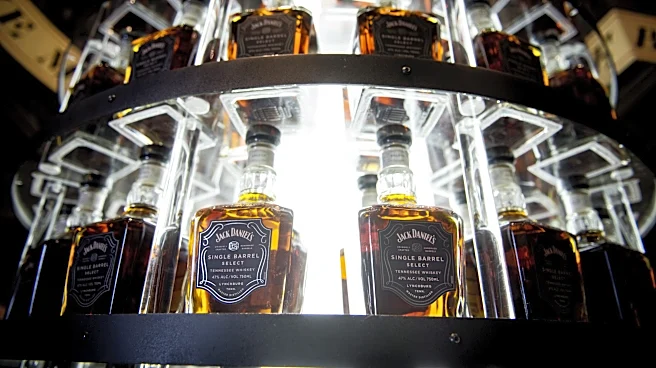

An Arizona company called VIP Products has been fighting Jack Daniel's over a squeaky dog toy since 2014. The toy is shaped like a whiskey bottle and labeled "Bad Spaniels," with taglines including "Old No. 2 on Your Tennessee Carpet" and "43% POO BY VOL." The case went to the Supreme Court and back, and on Aug. 4, the Ninth Circuit ruled in VIP's favor again.
The outcome is reasonable. The doctrine that enabled the lawsuit is worth chewing on.
Jack Daniel's wasn't claiming consumers were confused about who made the toy. It was pursuing a different theory: trademark dilution by tarnishment, which allows famous brands to suppress expression that merely associates their image with something unflattering, even when no one is confused about the product's
source. The Ninth Circuit reversed the tarnishment finding because Jack Daniel's expert established only a generic negative association between feces and consumable products — not that the specific marks at issue would actually suffer reputational harm. The court also held that parody can factor into whether tarnishment occurred, even if it doesn't trigger the statutory exception the Supreme Court blocked in 2023.
VIP Products wins. But the doctrine that nearly killed the toy is still intact and available to the next famous brand that decides a parody has gone too far.
There's a question this case never answered. Some academics and attorneys have argued that dilution by tarnishment wouldn't survive a First Amendment challenge if properly tested. The argument is that allowing trademark holders to suppress expression simply because it associates their brand with something unflattering gives private companies a heckler's veto over speech — which is exactly what the First Amendment was designed to prevent. VIP waived that constitutional argument early in the litigation. The case could have produced a significant ruling on whether tarnishment doctrine survives First Amendment scrutiny. Instead it produced a ruling about the adequacy of expert testimony.
The original logic of trademark law was to protect consumers from confusion about who made what — a public interest rationale. Dilution expanded that significantly. When trademark protection extends to controlling how consumers feel about a brand rather than whether they know who made a product, it stops functioning like consumer protection and starts functioning like brand reputation management at the public's expense. Arizona businesses that rely on parody, satire and commentary to operate should pay attention to which way that doctrine continues to develop because the next case may not have evidence problems as obvious as this one.
Simon Tam is the founder of The Slants and the central figure in Matal v. Tam (2017), the unanimous Supreme Court decision that struck down the government's power to deny trademarks on disparagement grounds. He speaks on First Amendment issues nationally.
This article originally appeared on Arizona Republic: An Arizona business beat Jack Daniel's. Free speech won too | Opinion