
I spent five hours in Chinle this primary Election Day with two of my colleagues, answering questions and handing out maps of our state legislative and congressional districts to anyone who wanted one. I've done this work long enough to know what a good Election Day looks like. This one gave me both hope and worry, and I think Navajo and Apache County voters deserve to hear both sides before November.
Let's start with hope, because there was plenty of it.
I watched grandmothers bring their grandchildren to vote. One super-voter grandma showed up with her granddaughter. We explained what vote centers are, what districts they live in and what was actually on the ballot.
Another family brought three generations together, a mother, a grandmother and a granddaughter
who will turn 18 before November, tagging along to learn the process before she casts her first ballot.
We registered brand-new voters right there on the spot. That's what our elections should look like: families making a day of it, kids watching their elders take democracy seriously, community members handing out food and information, community coming together in good spirits and rallying behind a common cause; voting for change.
But I can't write this piece without raising concerns about the November general election.
Apache County rolled out new vote centers this cycle, and plenty of people simply didn't know what that meant or where to go.
Some polling locations were consolidated because of space or internet limitations. That change needs to be communicated far better than it was.
My colleagues and I will do our best to help with that.
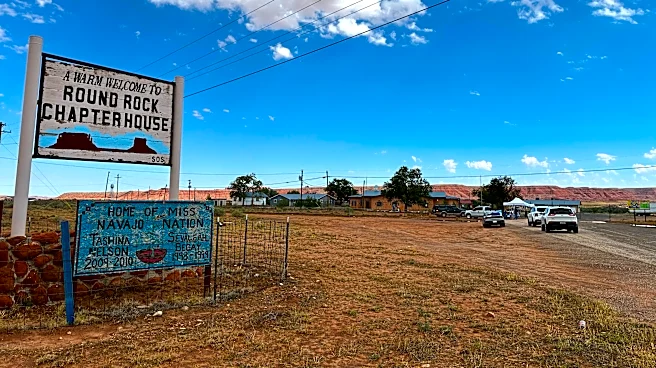
On the Navajo Nation, tribal and county and state elections are often located at different locations. In my hometown, the tribal election is impossible to miss, right at the chapter house, with food tents and community energy. But the county vote center was tucked behind the primary school, easy to drive past if you're not already looking for it.
We need to fix that visibility gap before November. We don't want to lose votes because the "where to vote" is confusing.
I have another concern. We heard about voters whose early ballots hadn't arrived. We don't know how many are impacting tribal and rural voters in our region and we're paying attention to this.
We heard from county officials that people are still forgetting to sign their ballots. A missing signature triggers a whole separate ballot-curing process that takes time and puts the burden back on the voter to fix it.
I'll be honest: I don't feel settled about how the mail service has been running lately, given the cuts and turnover at USPS. That's why my team has been telling people plainly — if you get a mail-in ballot, don't sit on it. Mail it back immediately, or better yet, drop it off in person or vote early in person. Don't gamble with your vote. Make sure it's counted.
Poll workers are another piece of this that voters don't always think about. We started recruiting Navajo-speaking poll workers weeks before the primary election. We were still fielding urgent calls a week before Election Day. These are low-wage jobs that ask people to work from before sunrise until after everything is put away, all while staying patient and professional with frustrated people. We need more of our own people willing to step into that role, and we need to start asking now, not the week before.
Here's the bottom line I want every Navajo and Apache County voter to think about: Midterm elections don't get the turnout they deserve, and yet that's exactly why they matter so much.
Presidential contests get attention, but it's the midterms that decide who represents us in Congress, who sits in the state Legislature and in other local offices. These are the very people with power over what's happening to our land right now.
I think about "why" I want our people to vote.
Twice this year, semitrucks tied to the uranium haul between the Pinyon Plain Mine near the Grand Canyon and a mill in Utah have had accidents on our roads. One was near Shonto in May, a truck loaded with ore. Another near Kayenta just days ago, though that truck was empty, headed back to the mine. Officials say no radiation leaked either time, but my stomach drops, because I know exactly what that nuclear gamble has already cost us. There are more than 500 abandoned uranium mines still sitting on and around our homeland, left behind after nearly 30 million tons of ore were pulled out of our lands between 1944 and 1986. Our people mined it, lived next to it, raised children next to it, without ever being warned what it was doing to them.
I know this because it's my own family's story. My grandfather worked those mines, and for a while, my dad worked alongside him. But the exposure didn't stay at the job site. It came home. My dad breathed the dust that clung to my grandpa's clothes and skin every day that he worked. My family washed those clothes by hand. Just having my grandpa in the house raised the exposure for everyone under that roof. My dad has been dealing with serious health problems now. Several doctors have linked his health challenges directly to uranium exposure. He didn't work a career in that mine. He was a kid whose father came home dusty. That's all it took.
That is not history. It is now, in our clinics, in my own dad's body and in too many families across this Nation.
And I fear we are about to do this again. The Trump administration just gutted protections for Bears Ears and Grand Staircase-Escalante, shrinking nearly 3 million acres from both monuments. The goal is more mining. More extraction. More damage to Native families and communities.
This is why I keep showing up, and it's why I'm asking you to show up too. Every one of these decisions — who mines, who drills, who gets consulted, who gets protected — traces back to the people we elect.
Here's my ask: Check your registration and your address with the county now. Verify your citizenship and residency. Don't wait for a deadline. And vote early!
To my Navajo people, know the difference between your tribal election site and your county vote center, because they may not be in the same place.
And bring your family. Bring your kids. Bring your grandkids who aren't old enough to vote yet, so they see what it looks like.
Jaynie Parrish, Navajo Nation, is the founder and director of Arizona Native Vote, a nonprofit helping to boost Native American civic participation.
This article originally appeared on Arizona Republic: Trump reopened our land to mining. Navajo voters, show up | Opinion