
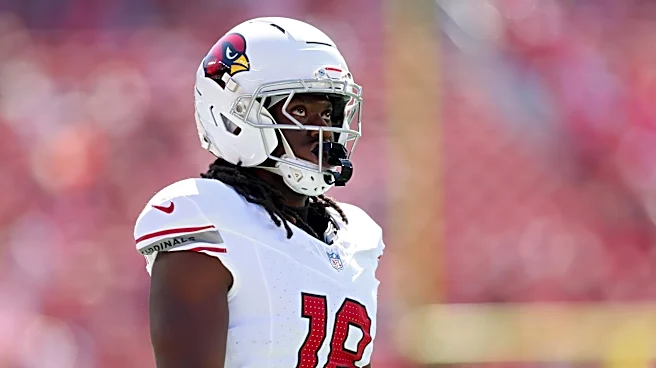

When they woke up on Oct. 10, Jalen Brooks and Reggie Virgil had played — between them — 13 NFL snaps this season. Even that is a bit of a misnomer. Brooks had played 13 snaps. Virgil, a fifth-round rookie, had not yet been active for a single game.
By breakfast, their worlds had changed.
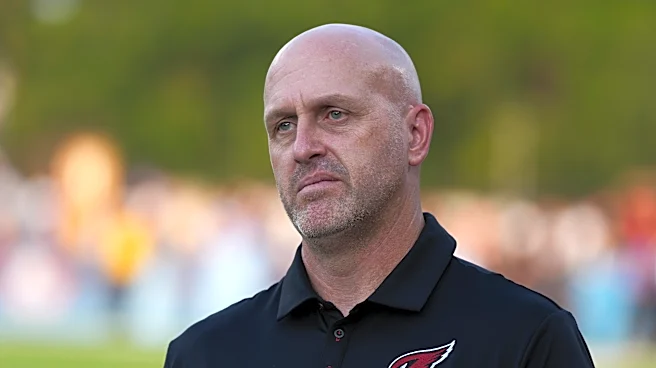
In a team meeting that morning, Mike LaFleur announced to his players that the Arizona Cardinals were trading Marvin Harrison Jr., who would be a healthy scratch in Week 5. By the time the news broke to the world, Brooks and Virgil were hurriedly preparing for an opportunity that once seemed fanciful.
“That whole week of prep, I was just trying to prep myself to be the best kickoff returner I could be,” Brooks said. “And then things obviously changed Saturday
morning.”
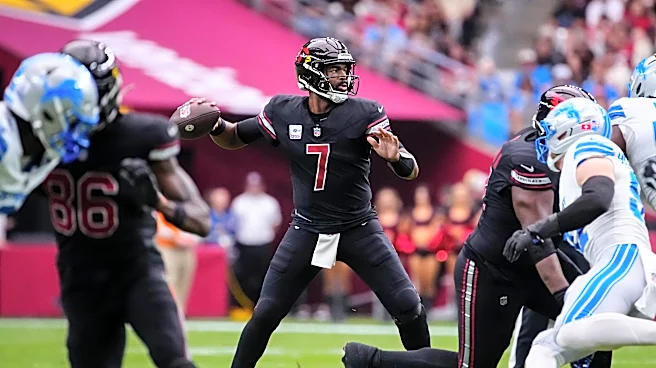
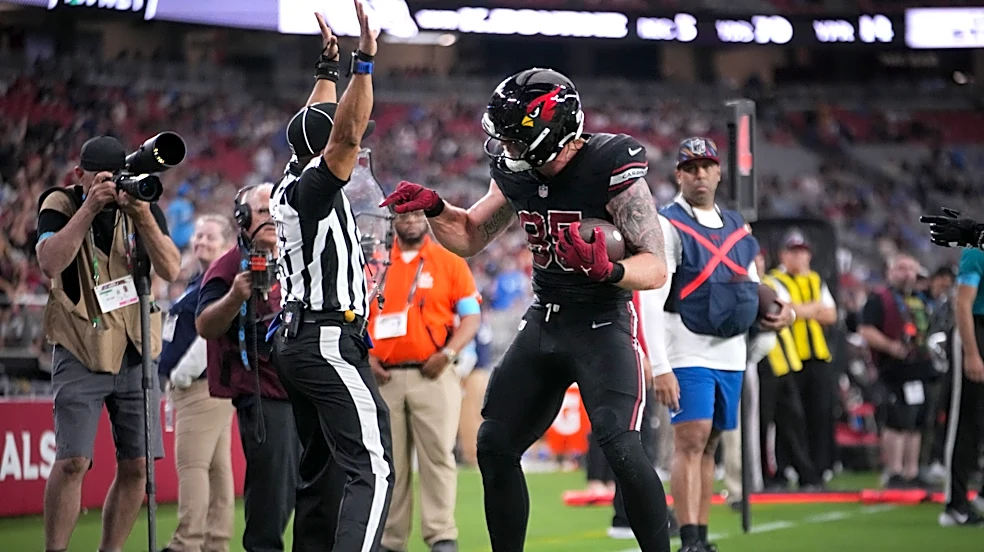
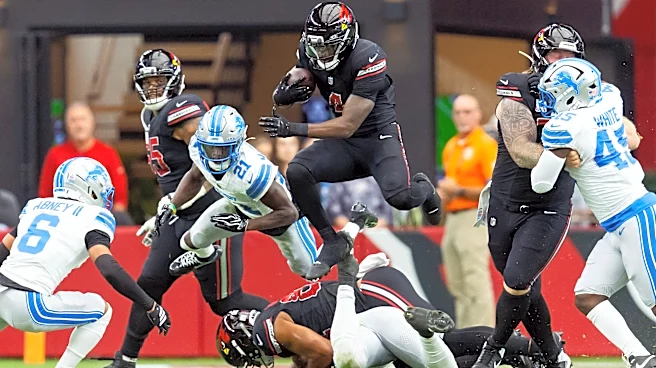
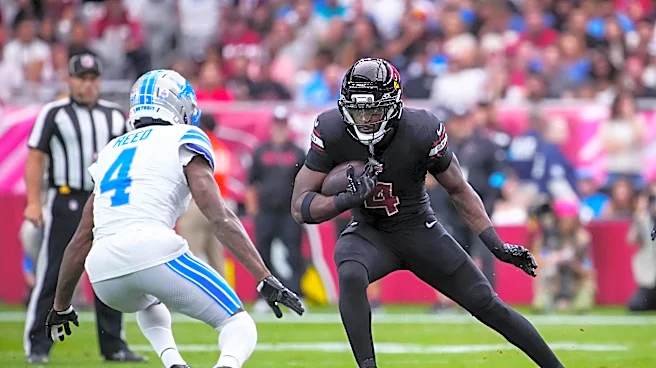
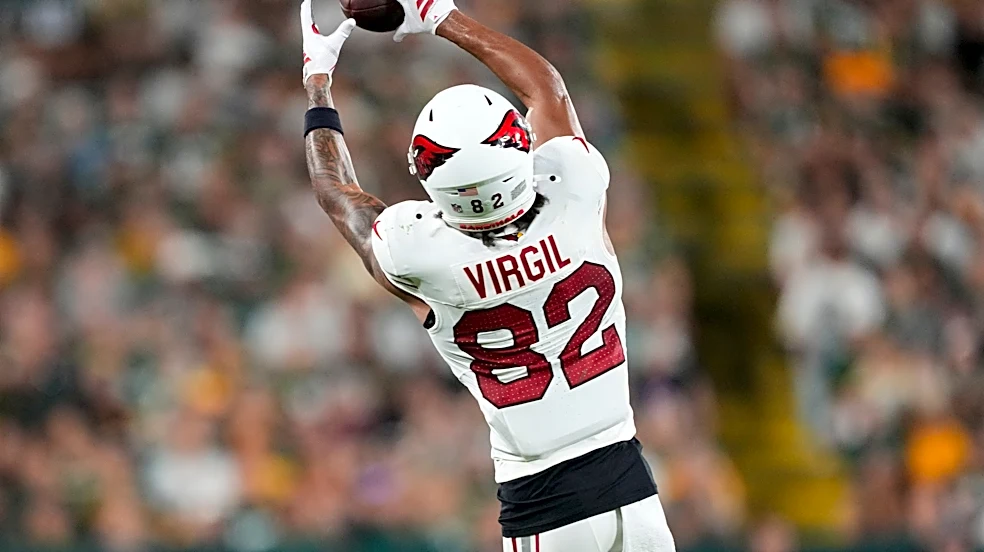
Just over 24 hours later, they were called into action, seeing a combined 52 snaps and 12 targets against the Detroit Lions. Three days after that, Virgil sat at his locker, smiling through a set of braces as he conducted the first scrum of his NFL career. Afterward, he bashfully asked reporters how he had done. He sounded like a kid still acclimating to professional life because, well, that’s what he is.
The on-field product — in the first test without Harrison — reflected this youth.
Brooks caught just two of his seven targets, while Virgil caught two of his five. Neither brought in contested catches over the middle of the field in the second quarter, when the game was still close. And with the Lions playing a heavy rate of one-on-one man coverage, both struggled to separate on the deep-breaking routes with which they were tasked.
But this week offers more opportunity, with both players having practiced for a full week in their new role, which appears to be shared custody over the ‘X’ receiver spot — formerly Harrison’s responsibility alone.
That’s a significant change from Brooks and Virgil’s normal practice schedule. As scout team wide receivers, they typically only run through the Cardinals’ own play calls in a walkthrough after practice with the backup quarterbacks.
“It's one thing when it's a nice, controlled environment,” LaFleur said. “It's another thing when it's in practice, and you've gotta go into the huddle, and there's no card, and now you've gotta go execute your job. And you get it to the point where you feel so good going into Sunday.”
For Brooks — a four-year veteran who earned his roster spot with an eye-popping training camp — the most important element here is familiarity with Jacoby Brissett.
He pointed to one red zone fade from last week, when he jumped too early on a well-thrown ball. That, Brooks said, is because he was expecting a line drive to his back shoulder. Instead, Brissett floated his pass toward the front pylon.
“That's 100% on me,” Brooks said. “That's one part in the game where I think I sped up my game instead of just staying a little bit calm. But it just takes time.”
For Virgil, the rookie, it’s more about understanding the speed and intensity of an NFL game. Last week, he said, his mind was occupied by simply trying to execute each play call correctly.
“I feel like now, since I got all the jitters out that I'll be more calm,” Virgil said.
That should enable him to showcase the trait that has stood out to coaches since the draft: Virgil’s ability to separate.
The rest of his game remains a work in progress. In training camp, he mixed in spectacular, acrobatic catches with befuddling drops. And he knows he needs to add more bulk, though he’s already up from 185 to 192 pounds since the draft. But for him to be successful at this level, separation will likely be his best trait.
“Coming out of college, people were worried about how fast I was,” Virgil said. “My 40's a little slow. But I showed that I can separate at this level.”
In the short term, extracting production from either Brooks or Virgil would be a significant boon to the Cardinals’ offense. With opponents taking away Michael Wilson and Trey McBride, the secondary receiving options need to step up to make life easier on LaFleur as a playcaller and Brissett as a distributor.
Their potential emergence, though, may be even more important in the long run. Next offseason, the Cardinals’ list of needs figures to include quarterback, right tackle, wide receiver, defensive tackle, edge rusher, inside linebacker and safety.
Even with abundant draft capital and $80 million in projected cap space, the more positions that can be crossed off that list, the better.
This article originally appeared on Arizona Republic: These 2 Cardinals receivers are replacing Marvin Harrison Jr.