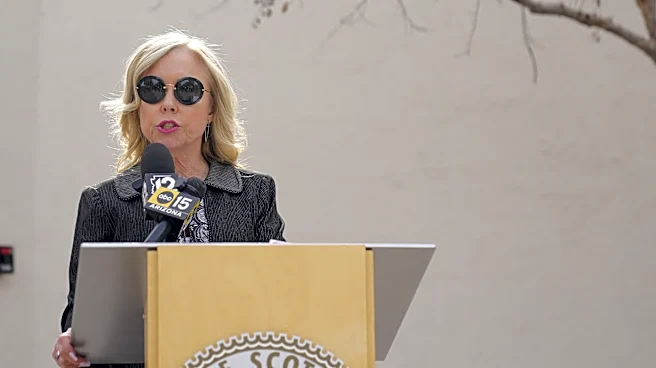






Scottsdale Mayor Lisa Borowsky avoided a $334 fine for a speeding ticket after one of the city's photo radar cameras snapped her image in October, even though she didn't show up in court.
That's because a process server was unable to locate the mayor at her home to deliver the citation, according to local authorities.
In late February, the Scottsdale Municipal Court dismissed the civil case against Borowsky, who twice failed to respond to or appear in court, legal filings showed.
The case was tossed “without prejudice,” meaning it’s not permanently closed and could be reopened, according to the court.
It was first made public by the anonymous online critic who goes by “William Coffin” on X.
Borowsky told The Arizona Republic on Aug. 10 that she never
received the ticket and had “no clue” what “Coffin” was posting about it.
“I can’t respond to something I have no idea about,” Borowsky said when asked if she would respond to the ticket.
According to Scottsdale police, Borowsky was heading north along Scottsdale Road on Oct. 14 when a camera at Thomas Road snapped her allegedly traveling 58 mph in a 40-mph zone.
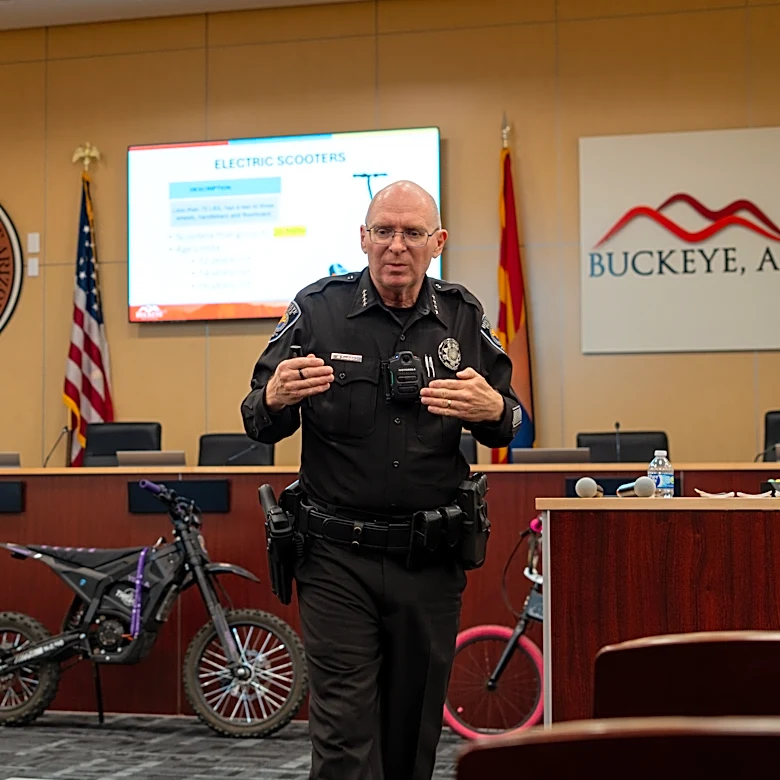
The citation was mailed to Borowsky on Oct. 31, but she never acknowledged it, Officer Aaron Bolin, a Scottsdale Police Department spokesperson, explained in an email. Borowsky had until Dec. 1 to respond.
When that date passed, the department’s contractor tried three times to serve the citation at her house between Dec. 30 and Jan. 21, Bolin stated. However, the process server couldn’t contact anyone at the home, so the citation wasn’t served.
“For context, in cases where we hire a contract process server (which is the vast majority of cases), the process servers do not attempt service at the offender's place of employment,” Bolin explained. “When we have a repeat offender, our officers will handle the citation service, and we will visit the offender's workplace. That is a very rare occurrence.”
The municipal court dismissed the case on Feb. 28.
Scottsdale is among a small handful of Arizona cities that have a photo enforcement program. Phoenix recently revived its program, which captured more than 65,000 violations between late March and late July.
In Arizona, many speeding and red-light violations are handled as civil traffic cases.
A driver with a civil ticket generally chooses to either admit responsibility and pay the fine, deny responsibility and request a hearing, or attend defensive driving school — if the violation and driver qualify.
David Enevoldsen of Traffic Law Guys is an attorney with more than a decade of experience. Speaking to The Republic recently, he noted that some believe they don’t have to pay the ticket or that by ignoring it, it will go away. That’s only true, though, some of the time, he stressed.
Under Arizona law, a city has 90 days from when a citation is filed in court to formally serve the driver who doesn’t pay the fine or appear in court.
In cases where people wait, some cases do get dismissed because of the challenges in serving drivers within the legal deadline, Enevoldsen said. However, he doesn’t advise people to evade getting served. Rather, they should understand their legal rights and how the system works.
“A lot of people take that gamble,” he said, “because there is a chance that it will get dismissed.”
Republic Reporter Miguel Torres contributed to this report.
Like this story? Get more East Valley news straight into your email inbox by signing up for our free weekly East Valley Newsletter, which comes out Wednesdays.
Shawn Raymundo covers Scottsdale. Reach him at sraymundo@gannett.com or follow him on X @ShawnzyTsunami.
This article originally appeared on Arizona Republic: Skipped court? Scottsdale mayor avoids $334 speeding ticket anyway