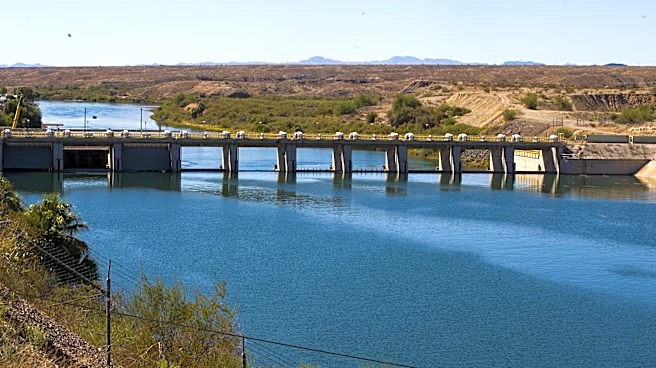





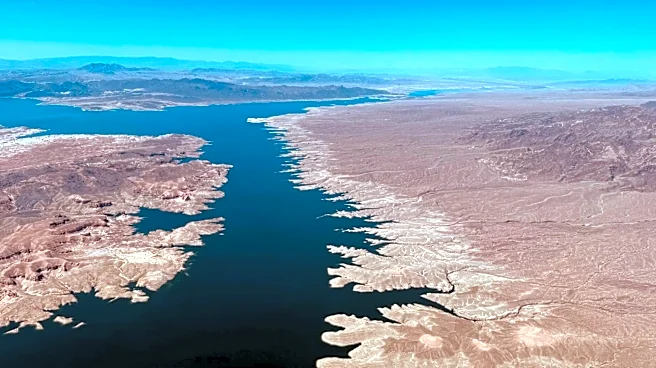

Arizona's largest and most senior water rights holder says it was left out of final discussions about the federal government's proposed plan to deal with ongoing water shortages in the Colorado River.
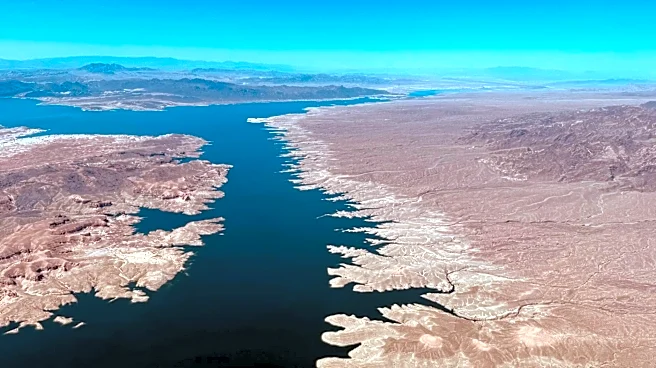
The plan, issued by the Bureau of Reclamation on July 31, outlines several alternative paths to preserving water levels in the Colorado's two major reservoirs, lakes Mead and Powell, and preventing catastrophic "dead pool" conditions that would halt hydroelectric production or water passage past Glen Canyon and Hoover dams.
The Colorado River Indian Tribes submitted a letterto the bureau Aug. 2 outlining its concerns. CRIT holds the most senior tribal water rights on the lower river and 23% of Arizona's entire allocation of the Colorado.
The tribe
said Reclamation had shared documents regarding the process to publish the final environmental impact statement with the seven basin states but did not extend that same courtesy to the tribe.
"Our limited role in this process does not reflect the nature and extent of our water rights," the letter said.
The 30 tribes that have rights to the Colorado watershed — either affirmed or in process — have long been excluded from full participation in water allocation discussions. The original 1922 compact did not include any input from tribes, and only limited opportunities in recent years, even though tribes hold about 20% of all rights to the Colorado, and about 40% of Arizona's river allocation.
As recently as December 2025, during the annual Colorado River Water Users Association meeting, tribes called once again for an equal seat at the table.
An earlier statement by the tribe acknowledged that Reclamation acknowledged the passage of an ordinance granting personhood rights to the Colorado, which gives them more legal tools to protect the river, an essential part of its culture and history.
"Our limited role in this process does not reflect the nature and extent of our water rights," the letter said. "And while CRIT appreciates those revisions in the FEIS made in response to its comments (after the draft statement was released in February), these revisions do not cure the procedural and substantive defects detailed below."
Letter: Short comment period, insufficient water distribution
Among other concerns, CRIT said that Reclamation should allow for a reasonable review of the July 31 report and the several alternatives offered before issuing its final plan. The tribe called for a 45-day period for all parties to fully review the environmental impact statement so officials can make informed comments.
Although the feds said they would not "modify" tribal water entitlements as guaranteed by several Supreme Court decisions and the foundational doctrine of prior appropriation, CRIT said any attempts to reduce tribal water allocations would violate the United States' trust obligation to the tribes and the Fifth Amendment.
And, they noted that Reclamation had not disclosed how it would reduce water to stakeholders in "dead pool scenarios" as it predicted several such incidents.
CRIT also repeated its call for the Bureau of Indian Affairs to fully fund and update irrigation infrastructure that in past years has allowed water to flow downriver and prevented the tribe from fully using its full allocation. The tribe operates one of the nation's largest tribal agribusinesses with 33,000 acres growing alfalfa, cotton, durum wheat and other crops.
'A living river' essential to tribal members
The 4,277-member tribe also told the agency that a living Colorado "that rises and falls with the seasons, has an active channel, energizes the broader ecosystem, and provides a place for tribal members to gather … is at the heart of CRIT society." The ability to come together culturally, spiritually, religiously and economically is essential to member's overall health and welfare, and is necessary for a homeland, CRIT leadership said.
This inability to use its legally-guaranteed water causes harm to the tribe, they said.
CRIT Vice Chairman Dwight Lomeyesva, a longtime council member and water rights expert, said, "Our immediate need is to protect CRIT’s allocation and ensure the federal government follows the law."
Chairwoman Amelia Flores said that despite being hopeful that an agreement respective tribal sovereignty will be reached, "CRIT expects true consultation that respects our sovereign status and provides adequate time for meaningful review and input.”
Debra Krol reports on Indigenous communities at the confluence of climate, culture and commerce in Arizona and the Intermountain West. Reach Krol at debra.krol@azcentral.com. Follow her on X, formerly known as Twitter, @debkrol and on Bluesky at @debkrol.bsky.social.
This article originally appeared on Arizona Republic: Colorado River tribes say feds left them out of final shortage talks