

For the Arizona Cardinals defense, this season was always set to be about player development above all else.
They established that expectation in January, when general manager Monti Ossenfort hailed his core of young players, pointing to their development as a central part of the decision to move on from Jonathan Gannon. They affirmed the expectation in March and April, when Ossenfort left that core untouched in free agency and the draft.
Through three weeks, the returns have largely fallen flat.
B.J. Ojulari and Elijah Jones were released in August, as former top picks unable to overcome a spate of injury woes. Cody Simon and Dadrion Taylor-Demerson lost training camp competitions for starting spots, both to veterans on low-cost contracts. Darius
Robinson is now a backup, with his snap counts slashed significantly from last year. Fourth-round rookie Kaleb Proctor is out for the season. Will Johnson likely is, too. Even Walter Nolen, the most promising talent on this defense, is off to a slow start, producing a fraction of his rookie-year pass-rush output.
There is, though, one exception.
With Johnson out, the Cardinals have had to turn to Max Melton and Denzel Burke as their starting outside cornerbacks. And both players are off to encouraging starts — Melton in his third year, Burke in his second.
“They responded like we thought they would,” head coach Mike LaFleur said, praising both players for how they handled increased responsibilities after Johnson’s injury.
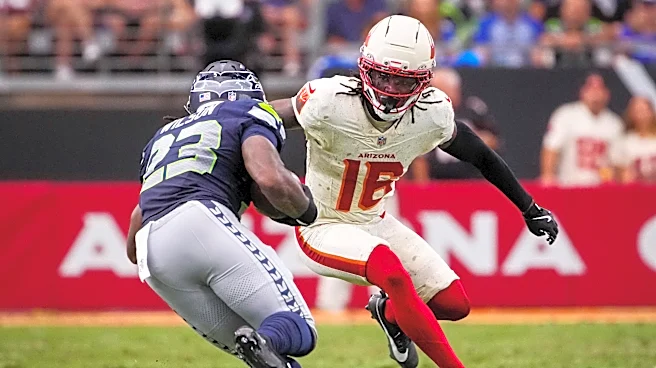
For Burke, it’s the continuation of a quietly strong start to his NFL career. He’s allowing 6.1 yards per target, down from 6.7 last year, per Fantasy Points Data. And he’s had his receiver blanketed — less than one step of separation — on 61.5% of targets. Among starting cornerbacks, only A.J. Terrell and Darien Porter have consistently been tighter in coverage.
These stats are volatile, especially early in the season, but the eye test tells a similar story.
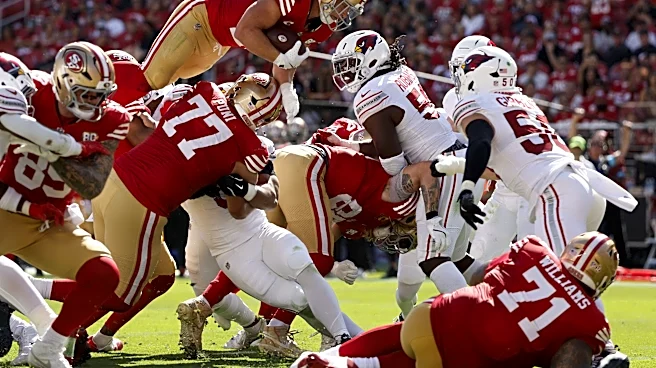
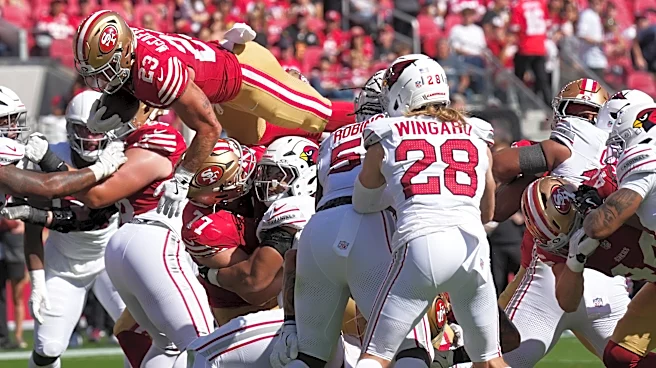
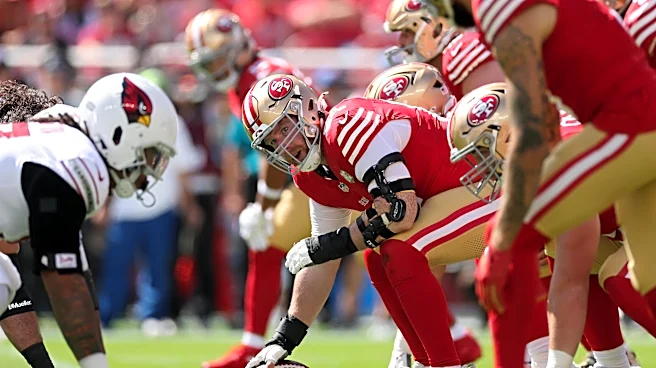
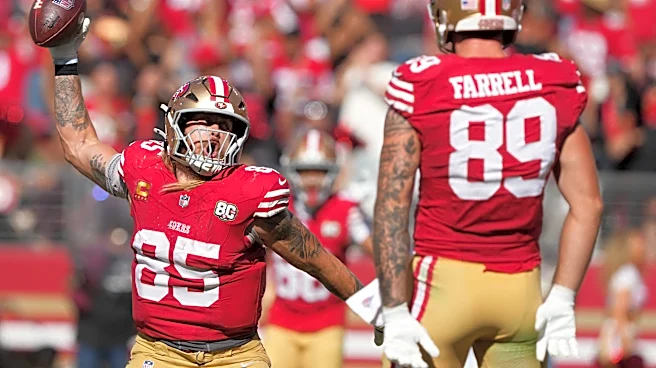
Against the 49ers, the Cardinals seemingly built their defensive game plan around Christian McCaffrey and George Kittle, leaving their cornerbacks isolated against outside wide receivers. Burke responded to the challenge with two pass breakups on his three targets — once on a Mike Evans comeback route, once on a broken play when he was the only defender between 49ers receiver Jacob Cowing and a touchdown.
Only once this season has Burke been beaten for an explosive play. That also came against the 49ers, as Evans beat him on a double move for a 23-yard touchdown. But even then, Burke should have had help over the top, had Budda Baker not been caught cheating on an underneath route.
“Denzel's a pro,” cornerbacks coach Zac Etheridge said. “I just love his mindset, the way he does things; his versatility to be able to play inside and outside adds a lot of value.”
For Melton, the equation is more complex. A 2024 second-round pick, he was benched midway through last season, partly because he was often culpable for coverage busts. But back in the spring, defensive coordinator Nick Rallis praised Melton for “a huge growth in terms of deep understanding” of play calls.
So far, that has become reality. He’s averaging 6.2 yards per target, down from 8.0 last season, per Fantasy Points Data. Other sources, such as Pro Football Focus, chart Melton with even more encouraging stats — another reminder that these numbers can be fickle early in the year.
Throughout his NFL career, Melton has flashed the ability to stay tight in coverage when his positioning is correct. Now, he’s in those positions more often.
“A lot of stuff that the defense has within it is contrary to what I've been taught my whole life,” Melton said. “So even with me understanding it before, I feel like I didn't truly believe in it and I wasn't truly bought into the technique of it, because I was taught differently for so many years. But when you just buy into it … it makes it a lot easier.”
That, Melton explained, is often about where Rallis wants him to be in the context of a certain play call.
“High or low on the receiver, even with the receiver, on top or beneath the receiver,” Melton said. “Stuff like that.”
Perhaps the most enticing aspect of this growth has manifested itself in Melton’s ball production. Through three games, he already has three pass breakups — an ability that he consistently showcased in training camp as well. In his first two NFL seasons, he had just four pass breakups across 27 games.
Unfortunately for the Cardinals, this improved production at cornerback has not led to improved defense as a whole. They’re allowing 8.4 yards per pass play, the second-worst mark in the NFL.
Break that down, though, and that number rarely falls on the cornerbacks. The 82-yard touchdown to Jaxon Smith-Njigba in Week 2 was a coverage bust from Baker. The 80-yard touchdown to Deebo Samuel in Week 3 was a hook-and-ladder, when the Cardinals were beaten schematically and Baker missed a tackle. Even the 34-yard completion late in the first half of that game was a coverage bust from Cardinals linebackers.
Plus, this defense is asking an enormous amount of its outside cornerbacks. They’ve played with five or more defense backs on the field at the second-lowest rate in the league, offering little help for Melton and Burke.
On the biggest play allowed by a cornerback against San Francisco — a 26-yard pass to Jordan Watkins — the Cardinals lined Melton up against Watkins with no inside protection and no deep safety over top. An in-breaking route in that situation is almost impossible to stop.
Then there’s the Cardinals' pressure rate, which is the lowest in the league, per Next Gen Stats. The Cardinals' cornerbacks are essentially being asked to cover opposing wide receivers longer and with less help than the rest of the league.
Still, those players are holding their own.
On a defense with few bright spots, their performance has offered a rare early-season positive.
This article originally appeared on Arizona Republic: How this position group offers something unexpected for the Cardinals