





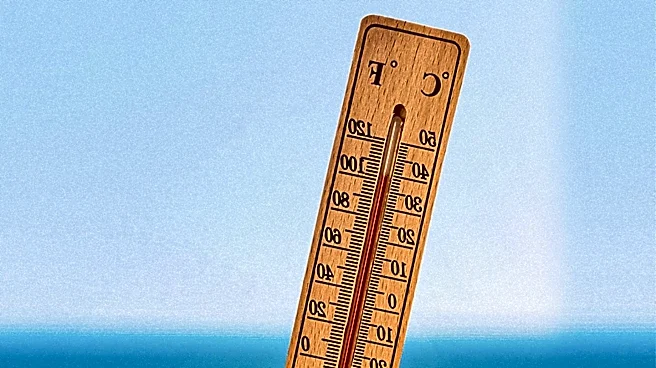
A scorcher late last week sent energy demand skyrocketing, according to two electric utilities that together provide power to approximately 2.7 million homes and businesses around the state.
Both Arizona Public Service and the Salt River Project reported record peak electricity demand last week as temperatures surged and air conditioning units worked overtime.
For both utilities, the July 24 demand was roughly 5% higher than the previous record, which was set in the summer of 2025. Both utilities forecast that 2026 would be a record-breaking summer.
Ann Porter, a spokesperson for APS, said that the impact on customer bills will vary widely depending on their rate plan and individual energy consumption.
your AC thermostat at this temperature
Some advice to keep bills down applies to all households: running fans counterclockwise only when people are in the room, weatherizing doors and windows to keep cool air in and hot air out, and changing filters every month.
But others depend on the type of rate plan customers have, Porter said.
If you're on a time-of-use rate plan, Porter said that keeping as much energy use out of the 4 p.m. to 7 p.m. window will lower costs. For customers on a fixed-rate plan, she recommends avoiding "stacking" energy uses, or running several power-sucking appliances at once.
Customers can also use a rate-comparison tool or do an energy audit to figure out ways to save energy and money.
Both the state and the utility's customer base are seeing "unprecedented growth," she said. APS' peak demand also broke records in 2024 and 2023, driven by high heat, population growth and business development in the state.
"We're projecting, I think, in the next eight years or so to be close to 12,000 megawatts in terms of the energy demand in Arizona," Porter said. "That's not unique just to APS, that's SRP, that's TEP, that's all the power providers here because of the growth we're seeing in the state."
The utility prepares for record days, Porter said, and had additional capacity over the highest demand on July 24, which peaked at 9,053 megawatts. SRP's peak demand was 9,072 megawatts.
Should APS use exceed that capacity, there are additional reserves and contingencies in place to keep the power on. But it's still a staggering amount of energy use. Porter compared one megawatt of energy use to a store like Costco or Walmart running all of their systems at once.
"When you think of 9,000 megawatts, that's like having 9,000 big box stores with everything running, all at the same time," Porter said.
That increased demand might not slow. According to a 2025 executive order signed by Gov. Katie Hobbs, some utilities are predicting that over the next 15 years, high temperatures and growth could increase peak demand in the state by up to 40%.
Friday was the hottest July 24 on record in Phoenix, breaking the previous record of 116 degrees, set in 2023. The sun setting offered little relief from the night before, with an overnight low of 97 degrees in Phoenix — in total, there were just three hours at the crack of dawn where the temperatures fell below 100 degrees.
The overnight temperature was about 10 degrees hotter than the average July night.
Alaina Mencinger covers energy, utilities and technology. Reach her at Alaina.Mencinger@usatodayco.com.
This article originally appeared on Arizona Republic: Record heat drives record power demand across Arizona