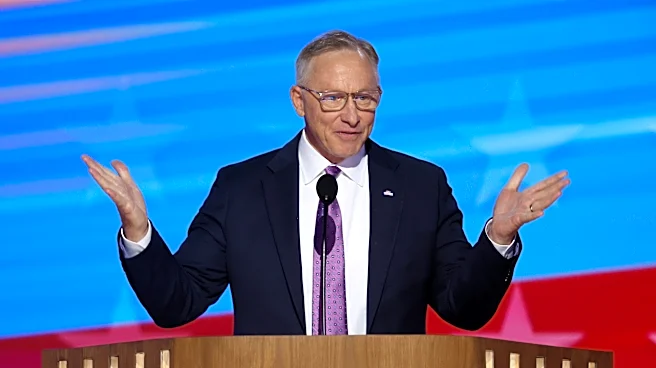



John Giles, who once advocated for Mesa to take more aggressive steps to ensure scofflaws pay photo enforcement tickets, has avoided five of his own violations for speeding and running red lights, records show.
Giles was issued those five citations in the last five years, the most recent in February, Mesa court records show. Mesa police confirmed all of the tickets were dismissed after the city was unable to serve Giles with notice of the violations.
Giles told The Arizona Republic he had paid tickets but "no more or less probably than the average driver," and denied intentionally avoiding the others.
"I've never attempted to avoid responsibility for those and I'm not aware of any citations that I haven't dealt with appropriately," he said.

"Yes,
I am guilty of, probably like most drivers, occasionally I've had the experience of a light will flash in my windshield and I've realized I'm a few miles over," Giles said. "And when that has occurred I've paid those citations, so I'm unaware of any unpaid citations but certainly would accept responsibility for any traffic citations I have."
Three of the dismissed citations were for speeding and two were for red light violations, public records show. They were issued between November 2021 and February of this year, but more details were not immediately available. The Republic requested the violations under Arizona Public Records Law but has not yet received the records.
Giles was mayor when four of the citations were issued.
Now, he's in line to possibly become an Arizona first: Democratic Gov. Katie Hobbs chose him as her pick for lieutenant governor. Hobbs and Giles are on the ballot this November, hoping to lead the state and fend off a challenge from Republican Rep. Andy Biggs. Arizonans will elect a ticket that includes a lieutenant governor for the first time this year.
Scrutiny of Giles' driving record bubbled up amid that campaign. The tickets — and images of Giles behind the wheel of a Tesla — were posted online by Brian Anderson, a Republican consultant in Arizona who is not working on the governor's race this year. Anderson has made public-records based oversight of Hobbs' administration and other Democrats the focus of his blog, FOIAzona.
In a statement, Giles said the "fact that the other side wants to talk about a handful traffic tickets as early voting has already begun shows how out of touch they are with what Arizonans are facing."
As a member of the Mesa City Council in the late 1990s, Giles supported the city's then-new photo enforcement program. Mesa began issuing tickets in 1997, and leaders there soon realized they had an issue: An estimated 900 people were ignoring the violations each month.
Giles said at the time that bred disrespect for law enforcement. He pushed to hire more process servers to deliver those tickets. "Apparently it's more voluntary than we want," he said in 2000, according to reporting in The Republic.
All five citations in Giles' name were dismissed because they were not served, according to Mesa spokesperson John Zielonka. The city was not able to provide information about attempts to serve Giles, but Zielonka outlined the general procedures when a photo camera snaps a speeder or red-light violator.
The city first mails the citation to the vehicle's registered owner. If the owner or driver does not respond in 30 days, the violation is sent from photo enforcement company Verra Mobility to a process server. That third-party company has 60 days to deliver the citation.
"Generally, three to five service attempts are made, however, the company does not maintain a record of every individual attempt," Zielonka said in an email. If service isn't completed, Verra Mobility notifies the courts and the cases are dismissed.
"Mesa PD handled these citations the same as it handles all similar cases," Zielonka said.
Photo enforcement systems are used by many metro Phoenix cities. Though they have been snapping pictures of speeders and red-light runners for decades, the systems have remained controversial. Arizona voters in November will have a say in whether municipalities can start new photo enforcement systems without allowing residents to weigh in first. The measure would also require voters to approve existing systems every 10 years.
The systems have also prompted questions of enforcement and ethics, as many rely on violators to respond to a letter in the mail. Taking a gamble trying to avoid personal service that follows that mailed notice could bring additional costs if unsuccessful, but drivers could avoid the hefty fine that comes along with a ticket if they don't recieve the legal notice.
Giles isn't the only public official to find himself in the latter category. Scottsdale Mayor Lisa Borowski avoided a $334 ticket for going 18 mph over the speed limit in October 2025.
Other public officials, including Sen. Jake Hoffman, R-Queen Creek, and Sen. Mark Finchem, R-Prescott, had speeding violations dismissed in recent years thanks to an immunity clause in the Arizona Constitution.
Reach reporter Stacey Barchenger at stacey.barchenger@arizonarepublic.com or 480-416-5669.
This article originally appeared on Arizona Republic: John Giles once targeted photo radar ticket scofflaws. His went unpaid