
In 2018, the Arizona Free Enterprise Club taught me that when it comes to ballot propositions, when in doubt, vote "no."
It’s still a smart rule of thumb. Good law requires nuance. It’s complicated. It accounts for tradeoffs and unintended consequences. Conversely, a winning ballot referral usually requires the opposite: simplicity, jargon and contrast.
It's part of the reason why I opposed the 2020 ballot proposition to legalize marijuana despite being libertarian-minded. The proposition sold itself in the simplest terms: "legalize weed!" But the reality of the law created a messy licensing and monopoly system that discourages competition and invites corruption. We'll be stuck with this imperfect system for a long time.
Similarly, the "Invest
in Ed" proposition offered winning campaign rhetoric: tax the rich, invest in schools. But it was coarse public policy that would have impacted limited liability companies encompassing far more than just the "rich" ― a term that wasn’t even defined by net worth. I voted "no."
I'm also voting "no" on Proposition 144 and Proposition 319 on this year's ballot. Neither is necessary; they're both arguably harmful, and they’re complicated topics that deserve more thought than can be put on a street sign.
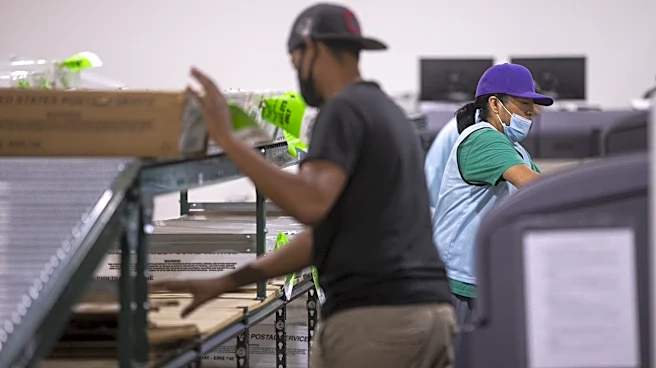
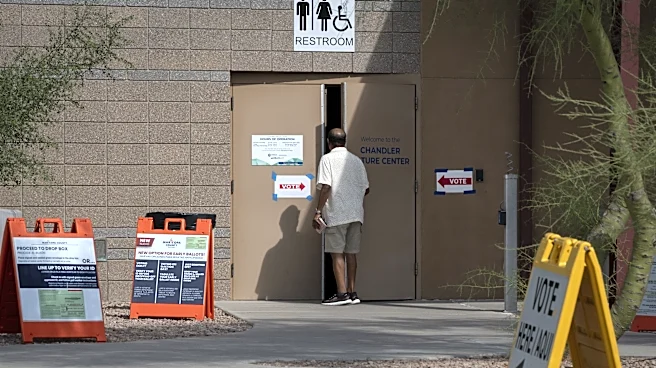
Proposition 144 would fundamentally change how Arizonans vote. Currently, about 80 percent of Arizonans vote by mail ballot ― returning ballots either through USPS or at a county drop box. Voters must sign the return ballot envelope, and election workers compare this signature with the voter's past signatures.
Proposition 144 would require mail voters to show "government-issued ID… when voting in each election." Does that mean voters would have to photocopy their driver's licenses and insert that photocopy into the mail ballot packet? Or does it mean that voters would have to write their nine-digit driver's license number or Social Security number on the return ballot envelope?
Nobody seems to know. A recent panel hosted by ASU's Mechanics of Democracy Laboratory put the question to Tom Collins, executive director of the Clean Elections Commission, and Gina Swoboda, former chairwoman of the Arizona Republican Party, but even those experts didn't have an answer.
These uncertainties have major privacy implications (does the mailman now get to see my Social Security number?), as well as major voter-access concerns (does everyone have access to a photocopier?). And no other predominantly vote-by-mail state currently has the requirements contemplated in Proposition 144 (e.g. Utah, Washington, Oregon, Colorado).
I hope it's not unreasonable to say I want more clarity before voting "yes" to change Arizona's Constitution (Proposition 144 is a constitutional change).
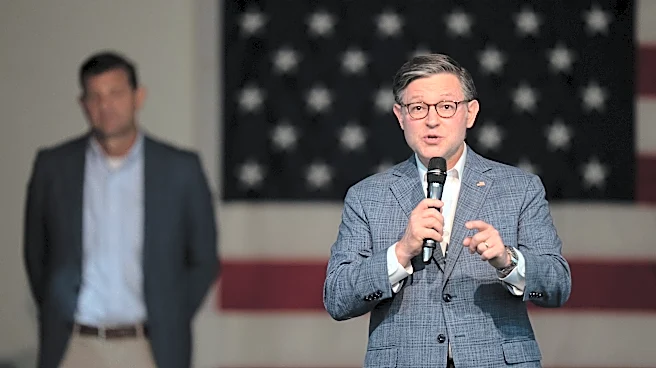
The Proposition is also loaded with items that let you know it’s more about politics, than it is about seriously reforming elections. It will, for example, "prohibit foreign nationals from contributing" to Arizona campaigns. But that’s already unlawful. And the Proposition's lead author, Alex Kolodin, says that a "yes" vote on the Proposition would make it unlawful for noncitizens to vote. But that, of course, is already unlawful.
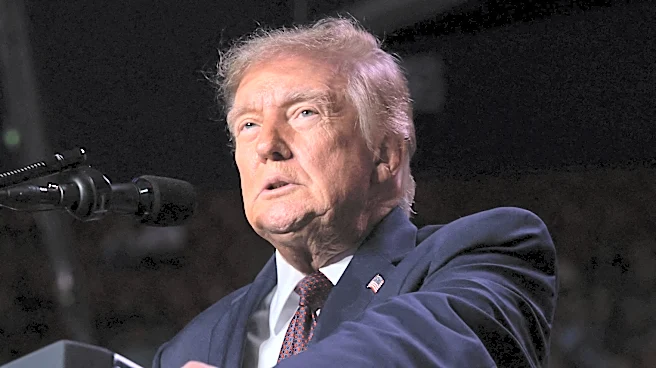
Advocates for the Proposition also can't point to the problem being solved. What's the current problem with Arizona elections? Is it alleged widespread fraud? Widespread fraud that not even President Trump's FBI and DHS can find? Last week, I wrote that County Attorney Rachel Mitchell recently ethically and dutifully investigated the fraud allegations dumped on her desk. Her office found three unlawful votes in Maricopa County from the 2020 presidential election ― that's out of the 2.1 million ballots cast.
The fundamentals of Arizona's election system have been in place since 1993. It's accessible. It's secure. Are we willing to inject uncertainty into our election rules because of three fraudulent voters? No thanks from me.
Proposition 319 would limit "state agencies and local governments… using photo enforcement systems." This isn't about Flock cameras, license plate readers and criminal investigations (about which I have grave misgivings). It's about red-light cameras.
Eight cities and towns currently use such cameras. Presumably city councils can effectively weigh the pros and cons of the use of photo enforcement and determine if it's right for their city. It's uncertain what problem the Proposition aims to solve.
What is certain is the deadly state of Arizona roads. Three people die every day in Arizona.
In 2022, Arizona had 17.7 motor vehicle deaths per 100,000 people. The national average is 12.8. We have the nation's highest rate of red-light-running fatalities.
Enter photo enforcement.
A University of Arizona study of Phoenix found that red light cameras reduced injuries by 28 percent. Similarly, a report by the Insurance Institute for Highway Safety found that photo enforcement "reduced the fatal red light running crash rate of large cities by 21 percent and the rate of all types of fatal crashes… by 14 percent."
Photo enforcement also reduces the number of potentially dangerous encounters that police officers have to encounter on a daily basis. Photo enforcement doesn't discriminate on the color of the driver's skin, or age, or model of car. Photo enforcement saves police officers from working overnight shifts, and it allows those police officers to deploy to more complicated situations.
And now we want to limit the ability of city councils to deploy these devices?
I clearly have my doubts.
And, again, as the Free Enterprise Club taught me, when in doubt, vote "no." So I'm voting "no" on Propositions 144 and 319.
Stephen Richer is the CEO of Republic Affairs, a legal fellow at the Cato Institute and a former Maricopa County recorder. You can contact him at Stephen@StephenRicher.com.
This article originally appeared on Arizona Republic: Arizona Props. 144 and 319 solve no clear problem | Opinion