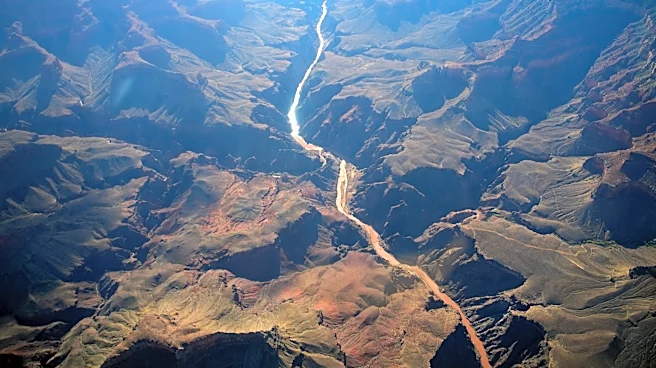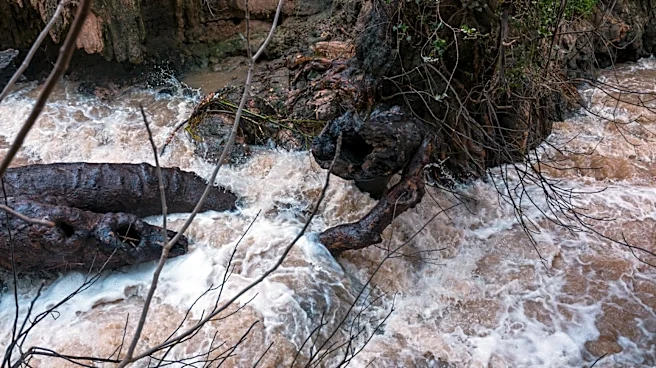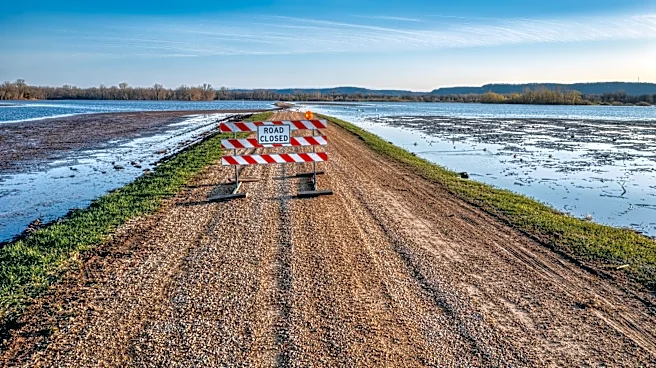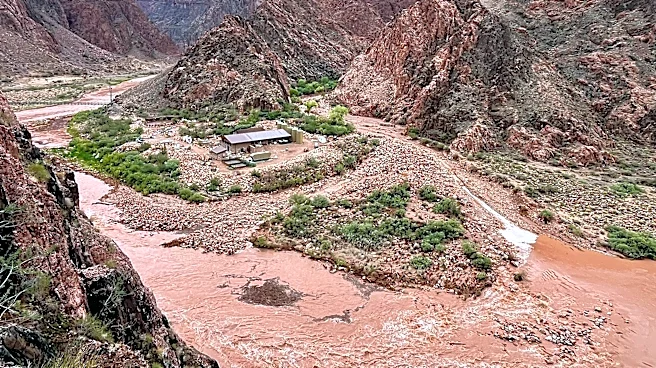

Flash flooding at Grand Canyon National Park damaged or destroyed about 40% of key water supply line, which left the South Rim to rely on stored water as crews assessed the damage.
Aerial surveys suggested
the damage could stretch for miles, according to the Park's Deputy Superintendent Brian Drapeaux, who estimated miles of the pipeline would also be affected.
Drapeaux described the legacy waterline as “battered, bruised, and decimated in certain areas” and said the park entered Stage 4 water restrictions Aug. 31 in response to the damage.
He distinguished the damaged system from what he called the park’s new waterline.
The South Rim had about two weeks of water available in storage as of Aug. 31, Drapeaux said. How long that supply can actually last would depend on the daily amount used by visitors and those in the area.
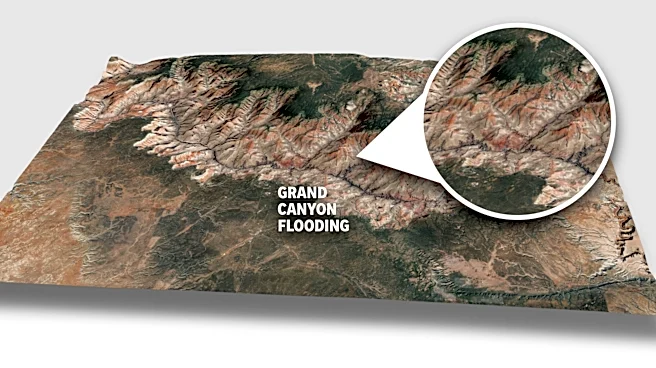
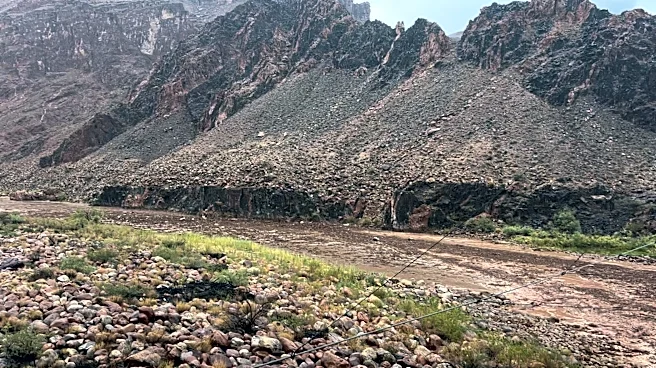
The flooding hit the Bright Angel Creek and Phantom Ranch area Aug. 29, damaging infrastructure throughout the canyon. Incident Commander Dave Black said the park lost numerous bridges and was assembling teams to assess buildings, landing pads and other structures.
The damaged waterline also forced the park to plan around any future firefighting needs.
Black said crews planned to stage portable water tanks throughout Grand Canyon Village because of the damaged waterline.
“We’re going to put some contingency plans in place there,” Black said.
Park officials asked visitors to conserve water by limiting showers to five minutes, turning off faucets while shaving or brushing their teeth and flushing toilets only when needed.
Fires are also prohibited on the South Rim and in the inner canyon, regardless of the fuel used.
The full extent of the waterline damage and how long repairs could take remained unclear as crews prepared to begin ground inspections.
On Sept. 1, Elizabeth Peace, a spokesperson for the U.S. Department of the Interior, said the National Park Service was continuing to assess the extent of the damage to the Transcanyon Waterline and other critical infrastructure in the area.
Until a comprehensive assessment is complete, "it would be premature to estimate the percentage of the waterline damaged, repair costs or timelines, impacts to the ongoing Transcanyon Waterline project, future water restrictions, or what additional funding may be needed," the spokesperson said in a statement.
"Some monitoring equipment was damaged or destroyed during Saturday's flooding. We are continuing to assess the performance and condition of that equipment as part of the broader review of the event and its impacts," the statement said.
What is the Transcanyon Waterline?
The Transcanyon Waterline was initially built in the 1960s to transfer water from the North Rim to the South Rim of the Grand Canyon. The 12.5-mile aluminum pipeline sent water from Roaring Springs to the Havasupai Gardens, providing potable water and fire suppression for all facilities on the South Rim as well as some inner canyon facilities in the Cross Canyon Corridor, according to the National Park Service.
But the pipeline has suffered more than 85 breaks since 2010, each disrupting water delivery and often costing upwards of $25,000 per repair. Breaks often happen in the inner Canyon and are only accessible by trail and helicopter, according to the National Park Service. Breaks often take days to repair and result in water conservation measures being implemented throughout the park.
In 2023, construction began on an over $200 million rehabilitation project that would reduce maintenance requirements and supply water for the next 50 years.
According to Stronghold Engineering, which is the lead contractor for the project, most of the construction is taking place at three different sites.
Two one-million-gallon water tanks were being built to store water adjacent to two existing water tanks on the South Rim, which would then pump water up from Havasupai Gardens to the new water tanks. Water would then be transferred from the tanks to the water treatment plant and then to the existing water tanks for storage.
That would allow water to continue to be treated with increased storage capacity despite potential system failures, according to Stronghold Engineering.
Crews were expected to begin assessing the damage to the waterline on Sept. 1.
Gauge systems went 'offline' during floods
Experts say the burn scar left by the Dragon Bravo Fire in Bright Angel Creek on Grand Canyon’s North Rim may have contributed to the flood's severity but likely was not a major influence, according to a preliminary assessment by the National Weather Service.
Flash floods have always been a risk within the Grand Canyon. After the Lower North Kaibab Trail reopened in March, the National Park Service said it had implemented additional measures to address the "elevated potential for flash flooding and debris flows" in the Bright Angel Creek watershed after the fire.
The park, with the U.S. Geological Survey, installed new stream gauges and also added three precipitation gauges on the North Rim. Those would provide data and early warnings of rising water levels, according to a February statement from the National Park Service.
It also developed an evacuation and alert plan that was meant to alert visitors when they should leave or seek higher ground through the National Weather Service.
Six alerts were sent beginning shortly after noon Aug. 29 at the request of the Park Service and National Weather Service. Nine more followed, including alerts about additional flooding and the closing and reopening of the Colorado River.
On Aug. 31, Drapeaux said the gauge system installed after the fire did alert staff to rising water levels. But it quickly went offline as the water progressed down the creek and picked up speed, Drapeaux said. It's unclear what exactly caused the systems to go offline, but they will undergo an investigation, he said.
"We do know that they were working, and then they weren't working," Drapeaux said.
Have a news tip? Contact The Arizona Republic and azcentral.com at newstips@arizonarepublic.com.
This article originally appeared on Arizona Republic: Grand Canyon flood damages key waterline, strains South Rim supply